Tournament charts are an essential tool for visually organizing and tracking the progression of participants in a single-elimination competition. Whether you’re hosting a sports tournament, planning team-building events, or making strategic decisions in the workplace, tournament charts provide a structured format to determine the final champion.
In this comprehensive guide, we will explore the intricacies of tournament charts, their significance, and how to effectively utilize them in various settings.
What is a Tournament Chart?
A tournament chart, also known as a bracket, is a visual representation of a single-elimination competition. It showcases head-to-head matchups between participants, illustrating how winners progress through each round until a final champion emerges.
Tournament charts are commonly used in sports competitions like basketball tournaments, but their versatility extends to team-building events, decision-making processes, and other scenarios requiring an organized elimination format.
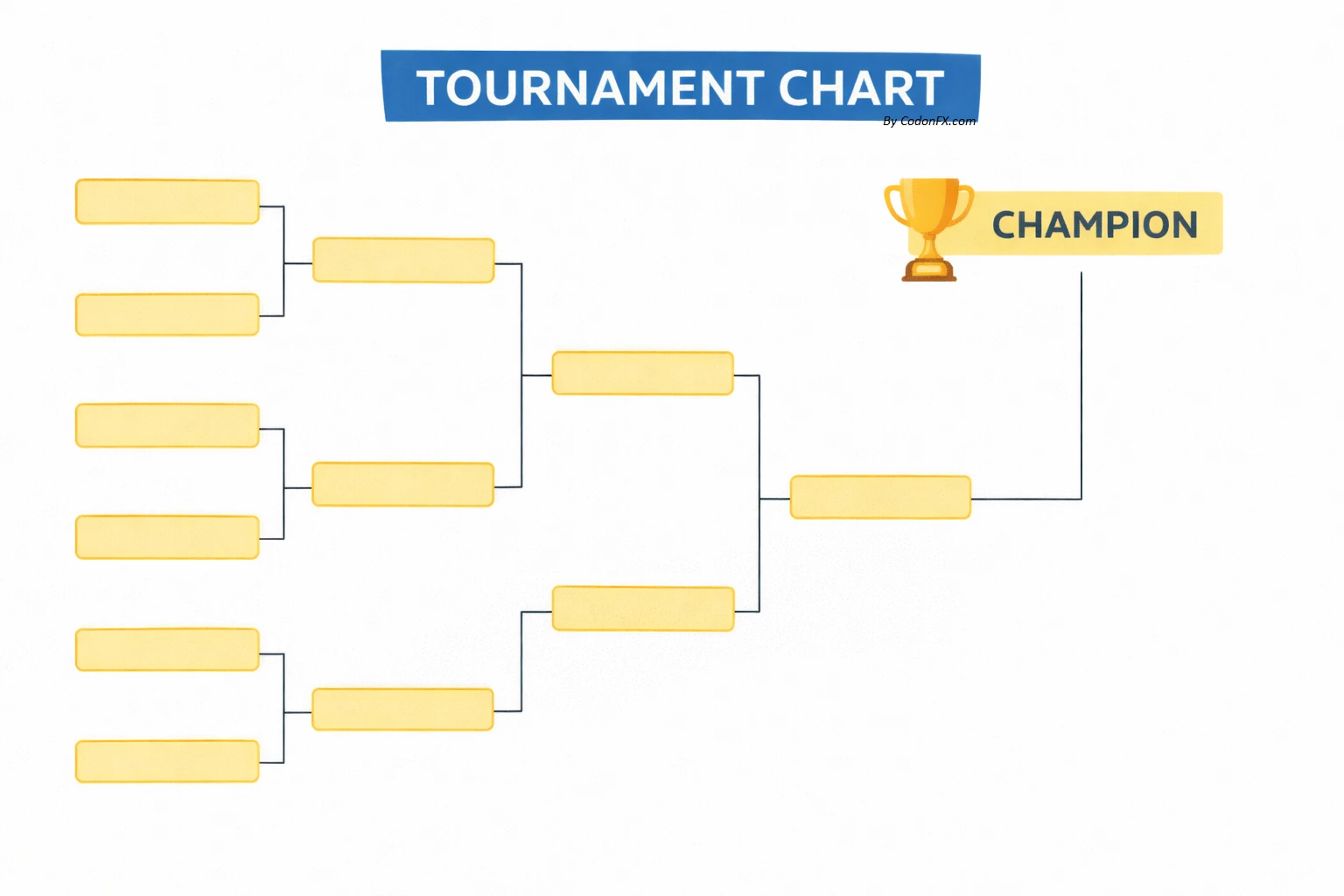
Why Use Tournament Charts?
The utilization of tournament charts offers several advantages in various settings, making them a valuable tool for organizers, participants, and spectators alike. Let’s delve into the reasons why tournament charts are essential for structuring competitions and events.
Clarity and Transparency
One of the primary benefits of tournament charts is their ability to provide clarity and transparency in the competition structure. By visually displaying the matchups, progression of participants, and outcomes, tournament charts offer a clear roadmap for participants and spectators to follow. This transparency fosters trust in the integrity of the competition and ensures that all stakeholders are on the same page regarding the event’s format and rules.
Additionally, the visual nature of tournament charts enhances understanding and engagement, particularly for participants who may struggle with textual or verbal instructions. The graphical representation of the competition flow allows for quick comprehension of the tournament’s progression, creating a dynamic and immersive experience for all involved.
Organization and Efficiency
Tournament charts play a crucial role in organizing and managing competitions efficiently. By laying out the matchups, participant pairings, and advancement criteria in a structured format, tournament charts help organizers streamline the flow of the event. This organization ensures that the competition runs smoothly, matches start on time, and participants know when and whom they will face in each round.
Moreover, the efficiency gained from using tournament charts extends to data management, results tracking, and communication with participants. Organizers can easily update the chart with match outcomes, track winners’ progression, and communicate any changes or updates to the competition schedule. This streamlined approach minimizes confusion, reduces errors, and enhances overall event management.
Engagement and Excitement
Tournament charts are not just practical tools for organizing competitions; they also serve as powerful engagement drivers and sources of excitement for participants and spectators. The visual representation of the competition flow, with its clear delineation of matchups and progression paths, creates a sense of anticipation and drama throughout the event.
Participants become emotionally invested in their journey through the tournament, rooting for themselves and their opponents as they navigate each round. Spectators are likewise drawn into the competition, following the chart’s progression and experiencing the highs and lows of each matchup. This engagement fosters a sense of community, camaraderie, and shared experience among participants and viewers, enhancing the overall atmosphere of the event.
What to Include in a Tournament Chart?
When creating a tournament chart, it is essential to include specific elements that contribute to its effectiveness and functionality. Let’s explore the key components that should be incorporated into a well-designed tournament chart.
Participant Names
At the core of any tournament chart are the names of the participants competing in the event. Clearly listing the names of all participants ensures that each individual is represented and accounted for in the chart. This inclusion helps participants identify their matchups, track their progress through each round, and understand their position in the overall competition hierarchy.
Moreover, including participant names adds a personal touch to the tournament chart, making it more relatable and engaging for competitors. Seeing their names displayed in the chart fuels participants’ sense of ownership and investment in the competition, motivating them to perform their best and strive for victory.
Matchup Pairings
The essence of a tournament chart lies in its depiction of matchup pairings between participants in each round of the competition. These head-to-head matchups showcase the competitive dynamics of the event, pitting participants against each other to determine the victor. Clearly illustrating these pairings in the chart allows participants to visualize their opponents, understand the sequence of matchups, and prepare strategically for each encounter.
Furthermore, matchup pairings create a sense of anticipation and excitement for both participants and spectators, as each round brings new challenges and opportunities for advancement. The strategic placement of matchups in the chart can influence participants’ gameplay, decision-making, and overall experience of the competition, adding depth and complexity to the event.
Winner Progression
Another critical element to include in a tournament chart is the progression of winners through each round of the competition. As participants compete and victories are determined, the chart should reflect how winners advance to the next stage and continue their journey towards the final championship. This visual representation of winner progression not only clarifies the competition flow but also highlights the achievements and successes of participants as they move through the ranks.
Tracking winner progression in the chart serves as a motivational tool for participants, showcasing their advancement and reinforcing their commitment to the competition. It also enables spectators to follow the success stories of individual participants, creating narratives of triumph, resilience, and skill that add depth to the overall competition experience.
Final Champion
One of the most critical components of a tournament chart is the declaration of the final champion at the conclusion of the event. The ultimate winner, who emerges victorious after navigating through all rounds of the competition, should be prominently displayed at the top of the chart as a symbol of achievement and excellence. This acknowledgment of the final champion not only celebrates their success but also serves as a culmination of the competition journey for all participants.
Highlighting the final champion in the tournament chart creates a sense of closure and accomplishment for the event, signaling the end of the competition and the crowning of a deserving winner. It also provides a memorable moment for participants and spectators to celebrate the champion’s victory, reflect on the competition’s highlights, and appreciate the competitive spirit and sportsmanship displayed throughout the event.
How to Create a Tournament Chart
Creating a tournament chart requires careful planning, attention to detail, and a strategic approach to layout and design. Let’s explore the step-by-step process of creating a tournament chart that is visually appealing, easy to understand, and functional for organizing competitions.
Determine the Number of Participants
The first step in creating a tournament chart is to determine the number of participants who will be competing in the event. This information is crucial for structuring the chart layout, determining the number of rounds needed, and ensuring that the competition format aligns with the participant count. Whether you have a small group of participants or a large-scale tournament, knowing the exact number of competitors will guide the design and organization of the chart.
For smaller competitions with a limited number of participants, a simple bracket layout may suffice, with fewer rounds and matchups to manage. On the other hand, larger tournaments with numerous participants may require a more complex bracket structure, additional rounds, and considerations for seeding, byes, or wildcard entries. Understanding the participant count sets the foundation for creating a tournament chart that accommodates all competitors and ensures a fair and competitive event.
Select the Bracket Format
Once you have determined the number of participants, the next step is to select the appropriate bracket format for the competition. Different bracket formats, such as single-elimination, double-elimination, or round-robin, offer varying degrees of competitiveness, fairness, and engagement for participants. Choosing the right bracket format is essential for creating a compelling and balanced competition experience.
Single-elimination brackets are commonly used in sports tournaments, as they provide a clear path to determine the final champion and create a sense of urgency and excitement in each matchup. On the other hand, double-elimination brackets offer participants a second chance after losing a match, ensuring that they have multiple opportunities to advance and compete for the championship.
Round-robin formats, on the other hand, involve each participant competing against every other participant in the tournament, with points or rankings determining the final standings. While more complex to manage, round-robin formats offer a comprehensive view of participant performance and can be suitable for smaller competitions with fewer participants.
Create Matchup Pairings
With the bracket format selected, the next step is to create matchup pairings for each round of the competition. The arrangement of matchups should be strategic, fair, and balanced to ensure that participants face appropriate challenges and opportunities for advancement. Consider factors such as seeding, rankings, and previous performance when pairing participants in each round.
Creating compelling matchups can enhance the competitiveness and excitement of the competition, as participants are motivated to test their skills against worthy opponents and showcase their abilities. Pay attention to the placement of matchups in the bracket, taking into account potential upsets, rivalries, and strategic pairings that can add drama and intrigue to the event.
Track Winner Progression
As the competition progresses, it is essential to track the advancement of winners through each round of the tournament. Updating the tournament chart with the outcomes of each matchup, identifying the victors, and moving them to the next stage of the competition ensures that the chart remains current, accurate, and reflective of the event’s progress.
Tracking winner progression also enables participants and spectators to follow the journey of individual competitors, see the impact of each matchup on the overall competition, and anticipate the outcomes of future rounds. This dynamic engagement with the chart adds a layer of interactivity and excitement to the event, as participants strive to move closer to the final championship and spectators witness the unfolding drama of the competition.
Declare the Final Champion
At the conclusion of the tournament, it is time to declare the final champion and celebrate their victory. The tournament chart should prominently display the name or team of the ultimate winner at the top of the bracket, symbolizing their achievement and excellence throughout the competition. This declaration marks the culmination of the event, recognizing the champion’s skill, perseverance, and competitive spirit.
Announcing the final champion in the tournament chart creates a lasting impression and sense of accomplishment for all participants and spectators. It serves as a memorable moment of triumph and celebration, highlighting the competitive journey of the champion and the intense competition that led to their success. By showcasing the final champion in the chart, organizers can honor their achievement and inspire future participants to strive for greatness in upcoming events.
Tips for Using Tournament Charts
Maximizing the effectiveness of tournament charts involves strategic planning, attention to detail, and a focus on engagement and clarity. Here are some tips to enhance the functionality and impact of tournament charts in organizing competitions and events.
Stay Organized
Organizational skills are crucial for maintaining a clear and structured tournament chart throughout the event. Keep the chart updated with match outcomes, participant advancements, and any changes to the competition schedule. Clear and consistent organization ensures that participants, spectators, and organizers can easily follow the progression of the competition and understand the current standings.
- Consistent Updates: Regularly update the tournament chart with match results, participant advancements, and any relevant information to keep stakeholders informed and engaged.
- Clear Labeling: Use legible fonts, colors, and formatting to label participant names, matchups, and progression paths in the chart for easy identification and comprehension.
- Backup Plans: Have contingency plans in place for unexpected changes or disruptions during the event to ensure that the tournament chart remains accurate and up to date.
Engage Participants
Encouraging active participation and engagement with the tournament chart can enhance the overall experience for competitors and spectators. Create opportunities for participants to interact with the chart, track their progress, and visualize their journey through the competition. Engaged participants are more likely to invest emotionally in the event and strive for success.
- Interactive Elements: Incorporate interactive features into the tournament chart, such as digital updates, live scoring, or participant feedback, to engage competitors and enhance their connection to the event.
- Participant Involvement: Encourage participants to take ownership of their journey through the competition by tracking their progress, strategizing for matchups, and celebrating their achievements on the chart.
- Reward Systems: Implement rewards, prizes, or recognition for participants who reach specific milestones or perform exceptionally well in the competition, motivating them to engage with the tournament chart and strive for success.
Consider Alternatives
Exploring different bracket formats, customization options, and creative layouts can add diversity and excitement to the tournament chart. Consider alternative designs, color schemes, or presentation styles that align with the theme of the event and cater to the preferences of participants and spectators. Flexibility and innovation in chart design can elevate the visual appeal and engagement factor of the competition.
- Theme Integration: Align the design of the tournament chart with the overall theme or branding of the event to create a cohesive and immersive experience for participants and spectators.
- Creative Layouts: Experiment with unconventional bracket layouts, graphic elements, or visual enhancements to make the tournament chart more visually appealing and engaging for viewers.
- Feedback Collection: Gather feedback from participants, spectators, and organizers on the effectiveness and appeal of the tournament chart design, incorporating suggestions for improvements or enhancements in future events.
Utilize Technology
Embracing technology and digital tools can streamline the creation and management of tournament charts, especially for large-scale competitions or events with complex bracket structures. Explore online platforms, software applications, or digital solutions that offer features for creating, updating, and sharing tournament charts efficiently and effectively.
- Online Platforms: Use online tournament management platforms or bracket generator tools to create dynamic and interactive tournament charts that can be easily accessed and updated by organizers and participants.
- Mobile Apps: Explore mobile applications that provide real-time updates, live scoring, and participant notifications for tournament charts, enhancing engagement and accessibility for all stakeholders.
- Data Integration: Integrate data analytics, performance tracking, and historical results into the tournament chart using technology solutions to provide insights, trends, and strategic information for participants and organizers.
Free Tournament Chart Template
A Tournament Chart helps you organize and display matchups, rounds, and progress in a clear and easy-to-follow format. It provides a structured layout for tracking teams or participants, scores, and advancement throughout the competition. With a well-designed template, you can manage tournaments efficiently and keep participants and spectators informed.
Download our Tournament Chart Template today to run your tournament smoothly and stay organized from start to finish.
Tournament Chart Template – DOWNLOAD
