Managing money as a couple can be challenging, especially when two people have different incomes, spending habits, and financial priorities. A couple budget template provides a simple way to organize shared finances, track household expenses, and work toward common savings goals.
Whether you are married, engaged, or living together, creating a shared monthly budget can help you understand where your money goes and how much you can afford to save. It also encourages honest conversations about financial responsibilities and future plans.
With a practical couples budget worksheet, both partners can record their income, divide household bills, monitor personal expenses, and review their financial progress. This guide explains how to create a budget together, choose a fair expense-sharing method, and use a printable template to manage your money more effectively.
What Is a Couple Budget Template?
A couple budget template is a financial planning worksheet designed to help two partners organize their combined income, shared expenses, individual spending, debt payments, and savings goals.
It provides a central place to record how much each partner earns, how much the household spends, and how much money remains after monthly obligations. Couples can use it to plan upcoming expenses and compare their budgeted amounts with actual spending.
A couples budget can be created in a spreadsheet, budgeting app, or printable worksheet. The best format is one that both partners can understand, update, and review regularly.
Why Should Couples Create a Shared Budget?
Budgeting together is not only about controlling expenses. It also helps couples build financial transparency, make informed decisions, and establish shared priorities.
1. Creates Financial Transparency
A shared budget gives both partners a clearer picture of household income, bills, debts, and savings. Instead of making assumptions about money, each person can understand the financial situation and contribute to planning decisions.
2. Helps Divide Household Expenses Fairly
Couples may earn different amounts or have different financial obligations. A budget makes it easier to agree on how rent, utilities, groceries, transportation, and other shared expenses will be divided.
3. Reduces Money-Related Arguments
Unclear financial expectations can create tension. Discussing spending limits, responsibilities, and savings targets in advance can help prevent misunderstandings.
4. Makes Saving for Shared Goals Easier
Whether you are building an emergency fund, planning a vacation, buying a home, or preparing for a major life event, a couple budget helps turn shared goals into realistic monthly targets.
5. Encourages Better Spending Habits
Tracking actual expenses helps couples identify unnecessary purchases and areas where they can reduce spending. Small adjustments can make a meaningful difference over time.
What Should a Couple Budget Include?
A useful couple budget template should cover all major sources of income and expenses. Organizing the information into categories makes the monthly budget easier to review.
1. Income From Both Partners
Start by recording the monthly income of each partner. Include regular earnings and other reliable income sources.
Common income categories include:
- Salary and wages.
- Self-employment income.
- Freelance or side income.
- Business income.
- Rental income.
- Other recurring income.
For a more accurate household budget, use take-home income after taxes and payroll deductions rather than gross salary.
2. Shared Household Expenses
Shared expenses are costs that both partners agree to cover. These expenses usually support the household or benefit both people.
Common shared household expenses include:
- Rent or mortgage payments.
- Electricity, water, and gas.
- Internet and phone services.
- Groceries and household supplies.
- Transportation and fuel.
- Home and auto insurance.
- Childcare and family expenses.
Couples should decide which expenses count as shared based on their living arrangements and financial agreements.
3. Personal Expenses
Even when partners share household finances, each person may have individual spending needs. Personal expenses should be included so the budget reflects the complete financial picture.
Examples include:
- Personal clothing and accessories.
- Individual subscriptions.
- Hobbies and entertainment.
- Personal care expenses.
- Individual transportation costs.
- Personal purchases.
Allowing each partner some personal spending money can help maintain independence while keeping shared finances organized.
4. Debt Payments
List recurring debt obligations separately. These may include credit card payments, student loans, car loans, or personal loans.
Discuss whether each debt will remain an individual responsibility or become part of the household budget. The answer may depend on when the debt was incurred and the couple’s financial arrangement.
5. Savings and Financial Goals
Savings should be treated as an important part of the budget rather than something left over at the end of the month.
Common savings goals for couples include:
- Emergency fund.
- Vacation or travel fund.
- Home down payment.
- Car replacement fund.
- Wedding or family expenses.
- Retirement savings.
- Future education expenses.
Set a target amount and decide how much you want to contribute each month. Review the progress together to keep your goals realistic.
How to Split Expenses as a Couple
There is no single method that works for every couple. The best expense-sharing arrangement depends on income differences, financial obligations, personal preferences, and the level of financial independence each partner wants to maintain.
1. Split Expenses 50/50
With an equal split, both partners contribute the same amount toward shared expenses. This method is simple and easy to track when both people have similar incomes and financial circumstances.
For example, if monthly shared expenses total $2,000, each partner contributes $1,000.
However, an equal split may feel difficult when one partner earns significantly less than the other.
2. Split Expenses Based on Income
An income-based arrangement divides shared expenses according to each partner’s percentage of total household income. This approach can make contributions more proportional to earning capacity.
For example:
- Partner 1 earns $4,000 per month.
- Partner 2 earns $2,000 per month.
- Combined income is $6,000.
- Partner 1 contributes approximately 66.7% of shared expenses.
- Partner 2 contributes approximately 33.3% of shared expenses.
If shared expenses total $1,800, Partner 1 contributes approximately $1,200, while Partner 2 contributes approximately $600.
3. Combine All Income
Some couples prefer to combine their income into a shared household budget. All earnings are pooled, and household bills, personal allowances, debt payments, and savings are planned together.
This method can simplify financial management, but it requires trust, communication, and agreement about spending decisions.
4. Use a Hybrid Budgeting Method
A hybrid approach combines shared financial responsibilities with individual accounts. Both partners contribute an agreed amount to a joint household account, while keeping separate money for personal expenses.
This method can provide a balance between teamwork and financial independence.
How to Create a Couple Budget Step by Step
Creating a household budget together does not have to be complicated. Follow these steps to build a practical monthly plan.
Step 1: Calculate Your Combined Monthly Income
Record both partners’ take-home income. Include reliable additional income, but avoid depending on uncertain earnings when setting essential spending limits.
Step 2: List All Monthly Expenses
Write down fixed bills, variable household costs, personal spending, debt payments, and recurring subscriptions. Review bank statements or previous receipts to avoid overlooking smaller expenses.
Step 3: Separate Shared and Personal Costs
Decide which expenses belong to the household and which remain individual responsibilities. This step helps prevent confusion when dividing payments.
Step 4: Choose an Expense-Sharing Method
Agree on whether shared expenses will be divided equally, proportionally based on income, or through another arrangement. Make sure both partners consider the method fair and sustainable.
Step 5: Set Monthly Savings Targets
Choose one or more financial goals and decide how much to save each month. Prioritize essential goals, such as building an emergency fund, while leaving room for other plans.
Step 6: Create Spending Limits
Set realistic limits for groceries, dining out, entertainment, shopping, and other variable expenses. These limits should reflect your actual lifestyle and financial priorities.
Step 7: Review the Budget Every Month
Compare planned expenses with actual spending at the end of each month. Discuss what worked, identify unexpected costs, and adjust the next month’s budget when necessary.
Couple Budget Example: Monthly Household Budget
The following example shows how two partners can organize their combined income and shared expenses. The figures are illustrative and can be adjusted to match your actual financial situation.
Partner 1 monthly income: $4,000
Partner 2 monthly income: $3,000
Combined monthly income: $7,000
Example monthly budget:
- Rent or mortgage: $1,500.
- Utilities: $250.
- Internet and phone: $120.
- Groceries: $600.
- Transportation: $350.
- Insurance: $300.
- Personal expenses: $500.
- Debt payments: $600.
- Savings: $1,000.
- Entertainment and dining: $300.
Total planned expenses and savings: $5,520.
Remaining amount: $1,480.
The remaining amount can provide a buffer for unexpected expenses or be allocated to additional savings and debt repayment. The couple should decide together how to use it instead of allowing the money to disappear through unplanned spending.
Tips for Managing Money as a Couple
A successful couple budget requires regular communication and a willingness to adjust. These practical habits can help both partners stay on track.
- Schedule monthly money meetings: Set aside time to review income, expenses, savings, and upcoming bills.
- Be honest about financial obligations: Discuss debts, recurring payments, and other commitments openly.
- Agree on spending limits: Decide when a purchase should be discussed before spending shared money.
- Keep personal spending flexible: Allow each partner reasonable individual spending money.
- Plan for irregular expenses: Include annual insurance, vehicle maintenance, gifts, and holiday costs.
- Build an emergency fund: Save for unexpected expenses instead of relying entirely on credit.
- Celebrate financial progress: Recognize milestones such as paying off debt or reaching a savings target.
- Adjust when circumstances change: Update the budget after changes in income, housing, family responsibilities, or financial goals.
Printable Couple Budget Template
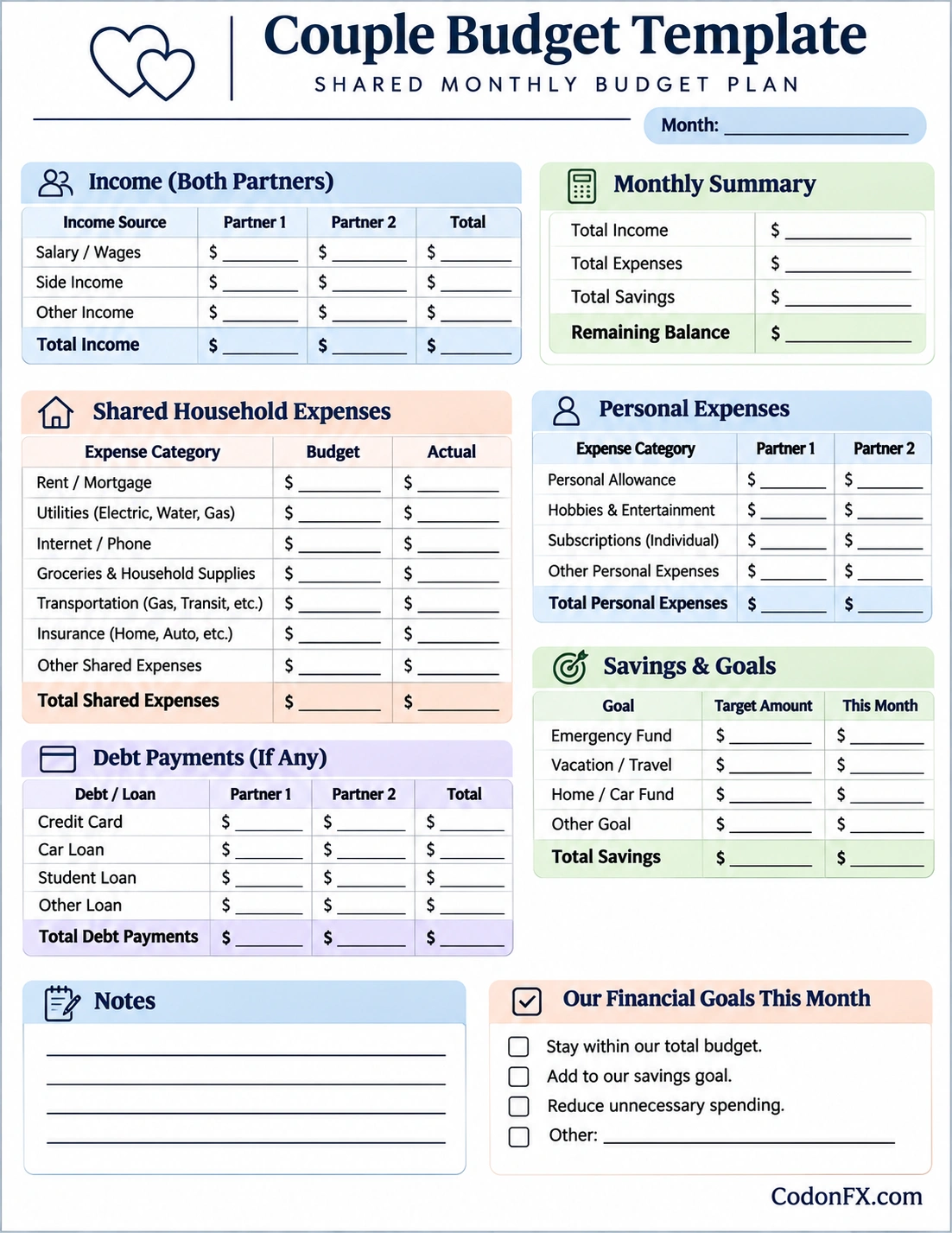
A printable couple budget template makes it easier to organize shared finances without building a spreadsheet from scratch. It provides dedicated sections for recording income, household expenses, personal spending, debt payments, and savings goals.
A useful worksheet should allow both partners to compare their individual contributions and review the household’s total financial position. It should also include a monthly summary showing total income, total expenses, savings, and the remaining balance.
The sample below uses a clean, modern layout with separate sections for each financial category. You can print a new copy each month, enter your actual figures, and use the notes section to record important financial decisions.
Digital vs. Printable Couple Budget Worksheets
Both digital and printable budgeting tools can help couples manage their finances. The right choice depends on how you prefer to record information and review your progress.
Digital Budget Templates
A digital couple budget spreadsheet is useful for partners who want automatic calculations and easy updates. Spreadsheet formulas can calculate totals, compare budgeted amounts with actual expenses, and show how much money remains.
Digital tools are also convenient when partners want to update the same budget from different locations.
Printable Budget Worksheets
A printable couples budget worksheet offers a simple, hands-on alternative. You can write down figures, review expenses together, and keep a physical record of your monthly financial plan.
Printable worksheets are especially useful for couples who prefer a straightforward layout without relying on budgeting software.
Frequently Asked Questions About Couple Budget Templates
What is the best way for couples to budget together?
The best approach is one that both partners understand and agree to follow. Start by combining your financial information, identifying shared and personal expenses, choosing a fair contribution method, and setting savings goals. Review the budget regularly to keep it practical.
Should couples combine their income or keep separate accounts?
There is no universal answer. Some couples combine all income, while others maintain separate accounts or use a hybrid system. The best arrangement depends on financial preferences, responsibilities, and mutual agreement.
How should couples split bills when they earn different incomes?
One common approach is to divide shared expenses proportionally based on each partner’s income. This means the higher earner contributes a larger percentage. Couples can also choose an equal split or another arrangement that they both consider fair.
What expenses should be included in a couple budget?
A couple budget should generally include housing, utilities, groceries, transportation, insurance, personal expenses, debt payments, subscriptions, savings, and entertainment. Add any other recurring or irregular costs that apply to your household.
How much should couples save each month?
The amount depends on combined income, essential expenses, debt obligations, and financial goals. Rather than choosing an unrealistic fixed amount, start with a manageable target and increase contributions when your budget allows.
How often should couples review their budget?
Most couples benefit from reviewing their budget monthly. A brief weekly check-in can also help monitor spending and upcoming bills, while a more detailed review can be done at the end of each month.
Can unmarried couples use a couple budget template?
Yes. A couple budget template is useful for married, engaged, and unmarried partners who share household expenses or financial goals. The worksheet can be customized to reflect their living arrangements and individual responsibilities.
What should couples do if they disagree about spending?
Start by discussing the reason behind each spending priority. Separate essential expenses from optional purchases, agree on reasonable personal spending limits, and set shared financial goals. A clear budget can help turn disagreements into practical decisions.
Conclusion
A couple budget template is a practical tool for managing shared finances, organizing household expenses, and working toward common financial goals. By tracking both partners’ income, separating shared and personal costs, and reviewing monthly spending, couples can build a clearer financial plan.
Whether you choose a printable worksheet, spreadsheet, or budgeting app, the most important part is communicating openly and agreeing on a system that works for both partners. Review your progress regularly and adjust your budget as your financial circumstances change.
With consistent planning and teamwork, budgeting together can become a useful habit that supports greater financial stability and helps you prepare for the future.
Download: Couple Budget Template
