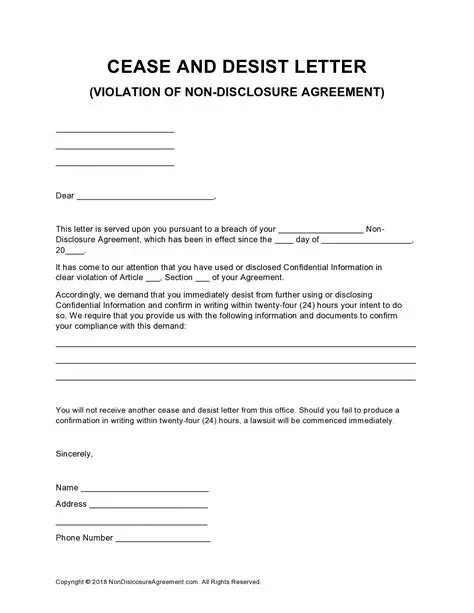
Cease and desist letters are powerful legal tools that can be used to address a variety of issues, from intellectual property infringement to harassment and defamation. These formal, written demands serve as a final warning before potential legal action is taken, making it crucial for individuals and businesses to understand their implications. In this article, we will delve into the what, why, key elements, how to, and tips surrounding cease and desist letters.
What is a Cease and Desist Letter?
A cease and desist letter is a formal written demand that notifies an individual or business to immediately stop allegedly illegal or harmful behavior. This behavior can range from intellectual property infringement, harassment, defamation, to any other actions that are deemed unlawful or harmful. The letter serves as a pre-litigation warning, indicating that legal action will follow if the behavior continues.
Why Use a Cease and Desist Letter?
Cease and desist letters are often used as a first step in resolving disputes without the need for costly and time-consuming litigation. By clearly outlining the specific behavior that needs to cease and providing a timeline for compliance, these letters can effectively communicate the seriousness of the situation and the consequences of non-compliance. Additionally, sending a cease and desist letter can help establish a paper trail in case further legal action is necessary.
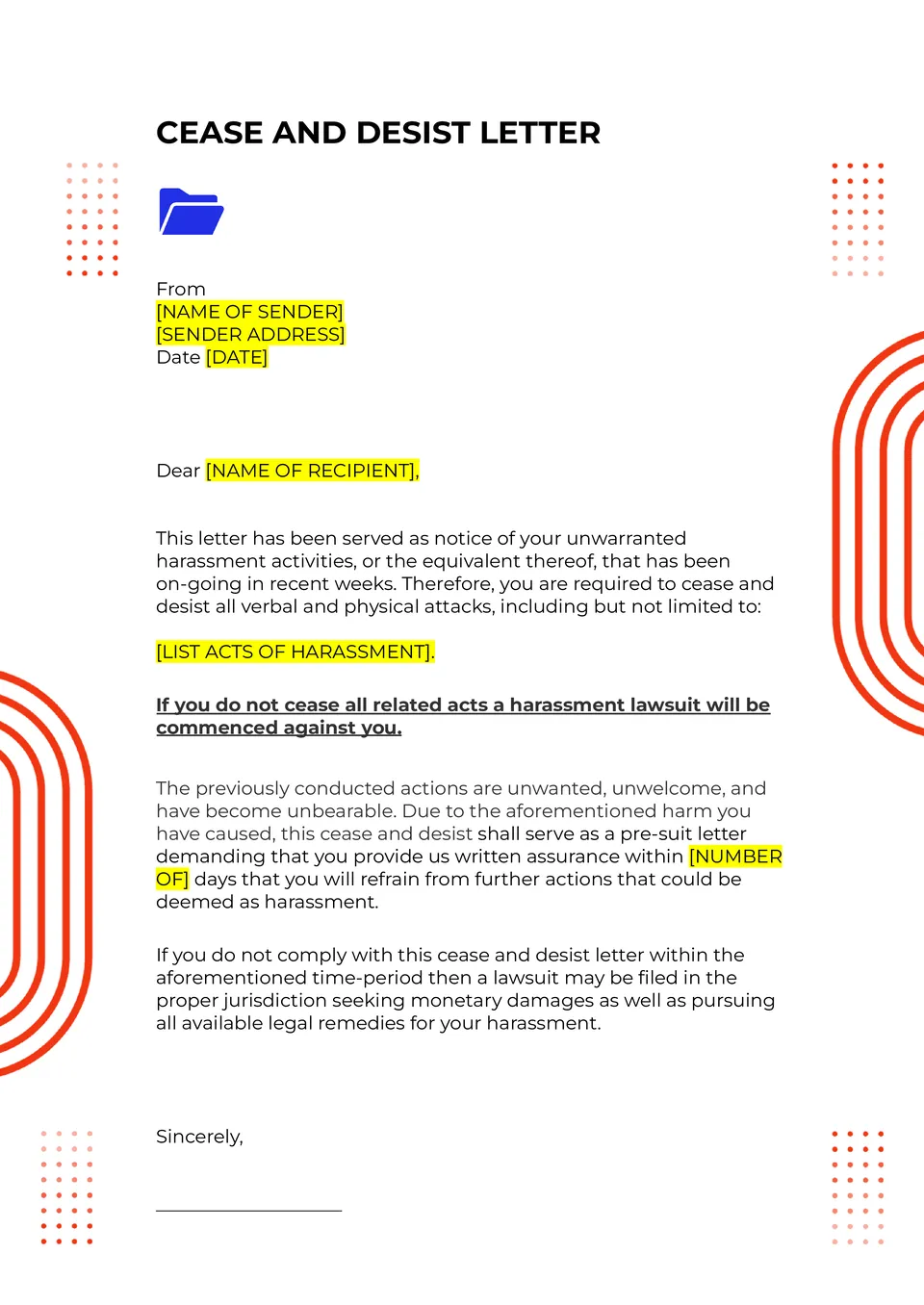
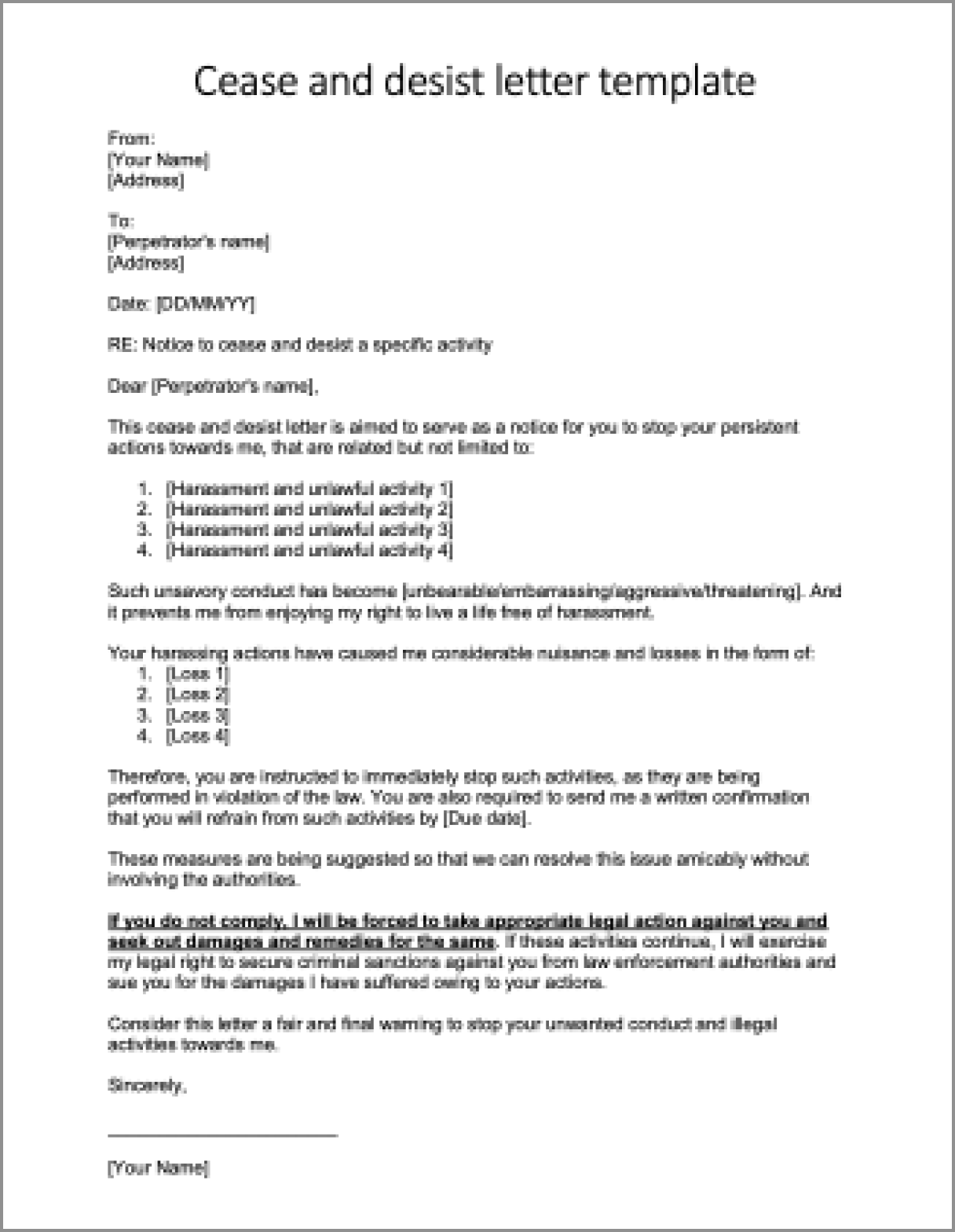
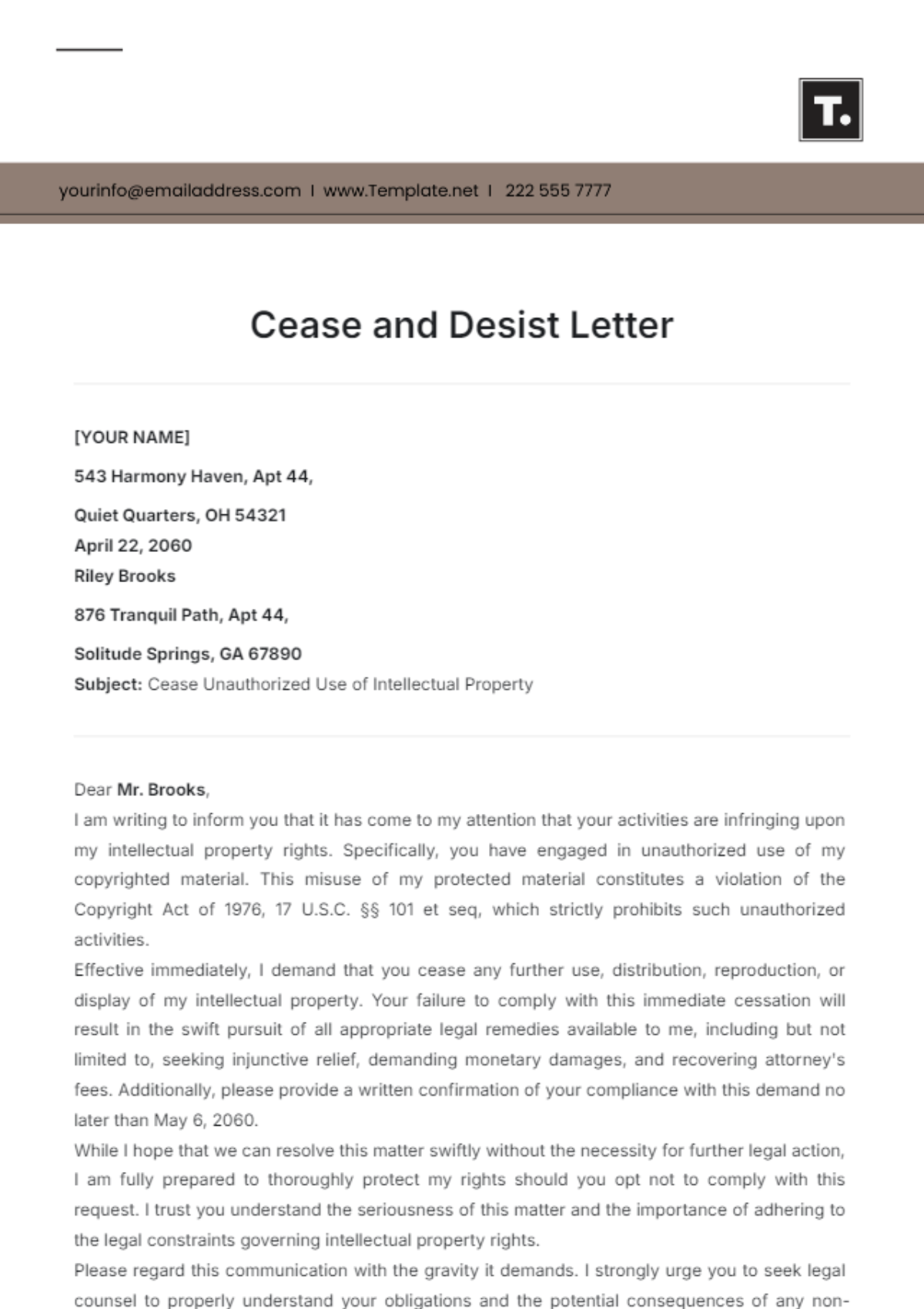
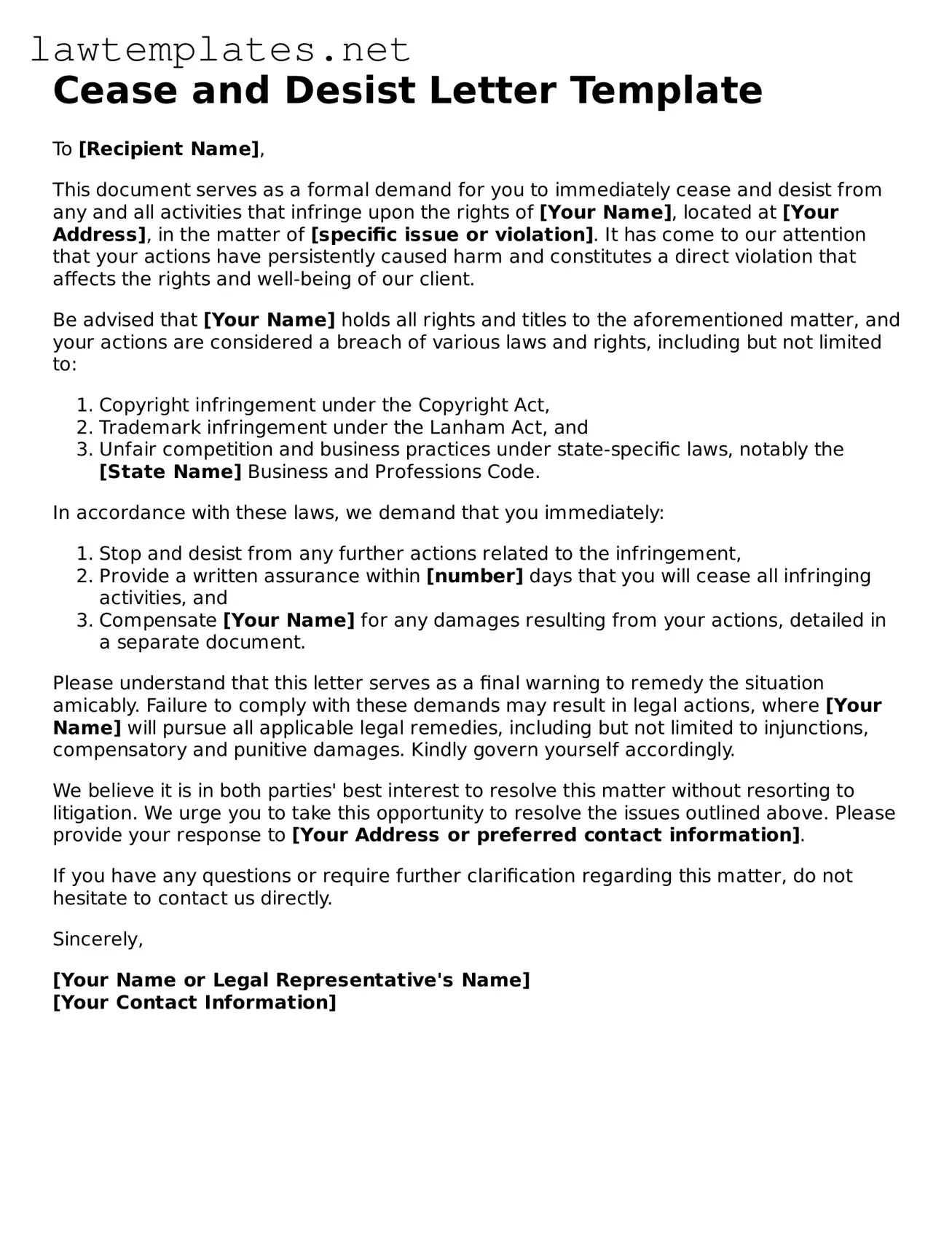
Key Elements of a Cease and Desist Letter
When drafting a cease and desist letter, there are several key elements that should be included to make it effective:
- Identification: Clearly identify the sender and recipient of the letter.
- Description of Behavior: Clearly describe the allegedly illegal or harmful behavior that needs to cease.
- Legal Basis: Provide a legal basis for why the behavior is unlawful or harmful.
- Timeline: Specify a reasonable timeline for compliance.
- Consequences: Clearly state the consequences of non-compliance.
- Contact Information: Provide contact information for further communication.
How to Draft a Cease and Desist Letter
When drafting a cease and desist letter, it is important to follow these steps:
- Research: Gather evidence to support your claims.
- Drafting: Clearly state the issue, the legal basis for your claims, and the actions required to cease the behavior.
- Review: Have the letter reviewed by a legal professional to ensure accuracy and effectiveness.
- Delivery: Send the letter via certified mail or email to ensure proof of delivery.
- Follow-up: Follow up with the recipient after the specified timeline to ensure compliance.
Tips for Using Cease and Desist Letters
Here are some tips to keep in mind when using cease and desist letters:
- Be Clear and Concise: Clearly state the issue and the desired outcome in a straightforward manner.
- Be Professional: Maintain a professional tone throughout the letter to convey seriousness.
- Seek Legal Advice: If you are unsure about the legal basis of your claims, consult with a legal professional.
- Document Everything: Keep a record of all communication related to the cease and desist letter for future reference.
- Consider Alternative Dispute Resolution: If the issue remains unresolved, consider alternative dispute resolution methods before pursuing litigation.
Conclusion
Cease and desist letters are valuable tools for addressing a variety of legal issues in a timely and cost-effective manner. By understanding the what, why, key elements, how to, and tips surrounding these letters, individuals and businesses can effectively protect their rights and interests. Remember to seek legal advice when needed and approach the situation with professionalism and clarity.
Cease and Desist Letter Template – Download
