A community service letter is an official document used to verify that a person has completed volunteer or community service activities. It can serve as proof of service for school requirements, job applications, scholarship programs, court or government requirements, and other situations where documented volunteer experience is needed.
Besides confirming participation, a well-written letter can describe the type of work performed, the number of hours completed, and the qualities demonstrated during the service. When appropriate, it can also function as a letter of recommendation by highlighting a person’s reliability, commitment, teamwork, leadership, and positive contribution to the community.
Whether you need proof of volunteer hours or want to recognize someone’s contribution, using a clear and professional format can make the document easier to understand and more useful to the recipient.
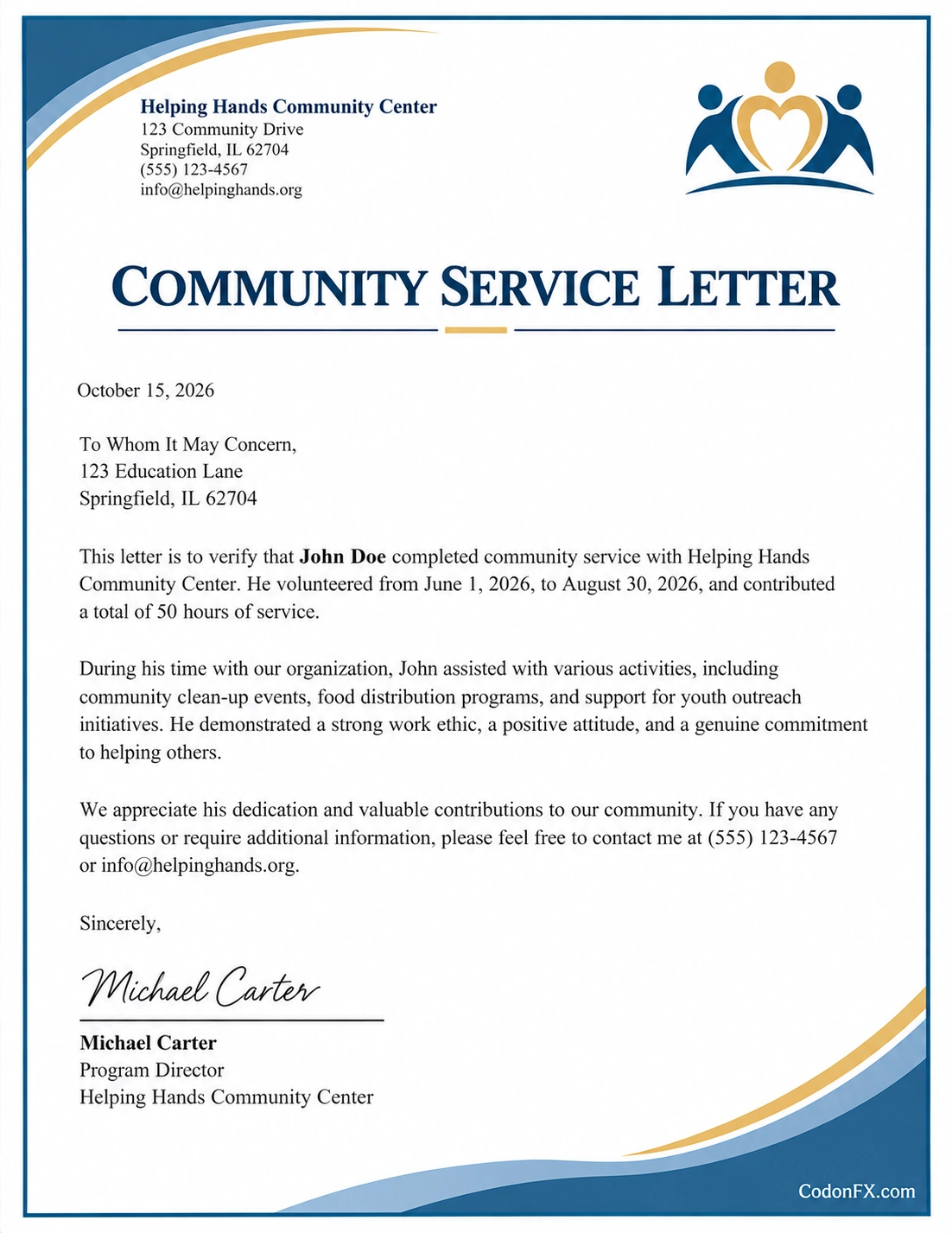
What Is a Community Service Letter?
A community service letter is a formal document that confirms an individual’s participation in volunteer or community service activities. It is usually prepared and signed by a supervisor, nonprofit organization, school, community group, or other authorized representative who can verify the person’s service.
The letter may confirm important details such as the dates of service, total volunteer hours, responsibilities, organization name, and type of activities completed. Depending on its purpose, it may also describe the individual’s work ethic, character, skills, and overall contribution.
A community service verification letter should be factual and specific. The organization providing the letter should only include information that can be accurately verified.
Why Is a Community Service Letter Important?
Volunteer work can demonstrate valuable personal and professional qualities, but organizations often need written documentation before they can recognize those activities. A formal letter provides a convenient way to verify the service.
Common reasons for requesting a community service letter include:
- School requirements: Students may need proof of volunteer hours for graduation, service-learning programs, or extracurricular requirements.
- Job applications: Volunteer experience can demonstrate transferable skills and a willingness to contribute.
- Scholarship applications: Some scholarships consider community involvement when evaluating applicants.
- Government requirements: Certain programs or mandates may require documented community service.
- Volunteer records: Individuals may want a permanent record of their service history.
- Recognition programs: Organizations may use service documentation when recognizing volunteers.
- Recommendations: A supervisor may use the letter to provide a brief recommendation based on the volunteer’s performance.
What Should a Community Service Letter Include?
The information required can vary depending on the recipient and purpose of the letter. Before preparing the document, check whether the school, employer, government agency, or other organization has specific requirements.
Organization Information
Begin with the name and contact information of the organization confirming the service. A letterhead can make the document look more official and help the recipient identify the source of the verification.
Date of the Letter
Include the date when the letter was issued. This creates a clear record of when the service was verified.
Volunteer Information
Clearly identify the person who completed the community service. Use the person’s full legal name when the document is being submitted for an official requirement.
Service Dates and Hours
State the period during which the individual performed the service and provide the total number of completed hours when applicable. Specific dates and hours make the verification more useful than a general statement about participation.
Description of Service
Briefly describe the activities performed. Examples may include food distribution, community cleanup, tutoring, event support, fundraising assistance, administrative work, or helping with nonprofit programs.
Skills and Personal Qualities
If the letter is also intended to serve as a recommendation, describe relevant qualities demonstrated during the service. Depending on the person’s actual performance, these may include reliability, communication, teamwork, leadership, organization, initiative, or responsibility.
Authorized Signature and Contact Information
The letter should be signed by an appropriate representative. Include the signer’s name, title, organization, and contact information so the recipient can verify the information if necessary.
How to Write a Community Service Letter
Writing a service verification letter becomes easier when the information is organized in a logical order. Keep the language professional, factual, and relevant to the purpose of the document.
1. Start With a Formal Introduction
Open by clearly stating why the letter is being provided. For example, explain that the document confirms the individual’s completion of community service with the organization.
2. Verify the Service
Provide the most important facts, including the volunteer’s name, service dates, total hours, and organization. This section should answer the basic question: what service was completed, and when?
3. Describe the Volunteer Work
Give a concise description of the responsibilities or activities performed. Focus on meaningful details rather than listing every minor task.
4. Mention Relevant Strengths
If appropriate, explain how the person performed during the service. Specific observations are more useful than vague praise. For example, you might mention that the volunteer consistently arrived on time, worked effectively with others, or took initiative when assisting with an event.
5. End With Verification Details
Close by providing the name and contact information of the person responsible for verifying the letter. Add a professional signature and title.
Community Service Letter Example Structure
A simple community service letter can follow this structure:
- Organization name and contact information
- Date
- Recipient information or “To Whom It May Concern”
- Statement confirming community service
- Volunteer service dates
- Total number of service hours
- Description of responsibilities
- Relevant skills or character qualities
- Closing statement
- Authorized signature and title
- Contact information for verification
This structure can be adapted for a school community service letter, volunteer verification letter, employment application, scholarship application, or other official purpose.
Community Service Letter for School Requirements
Students may need documentation of volunteer hours for graduation requirements, service-learning programs, clubs, or school-sponsored activities. In this situation, the letter should focus on accurate verification.
Make sure the document includes the student’s full name, organization, service dates, total hours, and a clear description of the activities completed. If the school provides a required form or specific information, follow those instructions instead of relying on a general format.
A supervisor or authorized organization representative should sign the letter whenever possible. This gives the school a reliable source for confirming the reported service.
Community Service Letter for a Job Application
Volunteer experience can provide evidence of skills that employers value. A community service letter for employment can therefore include more than just the number of hours completed.
When appropriate, mention skills demonstrated through actual responsibilities. For example, organizing a community event may demonstrate planning and communication skills, while assisting a food distribution program may demonstrate teamwork, reliability, and customer service.
Keep the description relevant to the position. A short, specific statement about demonstrated skills is generally more useful than excessive praise.
Community Service Letter as a Recommendation
A service verification letter and a recommendation letter are not always the same thing. A verification letter primarily confirms that service occurred, while a recommendation letter evaluates the person’s qualities and suitability for a particular opportunity.
However, a community service letter can include recommendation-style language when the writer has enough direct experience to support those statements. The writer should focus on qualities that were actually observed during the volunteer’s service.
Useful qualities may include:
- Dependability
- Leadership
- Teamwork
- Communication
- Initiative
- Organization
- Problem-solving
- Professionalism
- Commitment to the community
Tips for Making a Community Service Letter Professional
Keep the Letter Concise
Most verification letters do not need to be several pages long. Include the information the recipient needs and remove unnecessary details.
Use Specific Information
Whenever possible, provide exact dates, hours, responsibilities, and organizational details. Specific information makes the document easier to evaluate and verify.
Use Professional Language
Avoid overly casual wording, exaggerated claims, or emotional language. The purpose of the document is to communicate reliable information in a professional format.
Check Names and Numbers Carefully
Errors in names, service dates, or volunteer hours can cause problems when the letter is submitted for an official requirement. Review all factual information before signing the document.
Use Official Contact Information
When the letter is issued by an organization, use its appropriate contact information. This allows a recipient to verify the document if necessary.
Common Mistakes to Avoid
A professional community service letter should be accurate and easy to verify. Avoid common mistakes that could reduce its usefulness.
- Leaving out the total number of service hours when hours are required.
- Failing to include the dates of service.
- Using an unclear or generic description of the volunteer’s responsibilities.
- Providing exaggerated claims that cannot be supported.
- Forgetting the authorized person’s signature or title.
- Using incorrect contact information.
- Ignoring specific requirements from the organization receiving the letter.
- Submitting an unsigned document when a signature is required.
How to Use a Community Service Letter Template
A printable community service letter template can provide a useful starting point when you need to prepare formal documentation. Instead of creating the page structure from scratch, you can fill in the relevant information and customize the document for its intended purpose.
Before using a template, identify exactly what the recipient requires. Add the volunteer’s information, service dates, hours, activities, and verification details. If the letter is being used for a school, employer, scholarship, or government requirement, compare the completed document with that organization’s instructions.
Finally, have an authorized representative review the information before signing. A template provides the structure, but the organization providing the verification is responsible for confirming that the information is accurate.
Frequently Asked Questions About Community Service Letters
What is a community service letter used for?
A community service letter is used to verify that a person completed volunteer or community service activities. It may be submitted for school requirements, employment applications, scholarships, government requirements, volunteer records, or other situations requiring proof of service.
Who can write a community service letter?
A community service letter is generally written or signed by someone who is authorized to verify the individual’s service. This may be a volunteer coordinator, nonprofit director, supervisor, school representative, or another responsible official.
What should a volunteer verification letter include?
A volunteer verification letter should generally include the volunteer’s name, organization name, service dates, number of hours, description of activities, and authorized verification. Additional information may be included if the letter is also being used as a recommendation.
Can a community service letter be used as a letter of recommendation?
It can include recommendation-style information when the writer has directly observed the volunteer’s performance. However, a formal recommendation letter may be more appropriate when an institution specifically requests a recommendation rather than proof of service.
Should a community service letter include volunteer hours?
Yes, when the purpose of the document involves verifying completed service hours. The letter should state the total number of hours accurately and, when relevant, include the dates during which those hours were completed.
Does a community service letter need to be signed?
For many official uses, a signature from an authorized representative is important because it confirms who is providing the verification. Always check the requirements of the organization receiving the document.
Can I customize a community service letter template?
Yes. A template can be customized with the organization’s information, volunteer’s name, service dates, hours, activities, and other relevant details. The final version should accurately reflect the service that was completed.
Conclusion
A community service letter provides a clear and professional way to document volunteer work. It can verify service hours, describe responsibilities, and, when appropriate, highlight the skills and character demonstrated during the experience.
Whether the letter is needed for school, employment, a scholarship, a government requirement, or personal records, accuracy is the most important consideration. Include specific service information, use professional language, and have an authorized representative review and sign the document.
With a well-structured community service letter template, organizations and volunteers can create documentation that is easy to understand, practical to use, and appropriate for a variety of official situations.
Download: Community Service Letter Template
