A consulting invoice is a document that consultants send to clients to request payment for professional services provided. It outlines the work completed, applicable rates, hours or project fees, payment terms, and the total amount due. A clear invoice helps clients understand the charges and gives consultants a reliable record of their business transactions.
Whether you work as a business consultant, marketing consultant, IT consultant, management advisor, or independent professional, creating a professional invoice is an important part of running your business. A well-organized document can reduce billing confusion, support accurate bookkeeping, and make it easier to follow up on outstanding payments.
In this guide, you will learn what a consulting invoice should include, how to create one, which billing methods to consider, and how to avoid common invoicing mistakes. You will also find practical tips for creating a consulting invoice template that suits your services and client relationships.
What Is a Consulting Invoice?
A consulting invoice is a formal billing document used to request payment for consulting services. It records the services delivered, the agreed fees, and the payment deadline. Depending on the engagement, it may cover hourly consulting, a fixed-fee project, a monthly retainer, or other agreed billing arrangements.
For example, a business consultant may invoice a client for market research, strategy development, and a final presentation. An IT consultant may bill for system analysis, implementation support, and technical recommendations.
Unlike a general estimate or proposal, an invoice typically reflects charges that are due under the agreed engagement terms. It may be issued after work is completed, at project milestones, or according to a recurring billing schedule.
What Should a Consulting Invoice Include?
A professional consulting invoice should make it easy for a client to identify the bill, understand the charges, and complete payment. The exact requirements vary by jurisdiction and business arrangement, but most invoices include the following information.
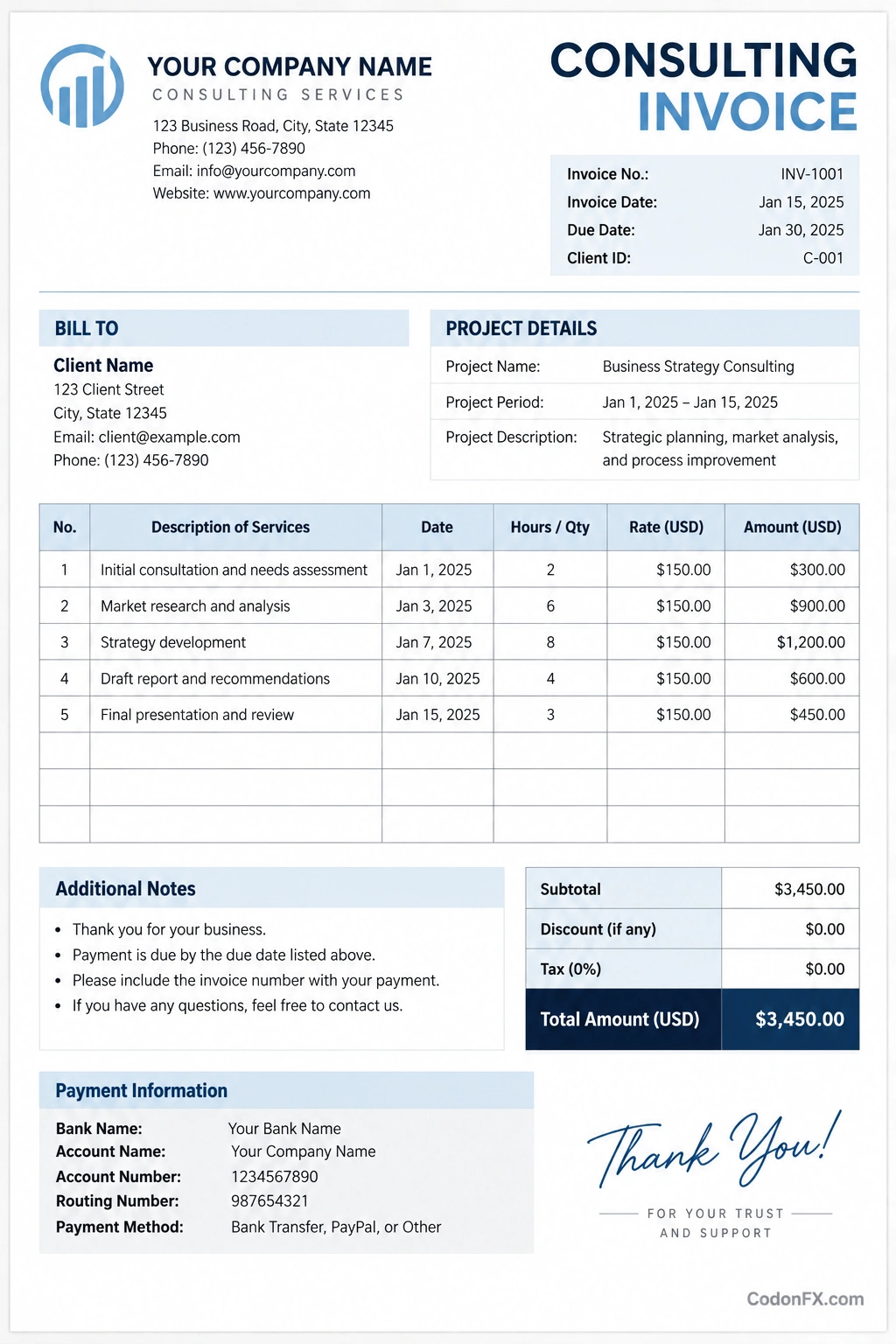
1. Consultant or Business Information
Start with the consultant’s name or business name and relevant contact information. Depending on your business structure and local requirements, you may include:
- Consultant or company name
- Business mailing address
- Email address and phone number
- Business website, if applicable
- Tax identification or registration details, when required
Consistent business information helps clients identify the service provider and contact the right person if they have questions about the invoice.
2. Client Information
Include the client’s name or company name and the appropriate billing address. For business clients, confirm the correct legal entity and billing contact before issuing the invoice.
Accurate client details can reduce processing delays, especially when invoices must pass through an accounts payable department.
3. Invoice Number and Dates
Assign a unique invoice number to each invoice. Include the issue date and payment due date so the client can identify the document and understand when payment is expected.
A consistent numbering system makes it easier to track invoices, match payments, and organize accounting records.
4. Description of Consulting Services
Describe the work being billed in clear, specific language. Instead of using a vague description such as “consulting services,” identify the work performed, such as market research, operational analysis, strategic planning, or project management advice.
For hourly work, include the relevant service dates, hours billed, and hourly rate. For fixed-fee projects, describe the milestone or deliverable covered by the charge.
5. Rates, Subtotal, Taxes, and Total
Show the amount charged for each service. The line-item amount should reflect the applicable quantity or hours multiplied by the agreed rate, with any relevant adjustment applied correctly.
Then calculate the subtotal and include applicable taxes, discounts, reimbursable expenses, or other agreed charges. Clearly display the final amount due and the currency used.
Tax obligations vary by location and type of service. Confirm whether tax registration, tax rates, or specific invoice disclosures apply to your consulting business.
6. Payment Terms and Instructions
State the accepted payment methods and any relevant payment terms. Common terms include payment due upon receipt, within 15 days, or within 30 days, depending on the agreement with the client.
If you accept bank transfers or electronic payment services, provide the necessary instructions securely. Avoid including unnecessary sensitive financial information in documents distributed beyond the intended recipient.
Common Consulting Invoice Billing Methods
Consultants use different billing methods depending on the nature of their work, the project scope, and the agreement with the client. Choosing the right approach can make fees easier to explain and payments easier to manage.
Hourly Consulting Invoice
An hourly invoice calculates fees based on the time spent providing services. It generally lists the service date, task description, hours worked, hourly rate, and amount due for each line item.
For example, a consultant who works 8 hours at an agreed rate of $150 per hour would bill $1,200 before applicable taxes, expenses, or discounts.
Fixed-Fee Consulting Invoice
A fixed-fee invoice charges an agreed amount for a defined project or deliverable. The invoice may cover the entire project or a specific milestone, depending on the contract.
This method is useful when the scope and expected deliverables are clearly defined. Describe the project or milestone so the client can connect the charge to the agreed work.
Monthly Retainer Invoice
A retainer invoice covers services provided under a recurring agreement. It may include a monthly advisory fee, an agreed number of consulting hours, or ongoing support services.
Specify the billing period, services covered, and any rules for additional work beyond the retainer. Clear terms help prevent misunderstandings about what is included in the recurring fee.
Project Milestone Invoice
Some consulting engagements use milestone billing, where payments are requested when specific stages are completed. For example, a project may have separate invoices for discovery, strategy development, implementation support, and final delivery.
Each invoice should identify the relevant milestone and the amount due under the project agreement.
Consulting Invoice Example
The following example illustrates an hourly consulting invoice using sample amounts in US dollars. These figures are for demonstration purposes only.
- Initial consultation and needs assessment: 2 hours × $150 = $300
- Market research and analysis: 6 hours × $150 = $900
- Strategy development: 8 hours × $150 = $1,200
- Draft report and recommendations: 4 hours × $150 = $600
- Final presentation and review: 3 hours × $150 = $450
Total billable hours: 23 hours.
Subtotal: $3,450.
If no additional taxes, discounts, or fees apply, the total due in this example is $3,450. In an actual consulting invoice, use the rates and charges specified in the client agreement and calculate any applicable taxes or adjustments accurately.
How to Create a Consulting Invoice
You can prepare a consulting invoice using a printable template, spreadsheet, word processor, accounting application, or invoicing software. The best option depends on your transaction volume, accounting workflow, and client requirements.
Step 1: Choose an Invoice Template
Select a consulting invoice template with clearly labeled sections for business details, client information, service descriptions, amounts, and payment instructions.
A consistent layout saves time when preparing future invoices. If you work with different types of clients, keep a master template and adjust the fields when necessary.
Step 2: Enter the Client and Project Details
Add the client’s billing information, invoice number, issue date, due date, and project reference. Confirm these details before sending the invoice, particularly when working with corporate clients.
Step 3: Itemize the Consulting Services
List the services delivered and explain how each charge was calculated. Include hours and rates for hourly work or the relevant deliverable and agreed fee for fixed-price work.
Check that the listed services match the contract, approved scope, or applicable project milestone.
Step 4: Calculate the Amount Due
Add the line-item amounts and calculate the subtotal. Apply any agreed discounts, reimbursable expenses, fees, and applicable taxes according to the relevant terms.
Review the calculations carefully. A small arithmetic or data-entry error can delay payment and create unnecessary questions from the client.
Step 5: Add Payment Terms
State the payment deadline and provide clear payment instructions. If the contract specifies a payment term, use that term consistently rather than introducing an unexpected deadline.
Include any agreed late-payment provisions only when they are applicable and permitted under the relevant agreement and law.
Step 6: Review and Send the Invoice
Check spelling, client details, service descriptions, amounts, currency, and payment information. Save a copy for your records and send the invoice through the agreed communication channel.
Record the issue date and payment status so you can follow up appropriately if the invoice remains unpaid.
Tips for Getting Consulting Invoices Paid on Time
Clear billing practices can reduce delays and help maintain positive client relationships. Consider these practical steps:
- Agree on fees in advance: Confirm rates, project scope, billing frequency, and payment terms before work begins.
- Invoice promptly: Send invoices at the agreed milestone or billing date rather than waiting unnecessarily.
- Write clear descriptions: Explain the services or deliverables covered by each charge.
- Use consistent numbering: Make it easier to track documents and match payments.
- Confirm the billing contact: Ask the client where invoices should be submitted and whether a purchase order is required.
- Keep supporting records: Maintain time records, approved expenses, project milestones, and relevant correspondence.
- Follow up professionally: Send a polite reminder when a payment becomes overdue, referring to the invoice number and due date.
Common Consulting Invoice Mistakes to Avoid
Even a well-designed invoice can cause payment delays if important details are missing or incorrect. Avoid these common problems:
- Missing invoice numbers: Use a unique reference for each invoice.
- Vague service descriptions: Identify the actual work or deliverable being billed.
- Incorrect calculations: Verify hours, rates, line totals, taxes, and the final amount.
- Unclear payment terms: State the due date and accepted payment methods.
- Unexpected charges: Bill expenses and additional services according to the client agreement.
- Incorrect client details: Confirm the billing entity and submission requirements.
- Poor recordkeeping: Keep copies of invoices and payment records for accounting and reference purposes.
Frequently Asked Questions About Consulting Invoices
What is a consulting invoice used for?
A consulting invoice requests payment for professional services delivered to a client. It documents the work performed, applicable fees, payment terms, and amount due.
When should a consultant send an invoice?
A consultant should issue an invoice according to the agreed billing arrangement. This may be after completing a project, reaching a milestone, working a specified number of hours, or beginning a new retainer period.
Can I create a consulting invoice in Excel?
Yes. Excel and other spreadsheet applications can be used to create an invoice with service descriptions, quantities, rates, and formulas for calculating totals. Review formulas and tax settings carefully before sending the invoice.
What payment terms should I use on a consulting invoice?
Use the payment terms agreed with your client. Common examples include payment upon receipt or payment within 15 or 30 days. Make sure the deadline is clear and consistent with your contract.
Should a consulting invoice include taxes?
Include applicable taxes and required disclosures based on your jurisdiction, business status, and the type of service provided. Tax obligations vary, so consult the relevant tax authority or a qualified professional if you are unsure.
What is the difference between a consulting invoice and a consulting proposal?
A consulting proposal outlines the suggested scope of work, approach, timeline, and fees before an engagement begins. A consulting invoice requests payment for services or milestones according to the agreed arrangement.
Can I invoice a client for expenses?
You may be able to bill approved expenses when permitted by your agreement. Identify reimbursable costs clearly, retain supporting documentation, and follow the client’s expense policies.
What should I do if a consulting invoice is overdue?
Review the payment terms, confirm that the client received the invoice, and send a professional reminder referencing the invoice number, amount, and due date. If the issue continues, follow the collection or dispute-resolution procedures in your agreement and applicable law.
Conclusion
A consulting invoice is an essential document for requesting payment, explaining professional service charges, and maintaining organized business records. A well-prepared invoice identifies the consultant and client, describes the services delivered, shows the agreed fees, and provides clear payment instructions.
Whether you charge hourly rates, fixed project fees, retainers, or milestone payments, a consistent invoice format can simplify billing and reduce misunderstandings. Review every invoice carefully and make sure it follows the terms of your client agreement and applicable requirements.
Use a consulting invoice template to create a professional billing process that helps you track payments, maintain accurate records, and focus more time on delivering value to your clients.
Download: Consulting Invoice Template
