A well-prepared construction project proposal helps turn a construction idea into a clear, actionable plan. It explains what the project will achieve, what work is included, how long the work is expected to take, and how much it may cost. It also gives clients and stakeholders the information they need to evaluate a contractor before approving the project.
Whether you are a general contractor, construction company, project manager, or independent builder, a professional proposal can help you communicate your capabilities and establish realistic expectations. This guide explains what to include in a construction proposal, how to organize each section, and how to present your plan in a way that builds client confidence.
What Is a Construction Project Proposal?
A construction project proposal is a formal document that describes a proposed building, renovation, remodeling, or infrastructure project. It presents the project’s objectives, scope of work, estimated costs, schedule, resources, and approach to completing the work.
The document is usually prepared by a contractor or construction company and submitted to a property owner, developer, business, or other stakeholder. Its purpose is to demonstrate that the proposed work is practical, clearly defined, and aligned with the client’s needs.
A construction proposal can be used for projects such as:
- Residential home construction and additions
- Commercial buildings and office developments
- Kitchen, bathroom, and whole-home renovations
- Retail, hospitality, and industrial construction
- Roofing, structural repairs, and exterior improvements
- Site preparation, landscaping, and infrastructure work
Although a proposal may become part of the contract approval process, it is not automatically a complete construction contract. The parties should clarify which documents are binding and execute the appropriate agreement before work begins.
Why Is a Construction Project Proposal Important?
A detailed proposal helps both the client and the contractor understand the work before making a commitment. It reduces uncertainty, supports better planning, and provides a written basis for discussing the project’s requirements.
It Defines Project Expectations
A proposal describes the intended result, the services included, and the responsibilities of each party. This helps prevent misunderstandings about what the contractor will deliver and what the client must provide.
It Explains Costs and Scheduling
Estimated costs and a proposed timeline allow stakeholders to evaluate whether the project fits their budget and business needs. Itemized estimates also make it easier to identify major cost categories and discuss potential adjustments.
It Demonstrates Professionalism
A well-organized document shows that the contractor has considered the project’s requirements, risks, resources, and delivery process. It can strengthen credibility and help clients compare competing proposals fairly.
What to Include in a Construction Project Proposal
The exact contents depend on the project’s size and complexity. However, most professional construction proposals benefit from the following sections.
1. Project Title and Company Information
Start with a clear title, such as “Construction Project Proposal.” Include the construction company’s name, logo, contact information, proposal date, and reference number if applicable. Identify the client or organization receiving the proposal.
These details make the document easy to identify, share, and reference during discussions.
2. Executive Summary
The executive summary provides a brief overview of the proposed project. Explain what the client wants to accomplish, the solution you recommend, and the main benefits of your approach.
Keep this section concise and focused on the client’s priorities. Detailed technical specifications, cost breakdowns, and schedule information can appear in later sections.
3. Project Objectives and Overview
Describe the project’s purpose and the results it is intended to achieve. Include relevant background information, the project location, building type, approximate size, and any important requirements provided by the client.
Whenever possible, make objectives specific and measurable. For example, a renovation project might aim to improve accessibility, increase usable space, or upgrade building systems to meet applicable requirements.
4. Scope of Work
The scope of work identifies the tasks, services, and deliverables included in the proposal. It is one of the most important sections because it establishes the boundaries of the contractor’s responsibilities.
Depending on the project, the scope may include:
- Site inspection, preparation, and excavation
- Foundation and structural construction
- Framing, roofing, and exterior work
- Electrical, plumbing, and mechanical installations
- Interior finishes, painting, and flooring
- Permits, inspections, cleanup, and handover, where included
Clearly identify exclusions, assumptions, owner-supplied materials, and work that requires separate pricing. If the final design or specifications are not yet complete, state which details remain subject to confirmation.
5. Project Schedule and Milestones
Provide an estimated start date, anticipated completion date, and major project milestones. A simple schedule may include site preparation, foundation work, structural construction, mechanical installations, finishing, inspections, and final handover.
Explain important dependencies that may affect the timeline, such as design approval, material availability, permit processing, weather, or access to the site. Avoid promising a fixed completion date when key conditions remain uncertain.
6. Cost Estimate and Payment Terms
Present the estimated project cost in a clear, organized format. An itemized estimate helps clients understand how the budget is distributed across labor, materials, equipment, subcontractors, and other project expenses.
Depending on the project, cost categories may include:
- Labor and subcontractor services
- Building materials and equipment
- Site preparation and transportation
- Permits, testing, and inspections
- Project management and overhead
- Applicable taxes and contingency allowances
State the currency, the estimate’s validity period, and whether taxes or other charges are included. Explain the proposed payment schedule, deposit requirements, progress payments, and final payment conditions where applicable.
Make it clear whether the figures are preliminary estimates, allowances, unit rates, or fixed prices. The pricing method should match the available project information and the terms the parties intend to agree upon.
7. Materials, Equipment, and Construction Methods
Describe the principal materials, equipment, construction methods, and technical standards proposed for the project. Mention relevant specifications, quality expectations, and sustainability considerations when they matter to the client.
If a particular material or product has not been selected, identify the selection process and any budget allowance. Avoid implying that an unconfirmed product or specification has already been approved.
8. Contractor Qualifications and Project Team
Introduce the company and the people responsible for delivering the project. Highlight relevant experience, licenses, insurance, certifications, and similar completed projects where applicable and accurate.
Briefly explain the responsibilities of the project manager, site supervisor, subcontractors, and other key team members. Relevant experience is more persuasive than broad claims that are not supported by evidence.
9. Safety, Quality Control, and Risk Management
Explain how the project team will manage site safety, inspect completed work, document progress, and address construction issues. Identify significant project risks and describe practical measures for reducing their impact.
Depending on the project, this may include site access controls, material inspections, quality checkpoints, communication procedures, and compliance with applicable building codes and safety regulations.
10. Terms, Conditions, and Approval
Summarize important commercial assumptions, proposal validity, change-order procedures, client responsibilities, and conditions that must be satisfied before work begins.
Include an acceptance section if appropriate, with space for authorized representatives to provide their names, signatures, and dates. State whether acceptance creates a binding commitment or whether a separate construction contract is required.
Sample Construction Project Proposal Structure
The following example shows how a proposal can be organized for a hypothetical commercial building project. The figures and project details are illustrative only and should not be treated as a real quotation.
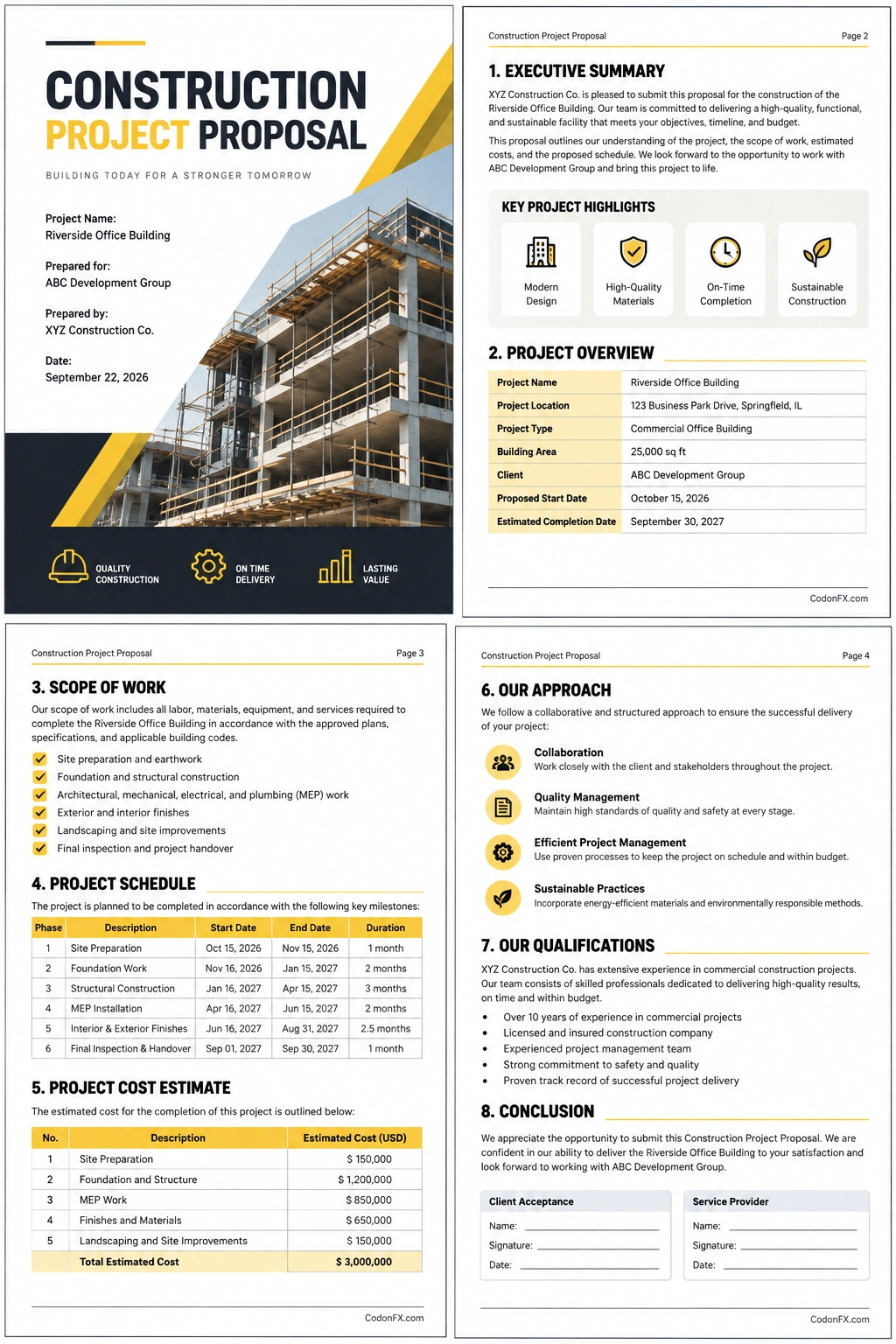
A practical proposal for this example could contain the following sections:
- Project: Riverside Office Building
- Client: ABC Development Group
- Contractor: XYZ Construction Co.
- Scope: Site preparation, structural work, building systems, finishes, and handover
- Schedule: Proposed milestones with estimated start and completion dates
- Budget: Itemized estimated construction costs and stated assumptions
- Approval: Client review and the required contract documentation
In a real proposal, all names, specifications, dates, pricing, and responsibilities should reflect the actual project. Include drawings, technical schedules, or supporting documents when they are needed to explain the proposed work accurately.
How to Write a Construction Project Proposal Step by Step
Step 1: Understand the Client’s Requirements
Gather the project brief, drawings, specifications, site information, budget expectations, and desired completion date. Ask questions about any unclear requirements before preparing the estimate.
Step 2: Inspect the Site and Review the Information
Where appropriate, assess site conditions, access, existing structures, utilities, and other factors that may affect cost or scheduling. Record any assumptions that cannot be verified during the initial review.
Step 3: Define the Scope and Deliverables
List the work to be completed, the expected deliverables, and the services that are excluded. Confirm which items depend on design approvals, specialist input, or decisions from the client.
Step 4: Prepare the Estimate and Schedule
Calculate expected labor, materials, equipment, subcontracting, overhead, and other relevant costs. Develop a realistic timeline based on project phases, resource availability, and known constraints. Document the basis of the estimate so the client can understand its limitations.
Step 5: Present Your Proposed Approach
Explain how the team intends to deliver the project, maintain quality, communicate progress, and manage risks. Connect your proposed methods to the client’s priorities rather than listing services without explanation.
Step 6: Review and Submit the Proposal
Check all names, calculations, dates, quantities, exclusions, and attachments. Use consistent formatting, clear headings, and straightforward language. Submit the proposal in the requested format and explain how the client can ask questions or request revisions.
Tips for Creating a More Persuasive Construction Proposal
- Focus on the client’s goals. Explain how the proposed work addresses the client’s needs and project priorities.
- Use transparent pricing. Show the basis of major cost items and identify allowances or exclusions.
- Keep the scope specific. Replace vague descriptions with clear tasks, deliverables, and boundaries.
- Use a realistic schedule. Account for approvals, procurement, inspections, and potential delays.
- Support claims with evidence. Include relevant experience, references, qualifications, or examples when available.
- Make the document easy to scan. Use consistent headings, tables, and concise paragraphs.
- Explain the next steps. Tell the client how to review, request changes, approve the proposal, and proceed to contract execution.
Common Mistakes to Avoid
Even a visually appealing proposal can create problems if important details are missing. Watch for these common mistakes:
- Using a vague scope that leaves major responsibilities undefined
- Providing a total price without explaining significant assumptions
- Leaving out exclusions, allowances, or potential additional costs
- Promising deadlines without accounting for dependencies
- Overlooking permits, inspections, safety, or applicable regulations
- Including unsupported claims about experience or qualifications
- Failing to explain how changes to the original scope will be handled
- Assuming the proposal alone covers every legal and contractual requirement
Reviewing these details before submission can reduce avoidable disputes and make the proposal more useful to both parties.
Construction Project Proposal vs. Construction Contract
A construction project proposal and a construction contract serve related but different purposes. The proposal presents the contractor’s recommended plan, pricing, schedule, and approach for the client’s consideration. The contract establishes the agreed obligations, rights, payment conditions, and other binding terms of the engagement.
In some situations, an accepted proposal may form part of a binding agreement. Its legal effect depends on the wording, the parties’ intentions, applicable law, and the surrounding circumstances. For this reason, do not assume that a proposal automatically replaces a properly prepared construction contract.
Before work begins, make sure the required agreement addresses payment, scope changes, delays, insurance, warranties, dispute resolution, termination, and other terms relevant to the project.
Frequently Asked Questions
What is included in a construction project proposal?
A construction project proposal typically includes an executive summary, project objectives, scope of work, estimated costs, schedule, proposed materials and methods, contractor qualifications, risk considerations, terms, and approval instructions. More complex projects may also require drawings, specifications, and supporting schedules.
How long should a construction proposal be?
The length depends on the project’s complexity. A small renovation may need only a few pages, while a commercial building or large construction project may require a detailed proposal with technical attachments. Include enough information to explain the work clearly without adding irrelevant material.
Is a construction project proposal legally binding?
It can be binding in some circumstances, but not every proposal is automatically a contract. The result depends on the document’s wording, acceptance, applicable law, and other relevant factors. Clearly state the intended status of the proposal and obtain appropriate legal advice when needed.
What is the difference between a construction proposal and a bid?
A construction bid usually emphasizes the price offered to complete specified work. A construction proposal often provides a broader explanation of the contractor’s approach, scope, schedule, qualifications, and pricing. The terms may overlap, and their precise meaning depends on the procurement process and project requirements.
How do you estimate construction project costs?
Start with the defined scope, quantities, labor rates, material prices, equipment, subcontractor quotes, and other project expenses. Account for overhead, applicable taxes, and appropriate contingencies where relevant. Clearly identify assumptions and verify estimates against current prices and site conditions before presenting a final quotation.
Can I use a construction proposal template for different projects?
Yes. A reusable template can save time and help maintain consistent formatting. However, customize the scope, pricing, schedule, materials, risks, exclusions, and contract terms for every project. A template should guide preparation rather than replace project-specific review.
When should a construction proposal be submitted?
Submit the proposal after gathering enough information to define the proposed work and prepare a reasonable estimate. For formal tenders, follow the client’s submission instructions and deadline. If key information is missing, identify assumptions or request clarification before committing to a price or schedule.
Conclusion
A professional construction project proposal gives clients a clear view of the project’s objectives, scope, estimated costs, timeline, and delivery approach. It also helps contractors explain their qualifications, identify assumptions, and establish expectations before entering into a formal agreement.
By defining the work carefully, presenting transparent estimates, using a realistic schedule, and addressing risks and exclusions, you can create a proposal that is both informative and persuasive. Start with a structured construction proposal template, customize every section to the project, and ensure the final agreement reflects the terms accepted by all parties.
Download: Construction Project Proposal Template
