A construction agreement is an important document that outlines the expectations, responsibilities, and terms of a building or renovation project. Whether you are hiring a contractor to remodel a kitchen, build an addition, or construct a new property, a written agreement helps clarify what work will be performed, how much it will cost, and when the project should be completed.
For contractors, a construction agreement provides a structured way to communicate the scope of work, materials, labor, payment schedule, and project requirements. For property owners, it helps establish expectations and provides a written reference if questions or disagreements arise during construction.
A construction agreement template makes it easier to organize these essential details in one document. This guide explains what a construction agreement should include, how to prepare one, and what to review before signing. You can use the printable template as a starting point and adapt it to the specific needs of your project.
What Is a Construction Agreement?
A construction agreement is a written contract between parties involved in a construction project, commonly a property owner and a contractor. It describes the work to be completed and establishes the terms under which the project will proceed.
A typical construction agreement identifies the parties, defines the scope of work, states the contract price, establishes a timeline, and explains payment terms. It may also address materials, permits, insurance, warranties, change orders, delays, and dispute resolution.
When properly prepared and executed, a construction agreement can help create legally enforceable obligations. Its enforceability depends on the wording, circumstances, and applicable law. A clear agreement is valuable because both parties can refer to the same written terms throughout the project.
Construction Agreement Template: Printable Form
This construction agreement template provides a convenient starting point for documenting a construction or renovation project. It includes sections for owner and contractor information, project details, scope of work, completion dates, contract pricing, materials, changes, warranty terms, and signatures.
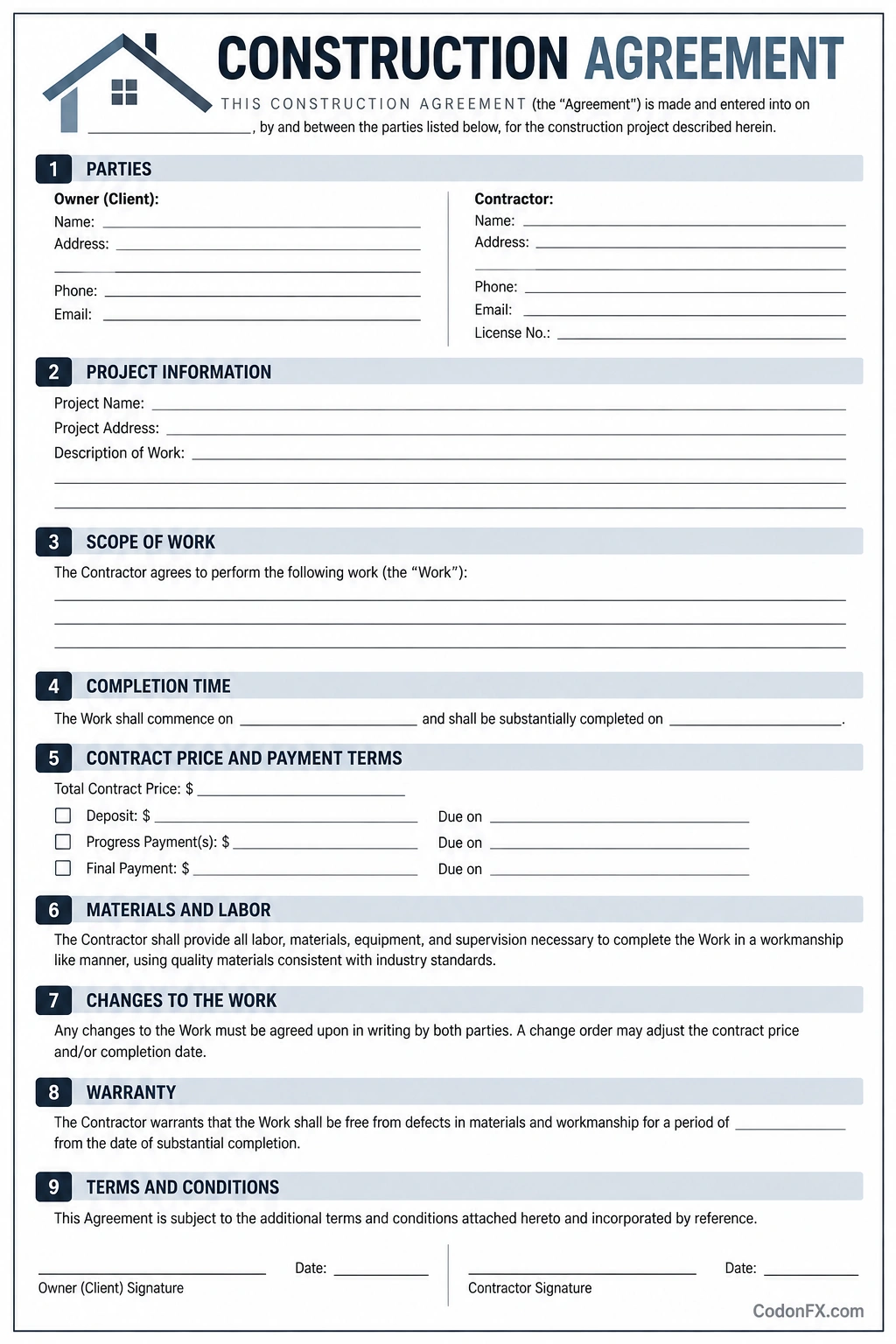
Print the template on standard US Letter paper and review every section before completing it. The form is a general starting point, so additional clauses or documents may be necessary for larger, specialized, or legally regulated projects.
What Should a Construction Agreement Include?
A useful construction contract should clearly explain the work, the price, the schedule, and each party’s responsibilities. The following sections help reduce ambiguity and make project management easier.
1. Owner and Contractor Information
Include the full legal names and relevant contact details of the property owner and contractor. Depending on the project and local requirements, you may also need the contractor’s business name, license information, mailing address, and other identifying details.
Confirm that the person signing the agreement has the authority to enter into the contract on behalf of the relevant party.
2. Project Description and Scope of Work
Describe the construction project and list the work the contractor is expected to complete. For example, a renovation agreement might identify demolition, framing, electrical work, plumbing, flooring, painting, and finishing tasks.
Include relevant drawings, specifications, material schedules, or other documents as attachments when necessary. Explain what is excluded from the contract so both parties understand the boundaries of the work.
3. Project Schedule and Completion Date
State the anticipated start date, important milestones, and expected completion date. If the project will proceed in phases, identify the major stages and any deadlines associated with them.
Construction schedules can be affected by weather, material availability, inspections, design changes, and other circumstances. The agreement should explain how schedule changes will be communicated and handled.
4. Contract Price and Payment Terms
Specify the contract price and explain how payments will be calculated and collected. The payment arrangement may involve a deposit, progress payments, milestone payments, or a final payment after completion.
Describe the conditions that trigger each payment, the applicable due dates, and any permitted adjustments. Payment schedules and deposit limits may be regulated by local law, so check the requirements that apply to the project.
5. Materials, Labor, and Equipment
Identify which materials and equipment the contractor will provide and which items the owner must supply. Where relevant, specify product types, quality standards, finishes, quantities, and approved alternatives.
Clarify who is responsible for labor, subcontractors, equipment rental, delivery, storage, site cleanup, and disposal of construction waste.
6. Permits, Inspections, and Compliance
Explain who is responsible for obtaining required permits, arranging inspections, and ensuring that the work complies with applicable building codes and regulations.
Responsibilities vary by project and jurisdiction. Confirm the applicable requirements before work begins rather than assuming that the contractor or owner automatically handles every obligation.
7. Change Orders and Additional Work
Construction projects sometimes require changes to the original plans. A change order documents an agreed modification to the scope, price, materials, or completion schedule.
Require changes to be documented in writing and approved by the appropriate parties before the additional work proceeds, except where emergency circumstances or applicable law require a different approach.
8. Warranty, Insurance, and Dispute Resolution
State any applicable workmanship or material warranties, including their duration and limitations. The agreement may also address insurance requirements, responsibility for damage, termination, and procedures for resolving disputes.
Because these provisions can have significant legal consequences, tailor them to the project and applicable law. Consider professional legal review before signing a substantial construction contract.
How to Use a Construction Agreement Template
Using a construction agreement template can simplify preparation, but the document must accurately reflect the actual project. Follow these steps before signing.
Step 1: Gather Project Information
Collect the project address, owner and contractor details, plans, specifications, estimated costs, and proposed schedule. Confirm the required permits and any applicable licensing or insurance requirements.
Step 2: Define the Work Clearly
Write a detailed scope of work and identify the materials, finishes, and tasks included in the price. List exclusions and explain how unforeseen conditions or owner-requested changes will be handled.
Step 3: Document the Price and Schedule
Record the agreed contract price, payment milestones, anticipated start date, and completion date. Explain the process for approving additional costs or extending the schedule.
Step 4: Review the Terms Together
Both parties should review the agreement carefully. Resolve unclear language, verify the figures and dates, and make sure any referenced plans or attachments are included.
Step 5: Sign and Keep Copies
Ensure that the required parties sign the final version before work begins. Each party should retain a complete copy of the signed agreement and all attachments, change orders, and relevant communications.
Common Construction Agreement Mistakes to Avoid
A poorly defined contract can lead to delays, unexpected costs, and disputes. Avoid these common mistakes when preparing a construction agreement.
- Vague scope of work: Specify the work, materials, finishes, and exclusions instead of relying on general descriptions.
- Unclear payment terms: State the amount, payment milestones, due dates, and conditions for payment.
- Unrealistic deadlines: Use a practical schedule and explain how delays will be addressed.
- Missing change-order procedures: Establish a written process for approving changes to price or scope.
- Unclear responsibilities: Identify who handles permits, inspections, materials, cleanup, and subcontractors.
- Missing attachments: Include relevant drawings, specifications, and schedules referenced in the agreement.
- Ignoring local requirements: Check licensing, consumer protection, insurance, payment, and contract rules that apply to the project.
- Signing without review: Read every provision and seek qualified legal advice when the terms are unclear or the project is substantial.
Frequently Asked Questions About Construction Agreements
What is a construction agreement?
A construction agreement is a contract that defines the work, price, schedule, payment terms, and responsibilities of the parties involved in a construction project. It helps establish clear expectations before work begins.
Is a construction agreement legally binding?
A properly formed construction agreement can create legally enforceable obligations, depending on the contract terms, circumstances, and applicable law. Some projects are subject to additional legal requirements, so professional advice may be appropriate.
Can I use a construction agreement template for a home renovation?
Yes. A general construction agreement template can be adapted for home renovations, repairs, additions, and other residential projects. Customize the scope, payment terms, schedule, warranties, and other provisions to fit the work and local requirements.
What is the difference between a construction agreement and a construction estimate?
A construction estimate provides an expected cost for proposed work. A construction agreement establishes the terms accepted by the parties, which may include the agreed price, scope, schedule, payment obligations, and other contractual provisions.
Should a construction agreement include a payment schedule?
Yes, a clearly documented payment schedule is generally helpful. It should identify payment amounts or calculation methods, due dates or milestones, and any conditions that must be satisfied. Check applicable rules governing deposits and progress payments.
What happens if the construction project changes after signing?
The parties should follow the agreement’s change-order procedure. Document the proposed change, its effect on price and timing, and the required approvals before proceeding whenever possible.
Does a construction agreement need to be notarized?
Not every construction agreement requires notarization. Requirements depend on the jurisdiction, type of transaction, and any applicable legal formalities. Verify local requirements before signing.
Should I have a lawyer review a construction agreement?
Legal review can be especially valuable for large projects, complex payment arrangements, substantial risks, unusual warranties, or unclear liability provisions. A qualified professional can help identify issues that a general template may not address.
Conclusion
A construction agreement helps property owners and contractors establish clear expectations for a building or renovation project. By documenting the scope of work, price, schedule, payment terms, materials, responsibilities, and procedures for changes, both parties have a written reference throughout the project.
A printable construction agreement template makes it easier to organize these details, but it should always be customized to reflect the actual work and applicable legal requirements. Review the document carefully, include relevant attachments, and keep signed copies for your records.
For complex or high-value projects, consider having the agreement reviewed by a qualified legal professional before signing. A clear, well-prepared contract is an important step toward managing construction work responsibly and reducing avoidable misunderstandings.
Download: Construction Agreement Template
