Planning meaningful activities for young children takes time, creativity, and organization. A preschool lesson planner helps teachers organize daily activities, weekly learning goals, and classroom materials in one convenient place. With a clear plan, educators can create engaging learning experiences while making sure children have opportunities to explore, play, and develop essential skills.
Whether you teach in a preschool, daycare, early learning center, or home-based classroom, a lesson planning worksheet can make your daily routine easier. It provides a simple way to prepare activities for children ages 3–5 without making the learning process feel overly structured.
In this guide, you will learn how to use a preschool lesson planner, what information to include, and how to create an effective weekly schedule. You can also use the printable planning templates to organize your classroom activities.
What Is a Preschool Lesson Planner?
A preschool lesson planner is a worksheet or planning document that helps teachers organize educational activities for young children. It usually includes learning objectives, activity ideas, teaching materials, and a daily or weekly schedule.
Unlike lesson plans designed for older students, preschool lesson plans should allow plenty of room for play-based learning, exploration, movement, creativity, and social interaction.
Teachers can use a preschool planning template to prepare activities in several developmental areas, including:
- Language and literacy: Storytelling, picture books, letter recognition, and vocabulary activities.
- Early mathematics: Counting, sorting, matching, patterns, and number recognition.
- Social-emotional development: Sharing, cooperation, identifying emotions, and building friendships.
- Physical development: Outdoor games, dancing, balancing, and fine motor activities.
- Creative expression: Drawing, painting, music, crafts, and imaginative play.
- Science and discovery: Nature exploration, simple experiments, observation, and sensory play.
Having these areas in a weekly plan helps teachers provide balanced learning opportunities throughout the week.
Free Preschool Lesson Planner Template
A printable preschool lesson planner makes it easier to organize classroom activities without creating a new document every week. You can use the templates below to plan learning objectives, daily lessons, play-based activities, and the materials needed for each session.
Choose the planning layout that best matches your teaching routine and classroom needs.
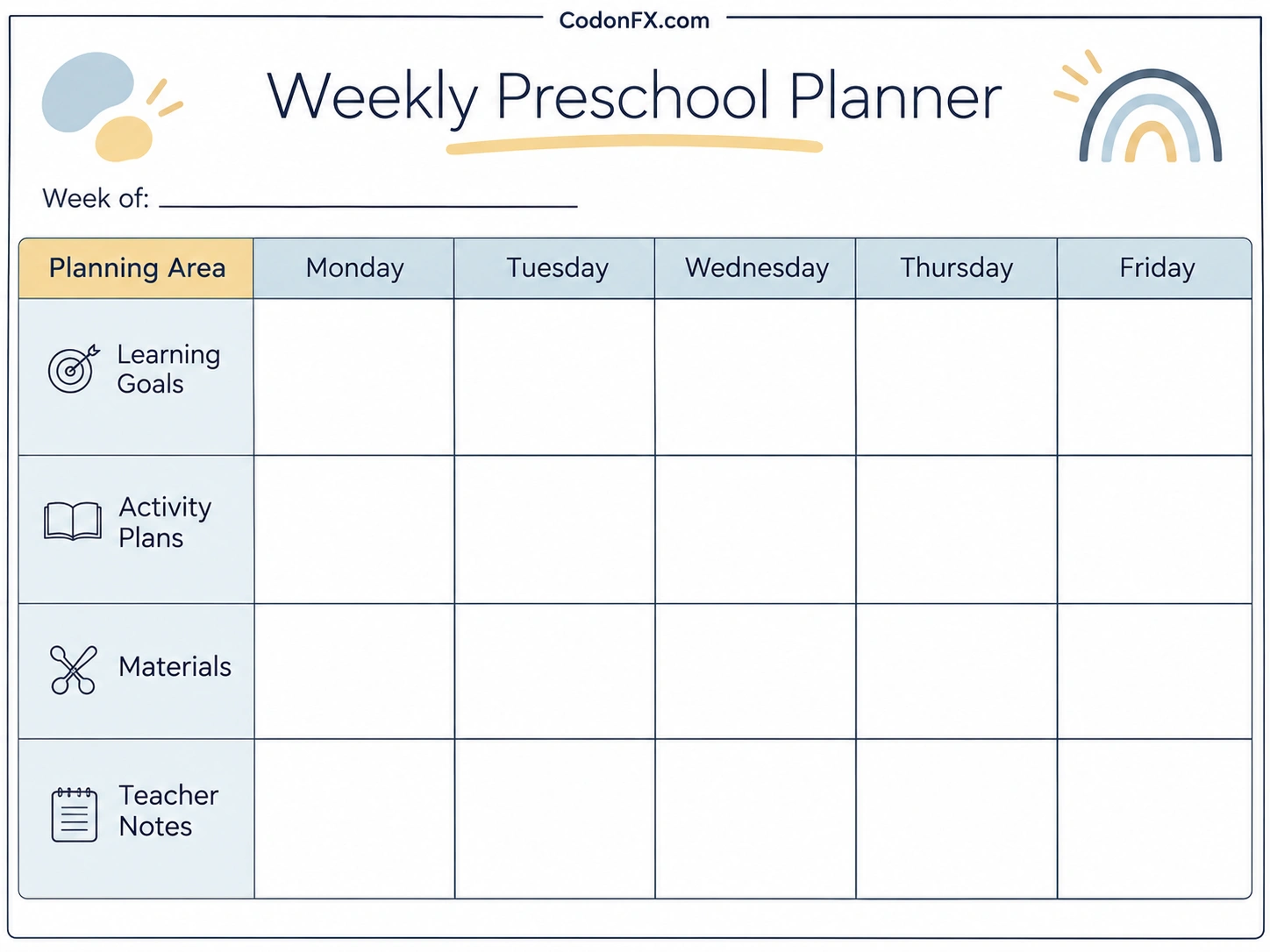
The weekly layout is useful for teachers who want to see their entire teaching schedule at a glance. Each weekday has space for learning goals, planned activities, materials, and additional notes.
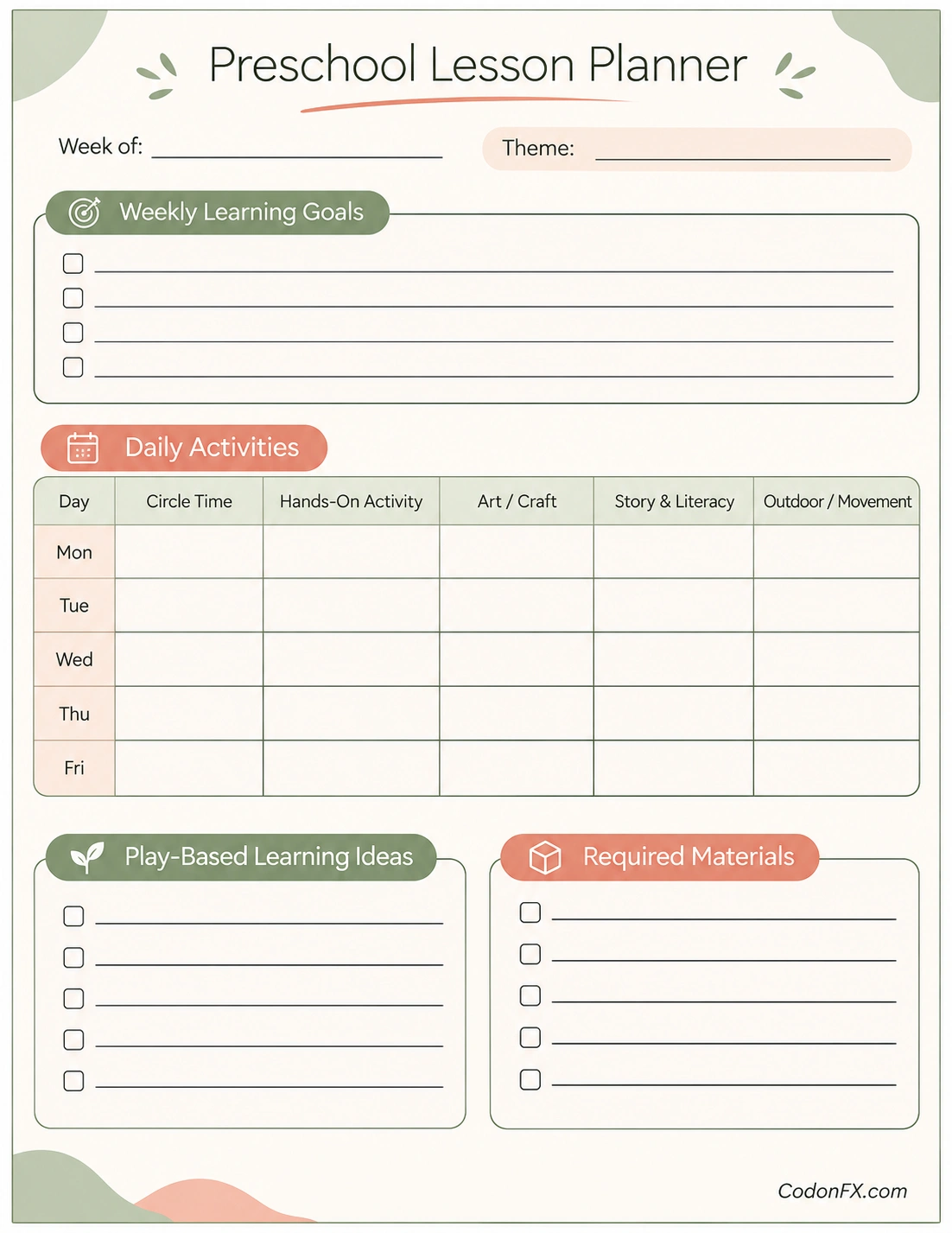
This layout provides a more detailed overview of the week. Teachers can write down their weekly theme, identify important learning goals, and organize activities such as circle time, arts and crafts, storytelling, and outdoor play.
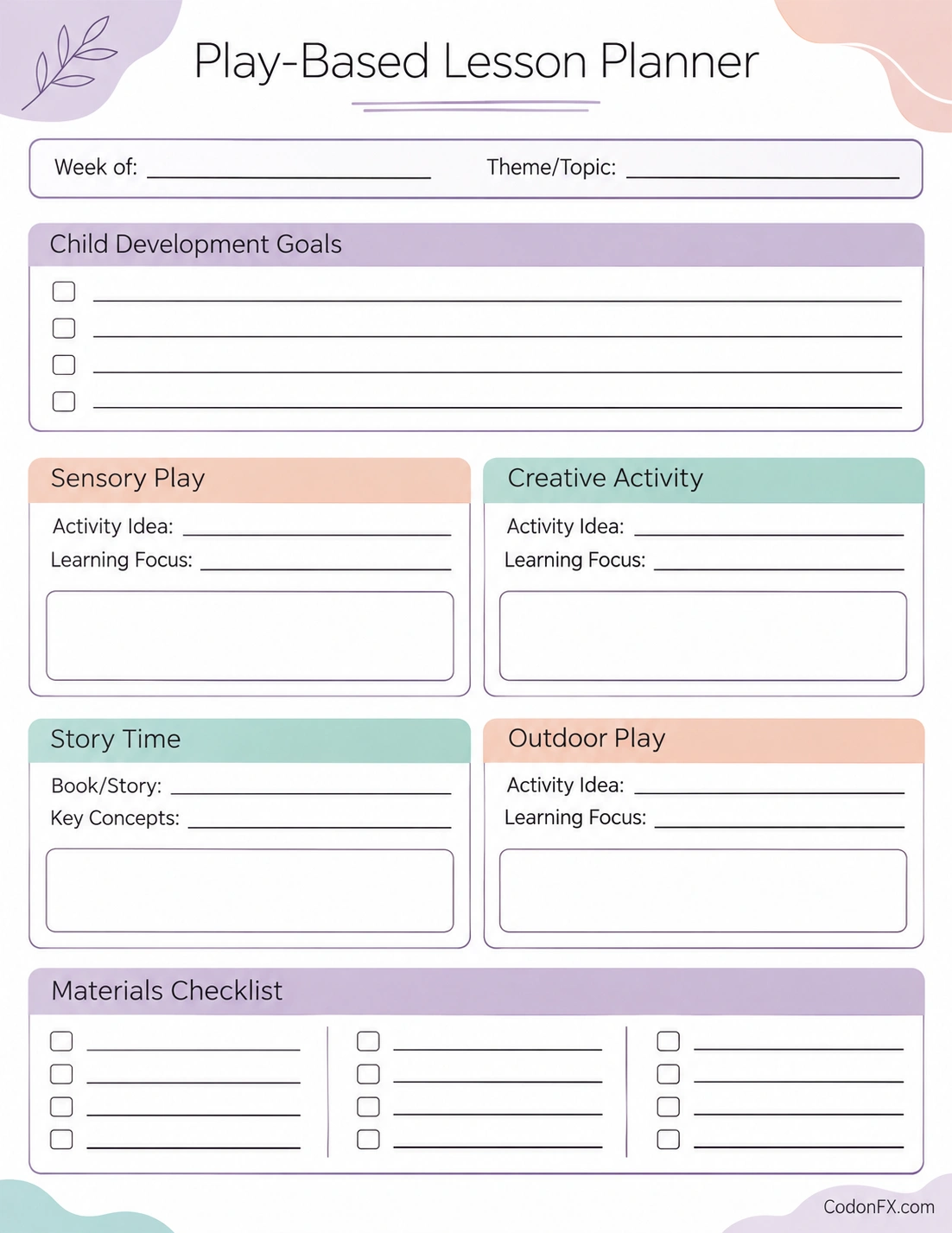
The play-based planning layout is ideal for educators who want to focus on hands-on experiences. It provides dedicated sections for sensory activities, creative projects, storytelling, and outdoor exploration.
What to Include in a Preschool Lesson Plan
An effective preschool lesson plan does not need to be complicated. The most important thing is to include enough information to help you prepare activities and understand what children should experience or learn.
1. Weekly Theme or Topic
Start by choosing a simple theme for the week. A familiar topic helps connect different classroom activities and gives children opportunities to explore one subject in several ways.
Popular preschool themes include:
- Animals and their habitats
- Colors and shapes
- Weather and seasons
- Family and community
- Transportation
- Plants and nature
- Numbers and counting
For example, a theme about animals can include animal stories, counting animal toys, drawing favorite animals, and discussing where different animals live.
2. Learning Goals
Learning goals describe the skills or experiences you want children to develop through planned activities. Keep these goals simple, specific, and appropriate for the children’s developmental stages.
Examples of preschool learning goals include:
- Recognize and name basic colors.
- Count objects from one to five.
- Practice taking turns during group activities.
- Develop hand coordination through drawing and cutting activities.
- Listen to a short story and identify familiar characters.
Remember that children develop at different rates. Learning goals should guide teaching rather than create unnecessary pressure.
3. Daily Activities
List the activities you plan to introduce each day. Include a mixture of structured experiences and opportunities for independent exploration.
Some useful preschool activities include circle time, music and movement, storytelling, sensory play, art projects, outdoor games, and simple hands-on learning tasks.
Try to balance quieter activities with movement-based experiences. This helps keep the classroom routine varied and gives children different ways to participate.
4. Required Materials
Write down the supplies needed for each activity before the school week begins. Preparing materials in advance can reduce interruptions and make classroom transitions easier.
Common preschool teaching materials include:
- Crayons, washable markers, and colored pencils
- Construction paper and child-safe scissors
- Picture books and story cards
- Building blocks and counting objects
- Play dough and sensory bins
- Glue sticks and craft supplies
- Outdoor play equipment
Choose age-appropriate materials and check that classroom supplies are safe for the children using them.
5. Teacher Notes and Observations
Leave some space for notes about how activities went during the week. You can record which activities children enjoyed, which skills need more practice, and whether an activity should be adjusted.
These observations can help you improve future lesson plans and make activities more responsive to children’s interests and developmental needs.
How to Create a Weekly Preschool Lesson Plan
Creating a weekly preschool lesson plan becomes easier when you follow a consistent process. Use these steps to organize your classroom schedule.
Step 1: Choose a Weekly Theme
Select one topic that is interesting and suitable for your classroom. Make sure it can support activities across several learning areas.
Step 2: Set Two to Four Learning Goals
Identify a few realistic goals for the week. Focus on skills that children can explore through different activities rather than trying to cover too many objectives at once.
Step 3: Plan Activities for Each Day
Distribute activities across the week. For example, a weather theme might include cloud observation on Monday, weather-related stories on Tuesday, a rain painting project on Wednesday, and outdoor weather exploration later in the week.
Step 4: Prepare Your Materials
Review each planned activity and create a materials checklist. Gather the supplies before the activity begins, and prepare alternatives when certain materials are unavailable.
Step 5: Review and Adjust Your Plan
At the end of each day or week, review your notes. Consider which activities worked well and which ones need improvement. Use these observations when preparing the next lesson plan.
Tips for Effective Preschool Lesson Planning
A good preschool lesson plan should support learning while remaining flexible enough to accommodate children’s needs and interests. The following tips can help make your planning more practical.
- Keep activities short and engaging. Young children benefit from varied experiences with opportunities to move between activities.
- Include plenty of play. Use games, exploration, storytelling, and hands-on experiences to introduce new concepts.
- Balance different learning areas. Include language, mathematics, creativity, physical movement, and social development throughout the week.
- Allow flexibility. Be prepared to extend an activity or change your schedule when children show interest in something unexpected.
- Use familiar routines. Consistent routines help children understand what to expect during the school day.
- Consider individual needs. Adapt activities to accommodate different abilities, interests, and developmental stages.
- Prepare materials ahead of time. A checklist helps prevent last-minute preparation and keeps lessons organized.
Sample Weekly Preschool Lesson Plan
Here is a simple example of a weekly preschool lesson plan using the theme “Colors Around Us.” You can adjust the activities according to your classroom schedule and children’s needs.
- Monday: Introduce basic colors using picture cards, colored objects, and a sorting activity.
- Tuesday: Read a color-themed story and ask children to identify different colors in the pictures.
- Wednesday: Create a colorful painting using washable paints and large sheets of paper.
- Thursday: Organize a classroom color hunt where children look for objects matching selected colors.
- Friday: Review the week’s learning through a color-matching game and a group discussion.
Learning goals: Recognize basic colors, improve vocabulary, practice sorting, and develop creative expression.
Required materials: Color cards, picture books, washable paints, paper, sorting objects, and classroom toys.
This example demonstrates how one weekly theme can connect several activities while providing different learning experiences each day.
Frequently Asked Questions
What is the purpose of a preschool lesson planner?
A preschool lesson planner helps teachers organize learning goals, daily activities, classroom materials, and teaching schedules. It supports consistent preparation and helps educators provide balanced learning experiences for young children.
What should a preschool lesson plan include?
A preschool lesson plan should include a weekly theme, learning objectives, daily activities, required materials, and space for teacher notes or observations. Teachers can also include assessment ideas and activity adaptations when needed.
How often should preschool teachers make lesson plans?
Many preschool teachers prepare lesson plans weekly and review individual activities each day. Weekly planning provides an overview of learning goals, while daily adjustments help teachers respond to children’s interests and classroom needs.
How long should a preschool lesson plan be?
A preschool lesson plan can be as short or detailed as necessary. A simple one-page weekly planner is often enough for organizing themes, goals, activities, and materials. More detailed plans can be used for special projects or specific learning activities.
What are the best activities for preschool children ages 3–5?
Suitable activities include storytelling, counting games, building blocks, drawing, painting, sensory play, music, movement, nature exploration, and pretend play. Choose activities that are age-appropriate, engaging, and adaptable to different developmental needs.
Can I use the same preschool lesson planner every week?
Yes. A reusable preschool lesson planner can be used every week. Simply update the weekly theme, learning goals, activities, and materials. Reusing the same format also helps maintain a consistent planning routine.
Why is play-based learning important in preschool?
Play-based learning gives children opportunities to explore ideas, practice social skills, solve simple problems, and develop creativity through meaningful experiences. It makes learning engaging while supporting different areas of early childhood development.
Conclusion
A well-organized preschool lesson planner can make classroom preparation easier and help teachers create meaningful learning experiences for children ages 3–5. By organizing weekly themes, learning goals, daily activities, and required materials, educators can maintain a balanced and flexible teaching routine.
Use a printable preschool lesson planning template to simplify your preparation and keep important classroom information in one place. With consistent planning and room for creative exploration, you can create an engaging preschool environment where children learn through play, discovery, and everyday experiences.
