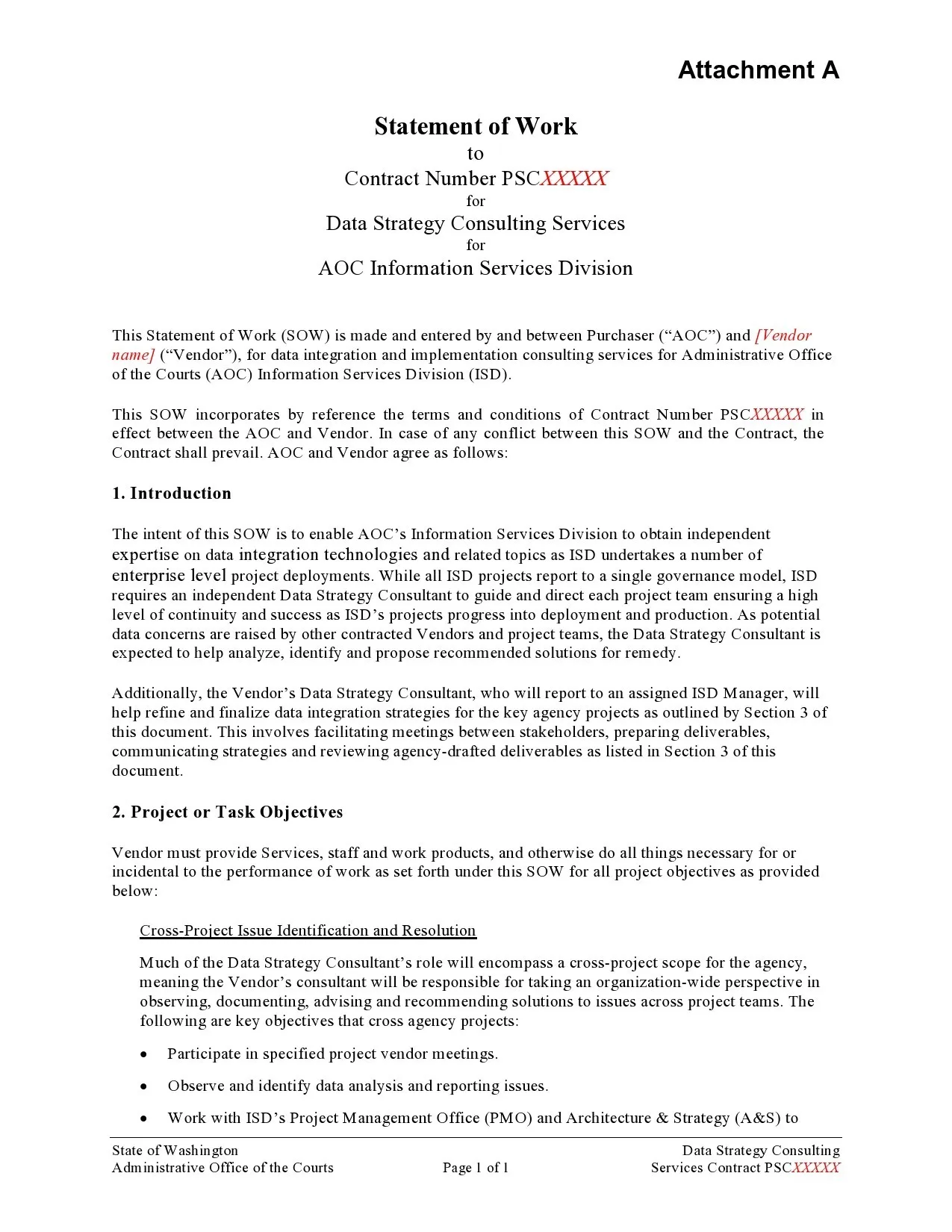
What is a Statement of Work?
A Statement of Work (SOW) is a foundational document in project management that outlines the scope, objectives, deliverables, timelines, resources, and costs associated with a project. It serves as a roadmap for all stakeholders involved, providing a clear understanding of what needs to be accomplished.
The SOW is a detailed description of the project requirements and serves as a reference point throughout the project’s lifecycle.
Why is a Statement of Work Important?
A Statement of Work is crucial in project management for several reasons.
Preventing Scope Creep
One of the main reasons why a Statement of Work is important is its ability to prevent scope creep. Scope creep refers to the gradual expansion of a project’s scope, leading to delays, budget overruns, and dissatisfaction among stakeholders. By clearly defining the project scope and deliverables in the SOW, both the client and the service provider can ensure that the project stays on track and within budget. This proactive approach helps to minimize risks and uncertainties, ultimately leading to successful project outcomes.
Establishing Accountability
Another key benefit of a Statement of Work is that it helps to establish accountability among all project stakeholders. By clearly defining roles, responsibilities, and expectations in the SOW, each party knows what is expected of them and can be held accountable for their deliverables. This accountability fosters a sense of ownership and commitment to the project’s success, leading to better collaboration and communication among team members.
Providing Legal Protection
In addition to preventing scope creep and establishing accountability, a Statement of Work also provides legal protection for both the client and the service provider. The SOW serves as a formal contract that outlines the terms and conditions of the project, including scope, timelines, costs, and deliverables. In case of disputes or disagreements, the SOW can be used as a reference point to resolve issues and protect the interests of both parties. This legal clarity minimizes misunderstandings and ensures that all parties are held accountable for their commitments.
What to Include in a Statement of Work?
Project Scope
The project scope is one of the most critical components of a Statement of Work. It defines the boundaries and objectives of the project, outlining what will be included and excluded. The project scope should be specific, measurable, achievable, relevant, and time-bound (SMART), ensuring that all stakeholders have a clear understanding of the project’s goals and deliverables.
Objectives and Deliverables
The objectives and deliverables section of the SOW outlines the specific outcomes that the project aims to achieve. This section should describe the expected results, milestones, and success criteria for the project. By clearly defining the objectives and deliverables, all parties can align their efforts towards achieving the desired outcomes and meeting stakeholder expectations.
Timelines and Milestones
The timelines and milestones section of the SOW establishes a roadmap for the project, outlining key deadlines and milestones that must be met. This section should include a project schedule, timeline for deliverables, and critical milestones for tracking progress. By setting realistic timelines and milestones, project managers can ensure that the project stays on schedule and remains within budget.
Resources and Roles
The resources and roles section of the SOW identifies the resources required for project completion, including personnel, equipment, materials, and external vendors. This section should also define the roles and responsibilities of each team member, outlining who is accountable for specific tasks and deliverables. By clearly defining roles and resources, project managers can ensure that all team members are aligned on their responsibilities and have the necessary support to complete their tasks.
Costs and Budget
The costs and budget section of the SOW outlines the financial aspects of the project, including budget, payment terms, invoicing procedures, and cost estimates. This section should provide a breakdown of costs for each deliverable, as well as any additional expenses that may arise during the project. By clearly defining the costs and budget constraints upfront, project managers can ensure that the project stays within budget and avoids cost overruns.
Risks and Assumptions
The risks and assumptions section of the SOW identifies potential risks that could impact the project’s success, as well as any assumptions that have been made during project planning. This section should outline risk mitigation strategies, contingency plans, and assumptions that could affect project outcomes. By identifying and addressing risks and assumptions early on, project managers can proactively manage uncertainties and prevent potential roadblocks.
Change Management Procedures
The change management procedures section of the SOW describes how changes to the project scope, timeline, or budget will be managed and approved. This section should outline the process for submitting change requests, evaluating impacts, obtaining approvals, and implementing changes. By establishing clear change management procedures, project managers can ensure that any changes to the project are properly documented, evaluated, and communicated to all stakeholders.
How to Create an Effective Statement of Work
Collaborate with Stakeholders
To create an effective Statement of Work, project managers should collaborate with all relevant stakeholders, including clients, team members, subject matter experts, and key decision-makers. By involving stakeholders in the SOW development process, project managers can ensure that all perspectives are considered, and that everyone is aligned on project objectives and requirements.
Be Specific and Detailed
When creating a Statement of Work, it is essential to be specific and detailed in outlining project requirements, deliverables, and expectations. Avoid using vague language or ambiguous terms that could lead to misunderstandings. Instead, provide clear and concise descriptions of each component, ensuring that all stakeholders have a shared understanding of what needs to be accomplished.
Set Realistic Timelines
Setting realistic timelines is crucial for creating an effective Statement of Work. Project managers should consider factors such as project complexity, resource availability, and external dependencies when defining project timelines. By setting achievable deadlines and milestones, project managers can ensure that the project stays on track and meets stakeholder expectations.
Include Metrics for Success
To measure the success of a project, project managers should include metrics and key performance indicators (KPIs) in the Statement of Work. These metrics should be specific, measurable, achievable, relevant, and time-bound (SMART), allowing project managers to track progress and assess performance against predefined criteria. By including metrics for success, project managers can demonstrate the project’s impact and value to stakeholders.
Review and Revise
Creating an effective Statement of Work is an iterative process that requires regular review and revision. Project managers should periodically review the SOW to ensure that it reflects the latest project requirements, changes, and stakeholder feedback. By revising the SOW as needed, project managers can adapt to evolving project conditions and ensure that all parties are aligned on project objectives.
Tips for Successful Project Management with a Statement of Work
Communicate Effectively
Effective communication is key to successful project management with a Statement of Work. Project managers should maintain open and transparent communication with all stakeholders, providing regular updates, addressing concerns, and soliciting feedback. By fostering clear communication channels, project managers can build trust, collaboration, and alignment among team members.
Monitor Progress
Monitoring progress against the Statement of Work is essential for successful project management. Project managers should track project milestones, deliverables, and key performance indicators to assess progress and identify any deviations from the plan. By monitoring progress proactively, project managers can address issues, make informed decisions, and keep the project on track.
Address Issues Promptly
Addressing issues and concerns promptly is crucial for successful project management. When challenges arise during the project, project managers should respond quickly, assess the impact, and take corrective action as needed. By addressing issues promptly, project managers can prevent delays, minimize risks, and maintain project momentum.
Seek Feedback
Soliciting feedback from stakeholders is essential for continuous improvement and successful project management. Project managers should regularly seek input from clients, team members, and other stakeholders to identify areas for improvement, address concerns, and enhance project performance. By actively seeking feedback, project managers can gain valuable insights, build stronger relationships, and drive project success.
Document Changes
Documenting changes to the project scope, timeline, or budget is critical for maintaining accountability and transparency in project management. Whenever changes occur, project managers should update the Statement of Work, communicate the changes to all stakeholders, and obtain approvals as needed. By documenting changes effectively, project managers can ensure that all parties are informed and aligned on project modifications.
Conclusion
In conclusion, a Statement of Work is a vital tool in project management that serves as a formal, contractual document defining project scope, objectives, deliverables, timelines, resources, costs, and risks. By creating a detailed and comprehensive SOW, project managers can establish clear expectations, prevent scope creep, establish accountability, and provide legal protection for all parties involved.
Effective project management with a Statement of Work requires collaboration, communication, monitoring, adaptation, and alignment among all stakeholders. By following best practices and tips for creating and managing a Statement of Work, project managers can enhance project success, mitigate risks, and deliver value to clients and stakeholders.
Statement of Work Template – DOWNLOAD
