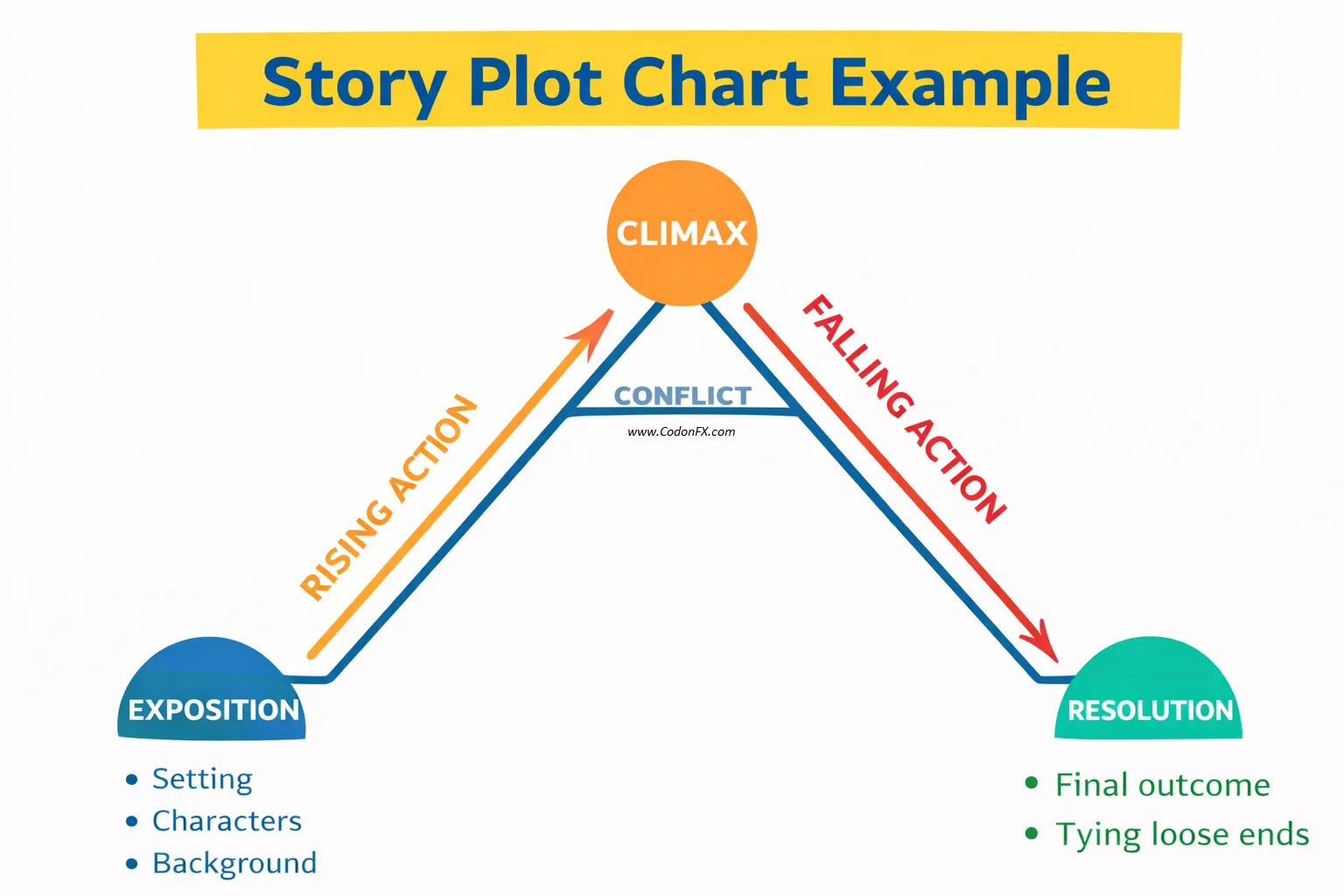
Story plot charts are essential tools for both writers and readers alike. They provide a visual map of a story’s structure, helping individuals track the progression of events, understand how tension builds and releases, and see how the different parts of the narrative—from the exposition to the resolution—connect to create a cohesive whole. This tool serves as a structural blueprint for authors during the writing process and a guide for readers and students to analyze and comprehend a story’s flow.
In this article, we will delve into the What, Why, Key Elements, How to use, and Tips for successful implementation of story plot charts.
What is a Story Plot Chart?
A story plot chart is a visual representation of the key elements of a story. It helps map out the narrative structure, including the introduction of characters, setting, conflict, rising action, climax, falling action, and resolution.
By plotting these elements on a chart, writers and readers can gain a better understanding of the story’s flow and how each part contributes to the overall plot.
Why Use a Story Plot Chart?
Story plot charts are valuable tools for writers because they provide a roadmap for crafting a well-structured and engaging story. By visually outlining the key elements of the plot, authors can ensure that their story has a clear beginning, middle, and end, with well-developed characters and a compelling conflict. For readers and students, plot charts help analyze and interpret the story’s progression, making it easier to identify important events and themes.
Enhancing Story Structure
One of the primary reasons for using story plot charts is to enhance the overall structure of a narrative. By plotting out key plot points and events, writers can ensure that their story follows a logical progression and maintains a consistent pace. This helps create a more engaging and immersive reading experience for audiences, as they can easily follow the story’s flow and understand how each event contributes to the larger narrative arc.
Fostering Creativity and Exploration
Story plot charts can also serve as tools for fostering creativity and exploration in the writing process. By visually mapping out different plot possibilities and story arcs, writers can experiment with various narrative structures and character developments. This allows for a more dynamic and engaging storytelling experience, as authors can explore different avenues for their story and push the boundaries of traditional storytelling conventions.
Improving Storytelling Consistency
Another benefit of using story plot charts is that they help improve storytelling consistency throughout the narrative. By visually representing the key elements of the plot, writers can ensure that there are no inconsistencies or gaps in the story’s progression. This can help maintain reader engagement and prevent confusion, as audiences can easily follow the development of characters, conflicts, and themes without getting lost in the narrative.
Key Elements of a Story Plot Chart
A typical story plot chart includes the following key elements:
- Exposition. This is where the characters, setting, and conflict are introduced.
- Rising Action. The series of events that builds tension and leads to the story’s climax.
- Climax. The turning point of the story is where the conflict reaches its peak.
- Falling Action. Events that occur after the climax, leading to the resolution.
- Resolution. The outcome of the story is where loose ends are tied up.
How to Use a Story Plot Chart
Creating a story plot chart involves plotting the key elements of the story on a visual map or graph. Writers can use tools like plot diagrams, flowcharts, or story mapping software to help organize their ideas. Here are some steps to create a story plot chart:
Identifying Key Plot Points
The first step in creating a story plot chart is to identify the key plot points of the narrative. This includes determining the main characters, setting, conflict, climax, and resolution. By clearly outlining these elements, writers can establish a solid foundation for their story and ensure that each part contributes meaningfully to the overall plot.
Plotting Out the Narrative
Once the key plot points have been identified, writers can begin plotting out the narrative on a visual map or chart. This can be done using a variety of tools, such as pen and paper, digital software, or online templates. By visually representing the flow of events, writers can see how the story unfolds and identify any areas that may need further development or revision.
Connecting Plot Points
After plotting out the key elements of the story, writers should focus on connecting these plot points to create a cohesive narrative arc. This involves looking for logical progressions between events, ensuring that each part of the plot leads organically to the next. By drawing lines or arrows between plot points, writers can visualize how the story unfolds and ensure that the plot maintainsa smooth and logical progression from beginning to end.
Reviewing and Revising
Once the story plot chart is complete, writers should take the time to review and revise their work. This involves looking for any inconsistencies, gaps in the plot, or areas that may need further development. By carefully examining the chart, writers can ensure that the story flows smoothly and that all key plot points are effectively connected. Revising the plot chart can help writers refine their narrative structure and create a more compelling and engaging story.
Using Story Plot Charts for Planning
Story plot charts are invaluable tools for planning and outlining a story before diving into the writing process. By creating a visual map of the narrative structure, writers can establish a clear roadmap for their storytelling journey. This can help prevent writer’s block, guide the development of characters and conflicts, and ensure that the story unfolds coherently and engagingly. Story plot charts can be used as a reference tool throughout the writing process, helping authors stay on track and maintain consistency in their storytelling.
Utilizing Story Plot Charts for Analysis
Story plot charts are not only useful for writers but also for readers and students looking to analyze and understand the structure of a story. By examining a plot chart, readers can gain deeper insight into the development of characters, conflicts, and themes throughout the narrative. This can enhance their comprehension of the story and allow them to appreciate the author’s storytelling techniques and choices. Students can use plot charts as study aids to dissect the components of a story and analyze how they contribute to the overall plot.
Adapting Story Plot Charts for Different Genres
Story plot charts can be adapted to suit different genres and styles of storytelling. Whether writing a mystery novel, romance, fantasy epic, or historical fiction, writers can customize their plot charts to fit the unique requirements of their genre. For example, a mystery plot chart may focus more on clues, red herrings, and plot twists, while a romance plot chart may emphasize emotional arcs, relationship development, and romantic tension. By tailoring the plot chart to the specific needs of the genre, writers can create more effective and impactful narratives.
Tips for Successful Story Plot Charts
Here are some tips for using story plot charts effectively:
Keep it Simple
When creating a story plot chart, it’s essential to keep the structure simple and focused. Avoid overcrowding the chart with unnecessary details or plot points that may distract from the main narrative. By maintaining a clear and concise layout, writers can ensure that the plot chart remains easy to follow and understand.
Use Visuals
Incorporating visuals such as colors, symbols, or images can enhance the readability and engagement of a story plot chart. Visual elements can help differentiate between plot points, highlight key events, and create a more dynamic and visually appealing chart. By using visuals strategically, writers can make the plot chart more engaging and memorable for both themselves and their readers.
Update as Needed
Story plot charts are dynamic tools that can evolve and change throughout the writing process. Writers should be willing to update and revise their plot charts as needed, especially as the story develops and new ideas emerge. By staying flexible and open to adjustments, writers can ensure that the plot chart accurately reflects the structure and progression of their narrative.
Refer Back to the Chart
Once a story plot chart is created, it’s essential to refer back to it regularly during the writing process. The plot chart can serve as a guide and reference tool to help writers stay on track, maintain consistency, and ensure that the story’s structure remains intact. By consistently referring back to the plot chart, writers can keep the narrative focused and cohesive from beginning to end.
Seek Feedback
Sharing the story plot chart with beta readers, writing groups, or mentors can provide valuable feedback and insights. External perspectives can help writers identify any weaknesses or inconsistencies in the narrative structure and suggest improvements. By seeking feedback on the plot chart, writers can refine their storytelling techniques and create a more compelling and engaging story.
Experiment with Different Formats
Story plot charts come in various formats, from traditional pen-and-paper diagrams to digital software and online tools. Writers should experiment with different formats to find the one that works best for their writing style and preferences. Whether using a flowchart, timeline, or storyboard, finding the right format can enhance the plotting process and make it easier to visualize the narrative structure.
Use Plot Charts as Learning Tools
For students and aspiring writers, creating and analyzing story plot charts can be valuable learning tools. By deconstructing published works and creating their plot charts, individuals can gain a deeper understanding of narrative structure, character development, and plot progression. This hands-on approach can help aspiring writers hone their storytelling skills and craft more engaging and impactful narratives.
Story Plot Chart Template
A Story Plot Chart helps writers organize the structure of a story by clearly mapping out key elements such as the exposition, rising action, climax, falling action, and resolution. It provides a visual framework that makes it easier to develop ideas, maintain logical flow, and strengthen storytelling. With a structured template, you can plan your narrative more effectively and bring your story to life with clarity and purpose.
Download our Story Plot Chart Template today to plan, organize, and strengthen your storytelling with ease.
Story Plot Chart Template – DOWNLOAD
