When buying or selling a trailer, it is essential to have a legal contract in place to document the transaction. This document is commonly referred to as a trailer bill of sale.
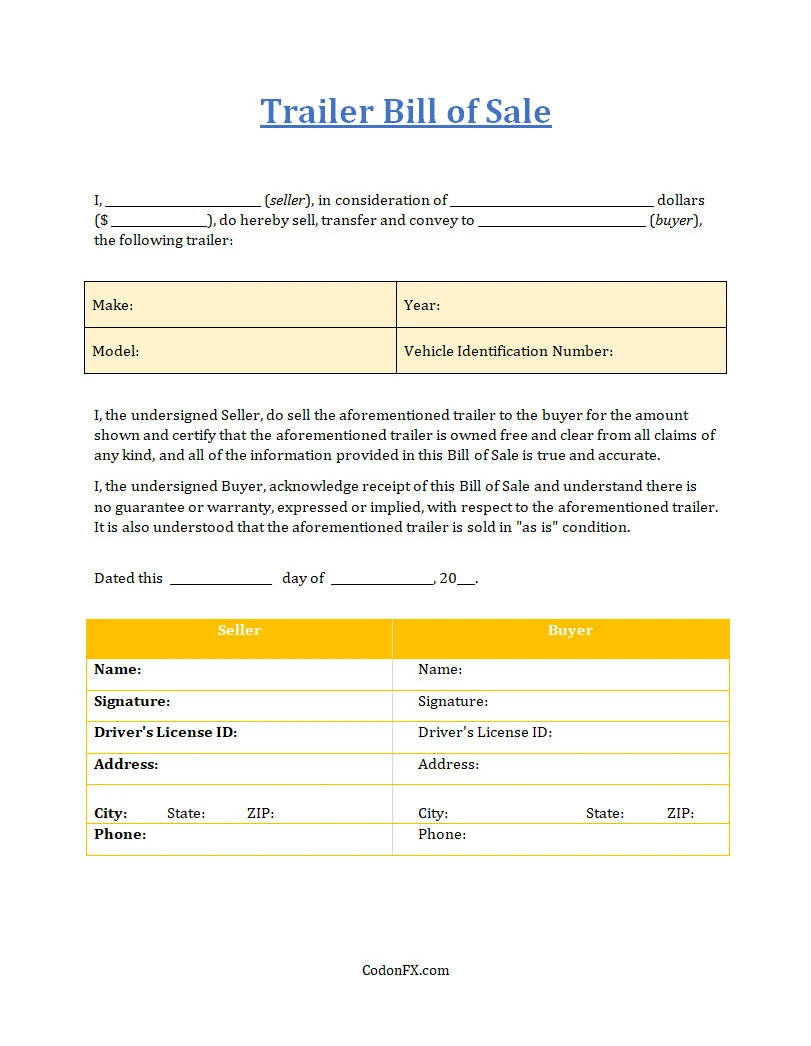
A trailer bill of sale is a legal contract that outlines the sale of a trailer and transfers its ownership from the seller to the buyer. It is crucial for both parties involved to understand their rights and responsibilities, as well as to acknowledge that payment has been made in full. Additionally, the bill of sale stipulates that the buyer accepts the trailer in its current condition, also referred to as “as is.”
What is a Trailer Bill of Sale?
A trailer bill of sale is a document that records the sale of a trailer between a buyer and a seller. It includes details such as the buyer and seller’s names and contact information, the trailer’s description (make, model, year, VIN), the sale price, the date of sale, and any terms or conditions of the sale.
This document serves as proof of ownership transfer and protects both parties in case of any disputes or legal issues that may arise in the future.
What is the difference between a bill of sale and a receipt?
While a bill of sale and a receipt may seem similar, they serve different purposes. A bill of sale is a legal document that proves the transfer of ownership of a trailer from one party to another. It includes detailed information about the transaction, such as the buyer and seller’s information, trailer details, sale price, and terms of the sale.
On the other hand, a receipt is a simple acknowledgment of payment. It confirms that the buyer has paid the seller for the trailer, but does not provide information about the transfer of ownership.
Purpose of a Bill of Sale
The primary purpose of a trailer bill of sale is to legally transfer ownership of a trailer from the seller to the buyer. It also serves as a record of the transaction, providing both parties with proof of purchase and payment. Additionally, the bill of sale protects the buyer by ensuring that the trailer is sold in its current condition, as is, and that the seller is not responsible for any damages or issues that may arise after the sale.
Establishing Ownership Transfer
One of the main purposes of a bill of sale is to establish the transfer of ownership from the seller to the buyer. By documenting the details of the sale, including the trailer’s description and sale price, the bill of sale serves as proof that the buyer now owns the trailer. This can be crucial in case of any disputes or claims regarding ownership in the future.
Protecting Both Parties
Another important purpose of a bill of sale is to protect both the buyer and the seller in the transaction. The bill of sale outlines the terms and conditions of the sale, ensuring that both parties understand their rights and responsibilities. By clearly documenting the agreement, the bill of sale helps prevent misunderstandings or disagreements that could arise after the sale is completed.
Providing Legal Documentation
Having a bill of sale also provides legal documentation of the transaction, which can be valuable in various situations. For example, if the trailer is involved in an accident or stolen after the sale, the bill of sale can serve as proof of ownership and establish the buyer’s rights. Additionally, for tax or insurance purposes, having a bill of sale can help validate the purchase and ownership of the trailer.
Ensuring Transparency and Clarity
By creating a bill of sale, both the buyer and seller can ensure transparency and clarity in the transaction. The details outlined in the bill of sale, such as the trailer’s condition and any warranties or guarantees, help set clear expectations for both parties. This transparency can prevent misunderstandings and protect both parties’ interests throughout the sale process.
How to Create a Comprehensive Bill of Sale for Trailers
Creating a comprehensive bill of sale for a trailer involves including specific details about the transaction to protect both the buyer and the seller. To create a comprehensive bill of sale, follow these steps:
Step 1: Gather Necessary Information
Start by collecting all the necessary information for the bill of sale, including the buyer and seller’s details, trailer description, sale price, and any terms or conditions of the sale. Having this information on hand will make it easier to create a thorough and accurate bill of sale.
Step 2: Use a Template or Create Your Own
You can use a template for a bill of sale specific to trailers or create your own document. Make sure to include all the essential components, such as buyer and seller information, trailer details, sale price, and terms of the sale. Using a template can help ensure that you don’t miss any critical details.
Step 3: Include Detailed Trailer Information
When describing the trailer in the bill of sale, be as detailed as possible. Include the make, model, year, VIN, and any other identifying features or characteristics of the trailer. This information is crucial for establishing the trailer’s identity and ensuring that both parties are clear on what is being sold.
Step 4: Specify the Sale Price and Terms
Clearly state the agreed-upon sale price for the trailer in the bill of sale. Additionally, include any terms or conditions of the sale, such as payment method, delivery arrangements, or any warranties or guarantees that are included with the trailer. Specifying these details helps prevent misunderstandings and ensures that both parties are on the same page.
Step 5: Review and Sign the Bill of Sale
Before finalizing the bill of sale, review it carefully to ensure that all information is accurate and complete. Once both the buyer and seller are satisfied with the document, sign and date the bill of sale. Each party should keep a copy of the signed document for their records as proof of the transaction.
Step 6: Consider Notarizing the Document
While not always required, consider having the bill of sale notarized for an added layer of security and authenticity. Notarizing the document involves having a notary public witness the signing of the bill of sale and verifying the identities of the parties involved. This can help prevent any challenges to the validity of the document in the future.
Do I need to Get a Trailer Bill of Sale Notarized?
While notarizing a trailer bill of sale is not always required by law, it can provide an added layer of security and authenticity to the document. Having the bill of sale notarized means that a notary public has verified the identities of the parties involved and witnessed their signatures on the document. This can help prevent any disputes or challenges to the validity of the bill of sale in the future.
Free Trailer Bill of Sale Template
A Trailer Bill of Sale Form helps formally document the transfer of ownership between a buyer and seller in a clear and legally recognized format. It includes essential details such as trailer description, sale price, buyer and seller information, and signatures, providing proof of the transaction and protecting both parties. With a well-structured template, you can ensure accuracy, transparency, and compliance during the sale.
Download our Trailer Bill of Sale Template today to complete your trailer transaction smoothly and with confidence.
Trailer Bill of Sale Template – DOWNLOAD
