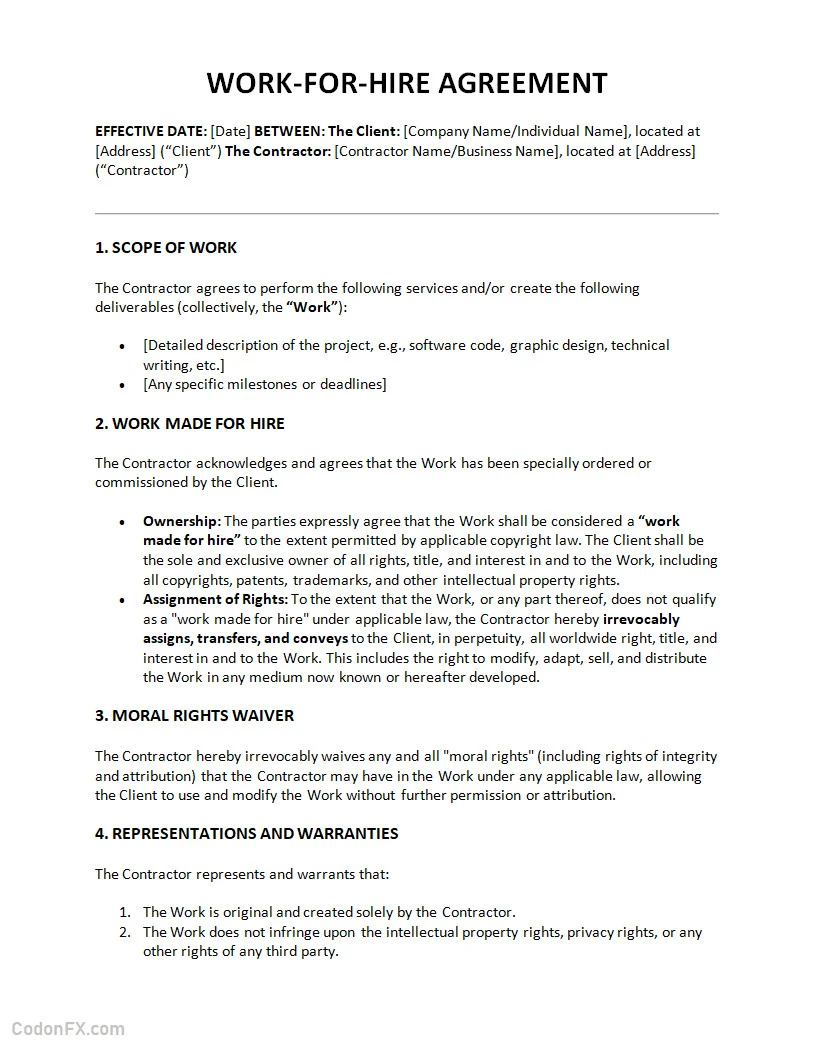
When hiring contractors or freelancers to create content, designs, or software for your business, it’s essential to have a clear understanding of who owns the intellectual property rights to the work produced.
A work-for-hire agreement is a legal document that ensures the hiring party, not the creator, owns the intellectual property developed by the contractor or freelancer. This agreement grants the employer full rights to use, modify, and distribute the work without seeking further permission, providing clarity and legal protection from ownership disputes.
What is a Work-for-Hire Agreement?
A work-for-hire agreement is a contract between an employer and an independent contractor or freelancer that specifies that any work created as part of the agreement belongs to the employer, rather than the creator. This type of agreement is commonly used in industries where the creation of intellectual property is a significant part of the work, such as graphic design, software development, music production, and writing.
By establishing ownership rights from the outset, a work-for-hire agreement helps to prevent future disputes over who has the right to use or profit from the work created. It also ensures that the employer has the freedom to make changes to the work, distribute it as they see fit, and protect their investment in the creative process.
Why Use a Work-for-Hire Agreement?
There are several key reasons why employers should use a work-for-hire agreement when engaging independent contractors or freelancers:
- Clarity: By clearly defining the ownership of intellectual property in a contract, both parties have a clear understanding of their rights and responsibilities.
- Legal Protection: Having a written agreement in place can help protect the employer from potential ownership disputes or claims of copyright infringement.
- Flexibility: The employer has the freedom to use, modify, or distribute the work without seeking additional permission from the creator.
- Investment Protection: By asserting ownership of the work, the employer can protect their investment in the creative process and ensure that they can benefit from the work produced.
Key Elements of a Work-for-Hire Agreement
When drafting a work-for-hire agreement, several key elements should be included to ensure clarity and legal protection:
- Description of Work: Clearly define the scope of the work to be created by the contractor or freelancer.
- Ownership Rights: Specify that all intellectual property rights to the work belong to the employer.
- Payment Terms: Outline the payment terms, including any milestones or deadlines for payment.
- Confidentiality Clause: Include a confidentiality clause to protect any sensitive information shared during the project.
- Indemnity Clause: Clarify the responsibilities of each party in the event of a legal dispute or claim.
How to Create a Work-for-Hire Agreement
Creating a work-for-hire agreement can be a relatively straightforward process, but it’s essential to ensure that the document is legally sound and covers all necessary details. Here are some steps to follow when drafting a work-for-hire agreement:
1. Define the Scope of Work:
Clearly outline the work to be done by the contractor or freelancer, including any specific requirements or deliverables.
2. Specify Ownership Rights:
Clearly state that all intellectual property rights to the work belong to the employer, including any modifications or derivative works.
3. Include Payment Terms:
Detail the payment terms, including the total amount to be paid, payment schedule, and any penalties for late payment.
4. Address Confidentiality:
Include a confidentiality clause to protect any proprietary or sensitive information shared during the project.
5. Add Indemnity Provisions:
Clarify the responsibilities of each party in the event of a legal dispute, including liability and indemnification.
6. Seek Legal Review:
Before finalizing the agreement, it’s advisable to have it reviewed by a legal professional to ensure that it complies with relevant laws and regulations.
7. Sign and Execute:
Once both parties are satisfied with the terms of the agreement, it should be signed and executed to make it legally binding.
Tips for Successful Work-for-Hire Agreements
To ensure a successful work-for-hire agreement and protect your interests as an employer, consider the following tips:
- Be Specific: Clearly define the scope of work and ownership rights to avoid any confusion or disputes.
- Consult Legal Counsel: Consider seeking legal advice when drafting or reviewing the agreement to ensure it meets your needs.
- Communicate Clearly: Keep lines of communication open with the contractor or freelancer to address any issues or concerns promptly.
- Document Everything: Keep detailed records of all communications, changes to the work, and payments made to protect yourself in case of a dispute.
- Review Regularly: Periodically review and update your work-for-hire agreements to ensure they reflect any changes in your business or industry.
By understanding the importance of work-for-hire agreements and following best practices when creating them, employers can protect their intellectual property rights and avoid potential legal disputes in the future.
Work-for-hire Agreement Template – DOWNLOAD
