What is a Sponsorship Agreement?
A sponsorship agreement is a formalized partnership between a sponsor and a sponsored entity where the sponsor provides financial support or in-kind services in exchange for promotional benefits. These agreements are crucial for organizations looking to boost their visibility, gain access to new audiences, and enhance their reputation.
By legally binding both parties to specific terms and obligations, sponsorship agreements help establish a mutually beneficial relationship that benefits both sides. The agreement outlines the responsibilities of each party, the benefits to be provided, and the duration of the partnership.
Why are Sponsorship Agreements Important?
Sponsorship agreements play a crucial role in formalizing and defining the terms of a partnership between a sponsor and a sponsored entity. These agreements are essential for protecting the interests of both parties and ensuring that the partnership is mutually beneficial and well-defined. By establishing clear terms, obligations, and expectations, sponsorship agreements help prevent misunderstandings, disputes, and risks that may arise during the partnership. These agreements also provide a framework for managing the relationship, promoting the sponsor’s brand effectively, and achieving the desired goals of both parties.
Protecting Both Parties
One of the primary reasons why sponsorship agreements are important is that they protect both parties involved in the partnership. By clearly outlining the responsibilities, obligations, and expectations of each party, these agreements help prevent misunderstandings, disputes, and conflicts that may arise during the partnership. For sponsors, this protection ensures that their investment is secure, and they receive the agreed-upon benefits and exposure. For sponsored entities, sponsorship agreements assure that they will receive the necessary support and resources from the sponsor to achieve their goals.
Defining Expectations
Another key aspect of why sponsorship agreements are important is that they help define the expectations of both parties involved in the partnership. By clearly outlining the deliverables, payment terms, exclusivity rights, and duration of the agreement, sponsors and sponsored entities can align their goals and objectives effectively. This clarity ensures that both parties understand their roles and responsibilities within the partnership and can work towards achieving mutual success. By setting clear expectations from the outset, sponsorship agreements help establish a strong foundation for the partnership and promote effective collaboration between the sponsor and the sponsored entity.
Ensuring Compliance and Accountability
Sponsorship agreements are also important for ensuring compliance and accountability within the partnership. By specifying the terms, obligations, and requirements of the agreement, sponsors and sponsored entities can ensure that they meet their commitments and responsibilities throughout the partnership. These agreements help establish accountability for both parties, making it clear what is expected of each party and what consequences may arise if the terms of the agreement are not met. By promoting transparency, compliance, and accountability, sponsorship agreements help build trust and credibility between the sponsor and the sponsored entity, fostering a positive and productive partnership.
Managing Risks and Liabilities
Furthermore, sponsorship agreements are essential for managing risks and liabilities that may arise during the partnership. By including clauses that address potential risks, liabilities, indemnification, and dispute resolution mechanisms, these agreements help protect both parties from unforeseen circumstances or challenges that may impact the partnership. Sponsors and sponsored entities can outline strategies for mitigating risks, resolving disputes, and addressing any issues that may arise during the partnership. By proactively addressing potential risks and liabilities in the agreement, sponsors and sponsored entities can minimize the negative impacts on their brands, reputations, and financial resources, ensuring a more secure and successful partnership.
Building a Strong Partnership
Ultimately, sponsorship agreements are crucial for building a strong and successful partnership between a sponsor and a sponsored entity. By formalizing the terms, obligations, and expectations of the partnership, these agreements help establish a clear framework for collaboration, communication, and mutual support. Sponsors and sponsored entities can work together effectively towards achieving their goals, leveraging each other’s strengths, resources, and expertise. By creating a strong partnership based on trust, transparency, and mutual benefit, sponsors and sponsored entities can maximize the impact of their collaboration, achieve their desired outcomes, and create value for both parties involved.
What to Include in a Sponsorship Agreement?
When creating a sponsorship agreement, it is essential to include a variety of key elements to ensure that the partnership is successful and well-defined. These elements help clarify the terms, obligations, and expectations of both parties, promoting effective communication, collaboration, and alignment of goals. By including the following components in a sponsorship agreement, sponsors and sponsored entities can establish a strong foundation for their partnership and work towards achieving their desired outcomes:
Parties Involved
One of the first things to include in a sponsorship agreement is a clear identification of the parties involved in the partnership. This section should clearly outline the sponsor and the sponsored entity, including their legal names, contact information, and any relevant details that define their roles within the agreement. By clearly identifying the parties involved, sponsors and sponsored entities can establish the basis for their partnership and ensure that both parties understand their responsibilities and obligations within the agreement.
Scope of Sponsorship
Another crucial element to include in a sponsorship agreement is the scope of the sponsorship. This section should define the specific services, resources, or financial support that the sponsor will provide to the sponsored entity. It should outline the objectives, goals, and deliverables of the partnership, specifying what the sponsor expects to receive in return for their support. By clearly defining the scope of the sponsorship, sponsors and sponsored entities can align their goals and expectations, ensuring that both parties are on the same page regarding the purpose and focus of the partnership.
Deliverables
When drafting a sponsorship agreement, it is essential to outline the specific deliverables that the sponsored entity will provide in exchange for the sponsor’s support. This section should detail the promotional benefits, services, or activities that the sponsored entity will offer to promote the sponsor’s brand, products, or services. It should specify the timeline, format, and frequency of the deliverables, as well as any requirements or standards that must be met to fulfill the obligations of the agreement. By clearly outlining the deliverables, sponsors and sponsored entities can ensure that the partnership is mutually beneficial and that both parties receive the expected benefits from the collaboration.
Payment Terms
Payment terms are a critical component of any sponsorship agreement and should be clearly defined in the agreement. This section should specify the payment schedule, amount, method of payment, and any additional fees or costs associated with the sponsorship. It should outline how and when payments will be made, as well as any penalties or consequences for late payments or non-compliance with the payment terms. By establishing clear payment terms, sponsors and sponsored entities can ensure that
Exclusivity Rights
Exclusivity rights are an important consideration in sponsorship agreements, especially for sponsors seeking to maximize their brand exposure within a specific industry or market. This section should outline whether the sponsor will have exclusive rights to promote their brand, products, or services within a defined geographic area, industry sector, or target audience. It should specify any restrictions on the sponsored entity from partnering with competitors or promoting conflicting brands during the partnership. By clarifying exclusivity rights, sponsors can ensure that their investment is protected, and they have the opportunity to stand out in the market and reach their target audience effectively.
Duration
The duration of the sponsorship agreement is another key element to include in the agreement. This section should specify the start and end dates of the partnership, outlining the timeline for the sponsorship and any renewal or termination clauses. It should also include provisions for extending or ending the agreement early, as well as any notice requirements for changes or modifications to the duration of the partnership. By setting clear dates and timelines for the sponsorship agreement, sponsors and sponsored entities can plan their activities, promotions, and campaigns effectively, ensuring that the partnership is successful and aligns with their goals and objectives.
Termination and Renewal
In addition to the duration of the sponsorship agreement, it is essential to include provisions for termination and renewal in the agreement. This section should outline the conditions under which either party can terminate the agreement early, such as non-compliance with the terms, breach of contract, or changes in circumstances that impact the partnership. It should also include provisions for renewing the agreement at the end of the term, specifying any conditions, fees, or requirements for extending the partnership. By including termination and renewal clauses, sponsors and sponsored entities can protect their interests and ensure that the partnership remains flexible and responsive to changing needs and circumstances.
Performance Metrics and Reporting
Performance metrics and reporting are essential components of a sponsorship agreement that help track the success and impact of the partnership. This section should specify the key performance indicators (KPIs) that will be used to measure the effectiveness of the sponsorship, such as brand exposure, audience reach, engagement, and return on investment (ROI). It should outline the frequency and format of reporting, as well as the responsibilities of each party for providing data, analytics, and insights on the performance of the partnership. By setting clear performance metrics and reporting requirements, sponsors and sponsored entities can evaluate the success of the partnership, make data-driven decisions, and optimize their strategies for future collaborations.
Dispute Resolution
Dispute resolution is an important consideration in sponsorship agreements to address any conflicts or disagreements that may arise during the partnership. This section should outline the procedures for resolving disputes, including mediation, arbitration, or legal action, as well as any timelines, requirements, or costs associated with the resolution process. It should also specify the consequences of unresolved disputes, such as termination of the agreement or penalties for non-compliance. By including a dispute resolution clause, sponsors and sponsored entities can mitigate risks, protect their interests, and ensure that issues are addressed in a timely and efficient manner, maintaining the integrity and effectiveness of the partnership.
Confidentiality and Non-Disclosure
Confidentiality and non-disclosure are critical considerations in sponsorship agreements to protect sensitive information, proprietary data, and trade secrets shared between the parties. This section should outline the obligations of both parties to maintain the confidentiality of any information disclosed during the partnership, as well as any exceptions or limitations to the confidentiality requirements. It should specify the consequences of breaching confidentiality, such as legal action, termination of the agreement, or financial penalties. By including confidentiality and non-disclosure provisions, sponsors and sponsored entities can safeguard their confidential information, intellectual property, and competitive advantage, ensuring that sensitive data is protected and secure throughout the partnership.
Indemnification and Liability
Indemnification and liability clauses are essential components of a sponsorship agreement to address risks, losses, and liabilities that may arise during the partnership. This section should outline the responsibilities of each party for indemnifying the other against claims, damages, or losses resulting from their actions or omissions. It should specify the limitations of liability, exclusions, and exceptions to indemnification, as well as any insurance requirements or coverage that may apply. By including indemnification and liability provisions, sponsors and sponsored entities can protect themselves from unforeseen risks, liabilities, and legal claims, ensuring that both parties are held accountable for their actions and commitments within the partnership.
Intellectual Property Rights
Intellectual property rights are crucial considerations in sponsorship agreements to protect trademarks, copyrights, patents, and other intellectual property assets shared between the parties. This section should outline the ownership, use, and licensing of intellectual property rights during the partnership, including any restrictions, limitations, or obligations related to the use of logos, images, designs, or other intellectual property. It should specify the consequences of infringing on intellectual property rights, such as legal action, termination of the agreement, or financial penalties. By including intellectual property rights provisions, sponsors and sponsored entities can safeguard their brand assets, creative works, and proprietary information, ensuring that their intellectual property is protected and respected throughout the partnership.
How to Create a Successful Sponsorship Agreement
Creating a successful sponsorship agreement requires careful planning, collaboration, and attention to detail to ensure that the partnership is mutually beneficial and well-defined. By following these best practices and guidelines, sponsors and sponsored entities can establish a strong foundation for their partnership and work towards achieving their goals and objectives effectively:
Communication and Collaboration
Effective communication and collaboration are essential for creating a successful sponsorship agreement. Sponsors and sponsored entities should work together to clearly define their goals, expectations, and deliverables within the partnership. By maintaining open lines of communication, both parties can align their strategies, identify opportunities for collaboration, and address any challenges or concerns that may arise during the partnership. Regular meetings, updates, and check-ins can help keep the partnership on track and ensure that both parties are working towards mutual success.
Legal Advice and Review
Seeking legal advice and review is crucial when creating a sponsorship agreement to ensure that the terms, obligations, and responsibilities of both parties are legally sound and enforceable. Legal professionals can help draft comprehensive agreements that protect the interests of both parties, address potential risks and liabilities, and comply with relevant laws and regulations. By consulting with legal experts, sponsors and sponsored entities can minimize legal exposure, mitigate risks, and ensure that their partnership is legally binding and secure.
Flexibility and Adaptability
Flexibility and adaptability are key factors in creating a successful sponsorship agreement that can respond to changing needs, circumstances, and opportunities. Sponsors and sponsored entities should build flexibility into the agreement to accommodate revisions, adjustments, or modifications that may arise during the partnership. By including provisions for amendments, extensions, or terminations in the agreement, both parties can adapt to evolving situations, seize new opportunities, and address unforeseen challenges effectively. Flexibility allows sponsors and sponsored entities to be responsive, agile, and proactive in managing their partnership and achieving their desired outcomes.
Measurement and Evaluation
Measurement and evaluation are essential components of a successful sponsorship agreement to track the performance, impact, and effectiveness of the partnership. Sponsors and sponsored entities should establish key performance indicators (KPIs) to measure the success of the sponsorship, such as brand exposure, audience reach, engagement, and ROI. By consistently monitoring and evaluating the partnership against these metrics, both parties can assess the effectiveness of their strategies, identify areas for improvement, and make data-driven decisions to optimize their collaboration. Measurement and evaluation help sponsors and sponsored entities demonstrate the value of the partnership, justify their investments, and make informed decisions for future collaborations.
Continuous Improvement and Learning
Continuous improvement and learning are essential for creating a successful sponsorship agreement that evolves and adapts to changing needs and circumstances. Sponsors and sponsored entities should continuously evaluate their partnership, gather feedback from stakeholders, and seek opportunities for innovation and growth. By reflecting on their experiences, identifying lessons learned, and implementing best practices, both parties can enhance the effectiveness of their collaboration, strengthen their relationship, and achieve their goals more effectively. Continuous improvement and learning help sponsors and sponsored entities stay ahead of the curve, seize new opportunities, and build a sustainable and successful partnership.
Sponsorship Agreement Template
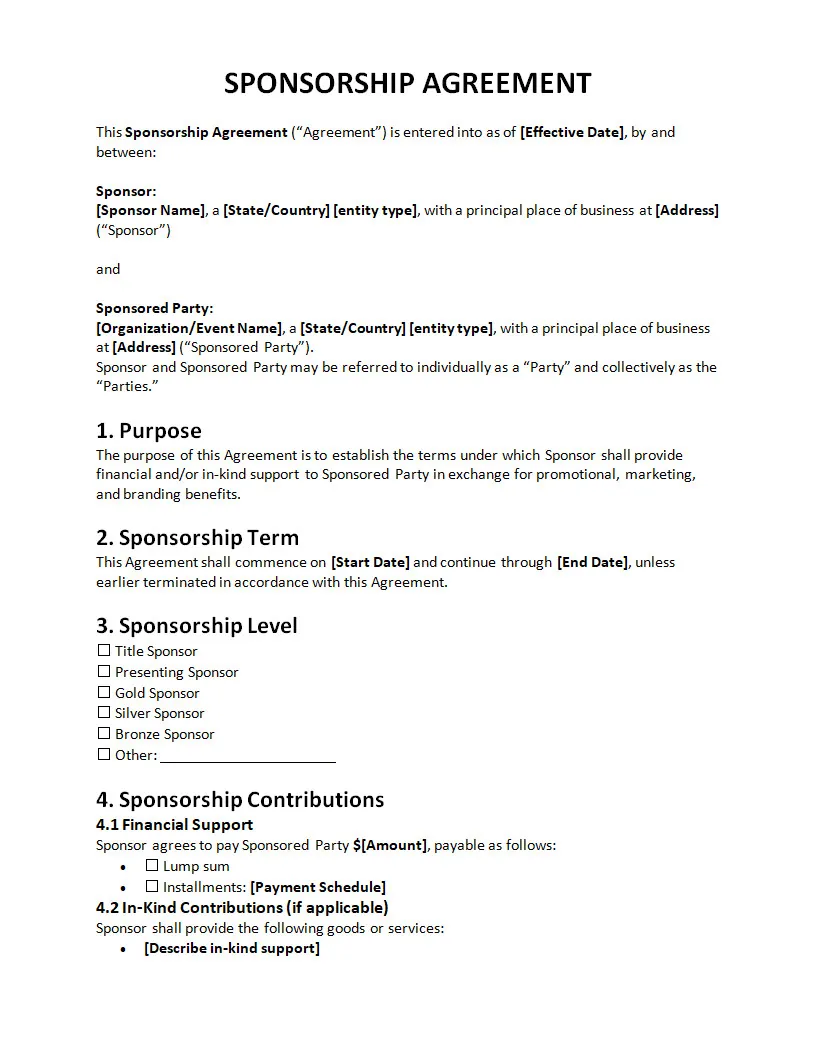
A Sponsorship Agreement helps clearly define the terms of a partnership between a sponsor and an individual, team, or organization. It outlines key details such as sponsorship benefits, payment terms, duration, branding rights, and responsibilities of both parties, ensuring transparency and mutual understanding. With a professionally structured template, you can protect interests, avoid misunderstandings, and build successful, long-term sponsorship relationships.
Download our Sponsorship Agreement Template today to create a clear, reliable agreement that supports effective and professional sponsorship collaborations.
Sponsorship Agreement Template – DOWNLOAD
