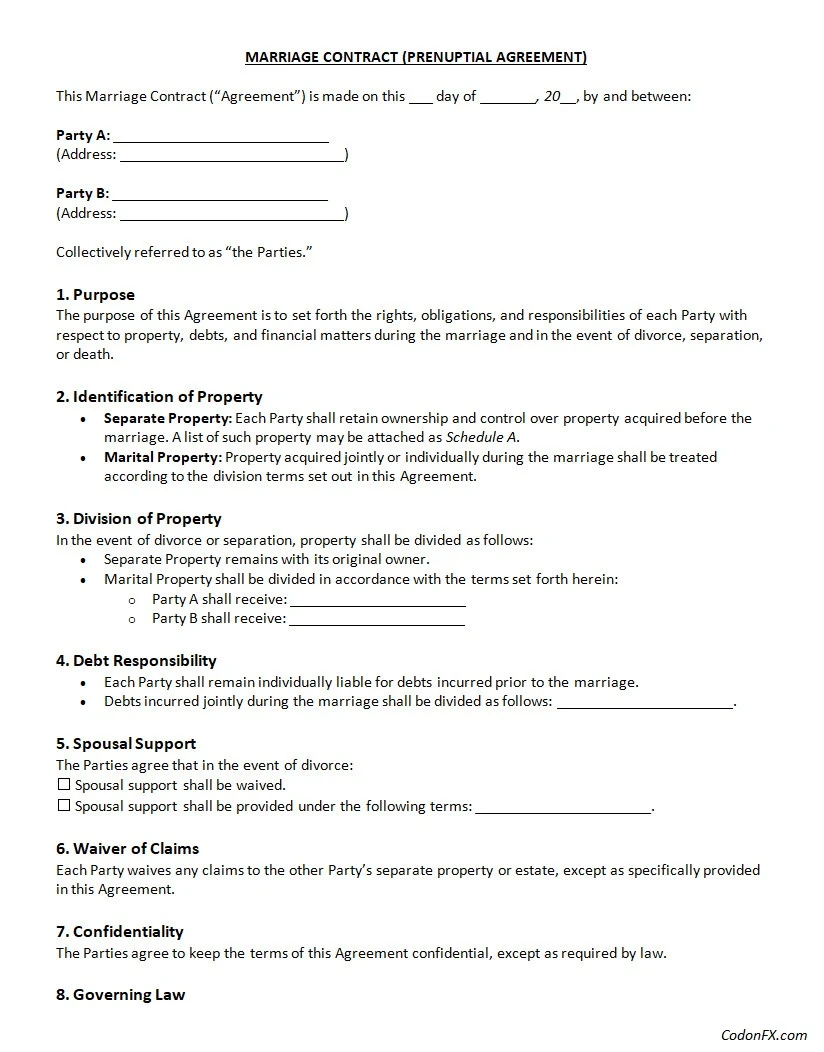
When couples decide to tie the knot, thoughts of potential separation, divorce, or death are often put on the back burner. However, it is crucial to be prepared for any eventuality and protect each partner’s assets and interests.
A wedding agreement, also known as a prenuptial agreement or prenup, is a legally binding document that outlines the rights and responsibilities of spouses in the unfortunate event of divorce, separation, or death. This agreement provides clarity by establishing specific terms such as property division, spousal support, and debt allocation, thereby reducing the likelihood of disagreements and ensuring that both parties’ wishes are honored.
What is a Wedding Agreement?
A wedding agreement, commonly referred to as a prenuptial agreement or prenup, is a legal contract that couples enter into before marriage to determine how their assets and liabilities will be divided in the event of divorce, separation, or death.
This document enables individuals to specify their respective rights and obligations, thereby safeguarding their personal finances and property. While some may view wedding agreements as unromantic or pessimistic, they serve as a practical and forward-thinking approach to addressing potential issues before they escalate into disputes.
Why Should Couples Consider a Wedding Agreement?
There are compelling reasons why couples should give serious thought to creating a wedding agreement to safeguard their legal rights:
Asset Protection
One of the primary reasons to consider a wedding agreement is asset protection. This document allows individuals to specify how their assets will be divided in the event of divorce, ensuring that pre-marital assets, inheritances, and business interests remain with their original owner. By clearly outlining ownership and distribution of assets, couples can prevent disputes over property division and financial matters.
Debt Allocation
Another critical aspect that a wedding agreement addresses is debt allocation. By specifying how debts will be divided between spouses, including credit card balances, mortgages, and other financial obligations, couples can avoid situations where one party is burdened with the other’s liabilities. This clarity can help prevent financial strain and disputes over debt repayment in the event of a breakup.
Spousal Support
Spousal support, also known as alimony, is a common issue in divorce cases. A wedding agreement can establish the terms of spousal support, including whether one party will provide financial assistance to the other and under what circumstances. By setting clear guidelines for spousal support, couples can avoid uncertainty and disagreements over financial obligations after a divorce.
Reduced Conflict
One of the main benefits of a wedding agreement is its ability to reduce conflict and uncertainty in the event of divorce or separation. By clearly outlining each spouse’s rights and responsibilities, including property division, spousal support, and debt allocation, the agreement can help minimize disputes and disagreements. This can lead to a more amicable and efficient resolution of financial matters during a divorce.
Protecting Children’s Interests
When couples have children from previous relationships, it is crucial to consider their well-being and financial security. A wedding agreement can address custody arrangements, visitation schedules, and child support obligations, ensuring that children’s interests are protected. By including provisions for children in the agreement, couples can provide for their care and support in the event of a divorce or separation.
Peace of Mind
Having a wedding agreement in place can provide couples with peace of mind and security as they enter into marriage. Knowing that their assets, financial interests, and wishes are protected by a legally binding document can offer reassurance and confidence in the face of uncertain future events. This peace of mind can strengthen the foundation of the relationship and alleviate anxieties about potential legal disputes.
What to Include in a Wedding Agreement?
When drafting a wedding agreement, it is essential to include comprehensive provisions that address key issues related to property division, spousal support, and debt allocation. The agreement should be tailored to the specific circumstances of each couple and may include the following elements:
Identification of Assets and Liabilities
A crucial component of a wedding agreement is a detailed inventory of each spouse’s assets and liabilities. This includes real estate properties, investments, bank accounts, personal belongings, as well as any debts or financial obligations. By clearly identifying each party’s financial status, couples can ensure that all assets and liabilities are accounted for and addressed in the agreement.
Property Division
One of the most significant aspects of a wedding agreement is property division. Couples should outline how their assets will be divided in the event of divorce, including the family home, vehicles, retirement accounts, investments, and other joint assets. By establishing clear guidelines for property division, couples can avoid disputes over ownership and distribution of assets during a breakup.
Spousal Support
Spousal support provisions in a wedding agreement address the issue of financial assistance between spouses after a divorce. Couples can specify whether one party will provide support to the other and define the amount and duration of payments. By including clear terms for spousal support in the agreement, couples can avoid uncertainty and conflicts over financial obligations in the future.
Debt Allocation
Debt allocation clauses in a wedding agreement outline how debts will be divided between spouses in the event of divorce or separation. This includes credit card debts, mortgages, loans, and other financial liabilities. By specifying how debts will be allocated, couples can prevent one party from being unfairly burdened with the other’s financial obligations and ensure a fair distribution of liabilities.
Child Custody and Support
If the couple has children, the wedding agreement may address custody arrangements, visitation schedules, and child support obligations. It is crucial to consider the best interests of the children and provide for their care and support in the event of a divorce or separation. By including provisions for children in the agreement, couples can ensure that their needs are met and their well-being is prioritized.
Modification and Termination
Wedding agreements should include provisions for modifying or terminating the agreement under certain circumstances. Couples may need to update the agreement to reflect changes in their financial situation, family dynamics, or legal requirements. By establishing clear procedures for amending or ending the agreement, couples can ensure that it remains relevant and enforceable over time.
How to Draft a Wedding Agreement?
Creating a wedding agreement requires careful consideration and legal guidance to ensure that it is comprehensive, fair, and legally binding. The process typically involves several steps to draft an agreement that meets the needs and expectations of both parties:
Consultation
The first step in drafting a wedding agreement is to consult with a family law attorney who specializes in marital agreements. During the consultation, couples can discuss their goals, concerns, and legal requirements for a valid agreement in their jurisdiction. The attorney can provide guidance on the content of the agreement and help couples navigate the legal complexities of drafting a comprehensive document.
Disclosure
Full disclosure of assets, liabilities, and financial information is essential when creating a wedding agreement. Each party should provide complete and accurate information about their financial status to ensure transparency and fairness in the agreement. Failure to disclose assets or liabilities can lead to challenges to the validity of the agreement in the future.
Negotiation
Negotiating the terms of the agreement is a critical step in the process.
Negotiation
During the negotiation phase, couples work together to define the terms of the agreement, taking into account each party’s needs, priorities, and concerns. It is essential to communicate openly and honestly during this process to address any potential conflicts or disagreements. Compromise and flexibility are key elements in reaching a mutually beneficial agreement that reflects the interests of both spouses.
Review and Signing
Once the terms of the agreement have been negotiated, it is crucial to review the final draft with the assistance of legal counsel. An experienced family law attorney can ensure that the agreement accurately reflects the intentions of both parties and complies with the legal requirements of the jurisdiction. After thorough review and discussion, the agreement can be signed in the presence of witnesses to make it legally binding.
Registration
Depending on the laws of the jurisdiction, couples may need to register the wedding agreement with the appropriate court or government agency to make it legally enforceable. Registration ensures that the agreement is recognized and upheld in the event of a dispute or legal challenge. Couples should follow the necessary procedures to ensure that their agreement is valid and enforceable under the law.
Tips for Creating a Successful Wedding Agreement
When creating a wedding agreement, it is essential to consider the following tips to ensure its effectiveness and enforceability:
Start Early
Begin the process of drafting a wedding agreement well in advance of the wedding date to allow sufficient time for negotiation, review, and any necessary revisions. Starting early can help minimize stress and ensure that both parties have ample time to discuss and finalize the terms of the agreement.
Communicate Openly
Effective communication is key to creating a successful wedding agreement. Couples should openly discuss their financial situation, goals, and concerns to address any potential conflicts or misunderstandings. Honest and transparent communication can help build trust and mutual understanding throughout the agreement process.
Seek Legal Advice
Consulting with experienced legal professionals is essential when creating a wedding agreement. Family law attorneys can provide valuable guidance on the legal requirements, content, and implications of the agreement. Legal advice can help ensure that the agreement is fair, comprehensive, and legally binding.
Be Transparent
Full and accurate disclosure of assets, liabilities, and financial information is critical when creating a wedding agreement. Both parties should provide complete and honest information to avoid challenges to the validity of the agreement in the future. Transparency can help build trust and ensure that the agreement accurately reflects the financial status of each spouse.
Update as Needed
Periodically reviewing and updating the wedding agreement is essential to ensure that it remains relevant and reflective of the couple’s current financial situation and circumstances. Couples should revisit the agreement periodically, especially after significant life events or changes in financial status, to make any necessary revisions or updates.
Consider Mediation
If couples encounter difficulties in reaching a mutual agreement, they may consider engaging a mediator to facilitate productive discussions and resolution. Mediation can help couples navigate conflicts and reach a consensus on the terms of the agreement in a neutral and collaborative setting. A mediator can provide an impartial perspective and assist in finding common ground on key issues.
Plan for the Future
When creating a wedding agreement, couples should consider potential scenarios and contingencies that may affect their marriage. Including provisions in the agreement for foreseeable events, such as job changes, relocations, or the birth of children, can help couples address these situations proactively. Planning for the future can help couples navigate unexpected challenges and protect their interests in the long run.
Wedding Agreement Template – DOWNLOAD
