A bill receipt is an important document that confirms a customer has made a payment toward a bill, invoice, or outstanding balance. Whether you run a small business, provide professional services, or manage recurring payments, issuing a clear receipt helps maintain accurate financial records and builds trust with customers.
A bill receipt template makes this process easier by providing a structured format for recording payment details. Instead of creating a new receipt every time a customer pays, you can use a reusable form to document the transaction, identify the parties involved, and confirm the amount received.
In this guide, you will learn what a bill receipt is, what information it should include, how to create one, and how to use a printable bill receipt template for different payment situations. You will also find practical examples and answers to frequently asked questions.
What Is a Bill Receipt?
A bill receipt is a written acknowledgment issued by a supplier, service provider, business, or individual after receiving payment from a customer. It serves as proof that a specific amount of money has been collected toward a bill or financial obligation.
Depending on the transaction, a bill receipt may confirm full payment or document a partial payment against an outstanding balance. It typically includes the receipt number, payment date, customer information, bill reference, amount received, payment method, and the remaining balance, if applicable.
Unlike a bill or invoice, which requests payment, a receipt documents that payment has already been received. This distinction makes it an important record for both the person making the payment and the party collecting it.
A properly completed bill payment receipt can help prevent misunderstandings, support bookkeeping activities, and provide evidence of a completed transaction.
Why Is a Bill Receipt Important?
Providing a receipt after receiving payment is a simple business practice that offers several benefits. It creates a written record of the transaction and gives both parties a reliable reference if questions arise later.
1. Provides Proof of Payment
The primary purpose of a bill receipt is to confirm that payment has been received. Customers can keep the document as evidence that they have fulfilled their payment obligations.
2. Improves Financial Recordkeeping
Businesses can use payment receipts to track incoming payments, update customer accounts, and maintain organized financial records. This information can also make bookkeeping and financial reviews easier.
3. Prevents Payment Disputes
A receipt records important transaction details, including the amount paid and payment date. If a disagreement occurs, both parties can refer to the same document instead of relying on memory.
4. Builds Customer Confidence
Issuing a professional receipt demonstrates that a business handles transactions responsibly. It reassures customers that their payments have been acknowledged and recorded.
5. Simplifies Account Reconciliation
When businesses receive payments from multiple customers, receipts help match incoming funds with the correct bills or invoices. This makes it easier to identify paid accounts and outstanding balances.
What Information Should a Bill Receipt Include?
A useful bill receipt should contain enough information to identify the transaction clearly. Although the exact format may vary depending on the business, most receipts should include the following details:
- Receipt Number: A unique identification number used to organize and locate individual payment records.
- Payment Date: The date when the customer made the payment.
- Supplier Information: The business name, address, phone number, and email address of the payment recipient.
- Customer Information: The name and contact details of the person or organization making the payment.
- Bill or Invoice Number: A reference number connecting the receipt to the original bill.
- Payment Description: A brief explanation of the product, service, utility, or expense being paid.
- Amount Received: The exact amount collected from the customer.
- Payment Method: The method used, such as cash, bank transfer, check, or credit or debit card.
- Outstanding Balance: Any amount that remains unpaid after the transaction, when applicable.
- Authorized Signature: A signature or other appropriate acknowledgment from the person receiving the payment.
Including these details makes the receipt easier to understand and more useful for future reference. For businesses handling frequent transactions, assigning unique receipt numbers is especially helpful.
Free Printable Bill Receipt Template
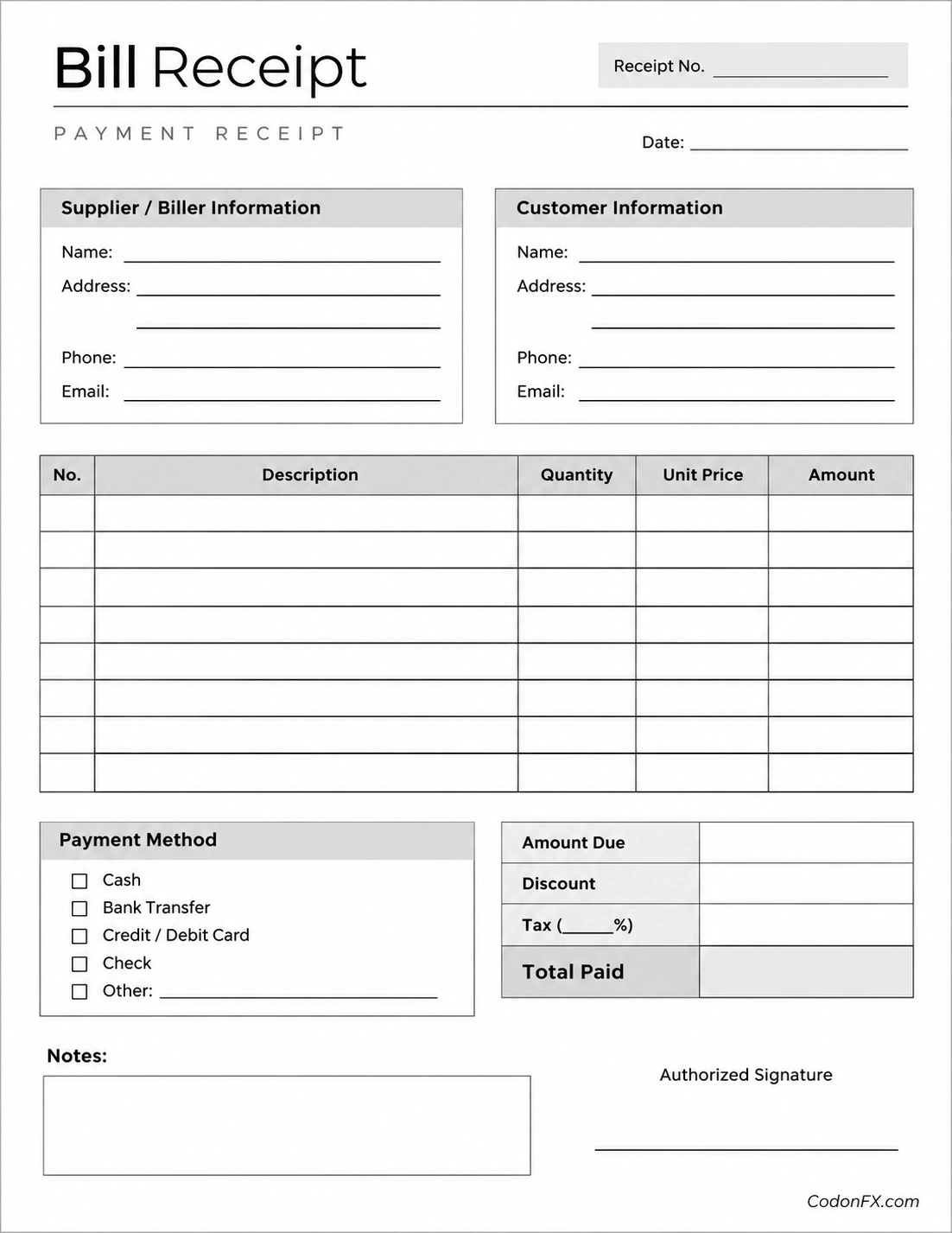
A printable bill receipt template provides a convenient way to document payments without designing a receipt from scratch. You can use a preformatted layout to record customer details, payment information, bill references, and the total amount received.
The following bill receipt format is designed with a clean, minimalist appearance. It includes dedicated sections for supplier and customer information, an itemized payment table, payment methods, and a final payment summary.
It is suitable for small businesses, independent service providers, contractors, and individuals who need a simple payment acknowledgment form.
Different Types of Bill Receipt Formats
Not every payment situation requires the same receipt layout. Depending on the nature of the transaction, you may need a more specialized format. Here are several common types of bill receipts and their typical uses.
1. Service Payment Receipt
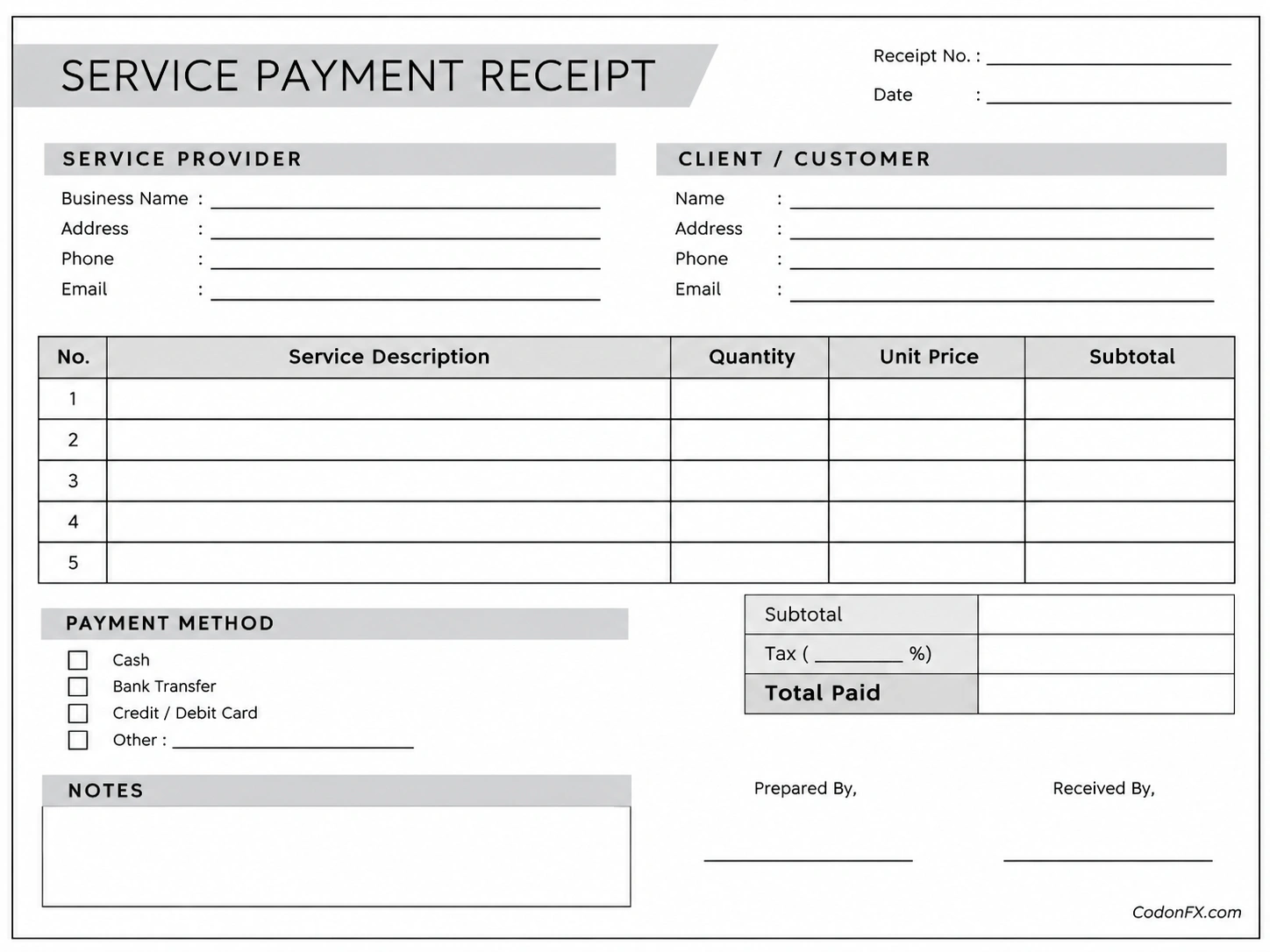
A service payment receipt is used by professionals and businesses that provide services to customers. It can document payments for maintenance, repairs, consulting, cleaning, installation, and other service-related work.
This format usually includes a service description, quantity or hours worked, unit price, total charges, and payment confirmation.
2. Paid Bill Receipt
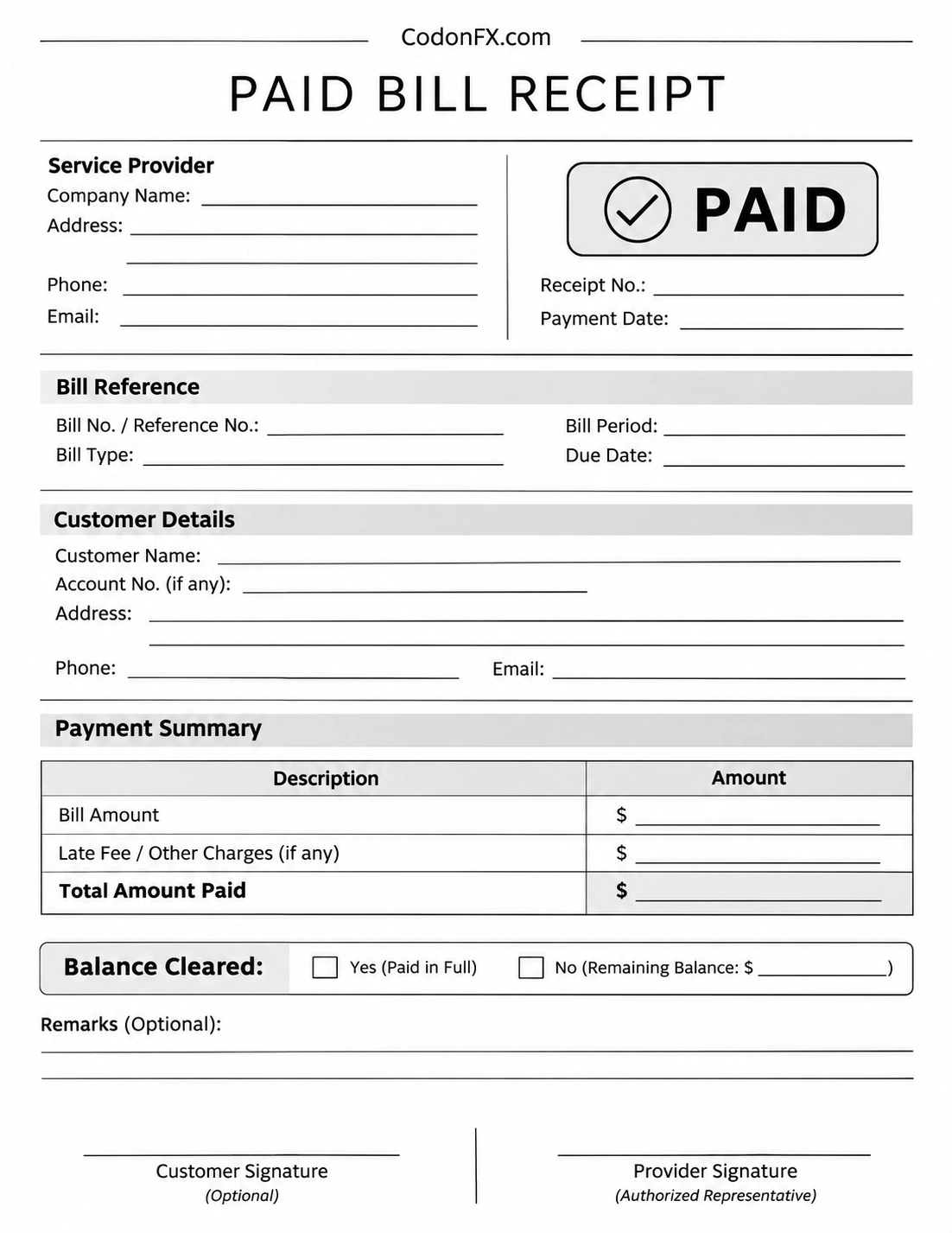
A paid bill receipt is specifically designed to confirm that a bill has been settled. It is useful when a customer needs written confirmation that an outstanding obligation has been paid in full.
This format should clearly display the payment date, bill reference number, total amount received, and a paid confirmation statement. If the payment is not complete, the remaining balance should be recorded accurately instead of marking the account as fully paid.
3. Utility Bill Receipt
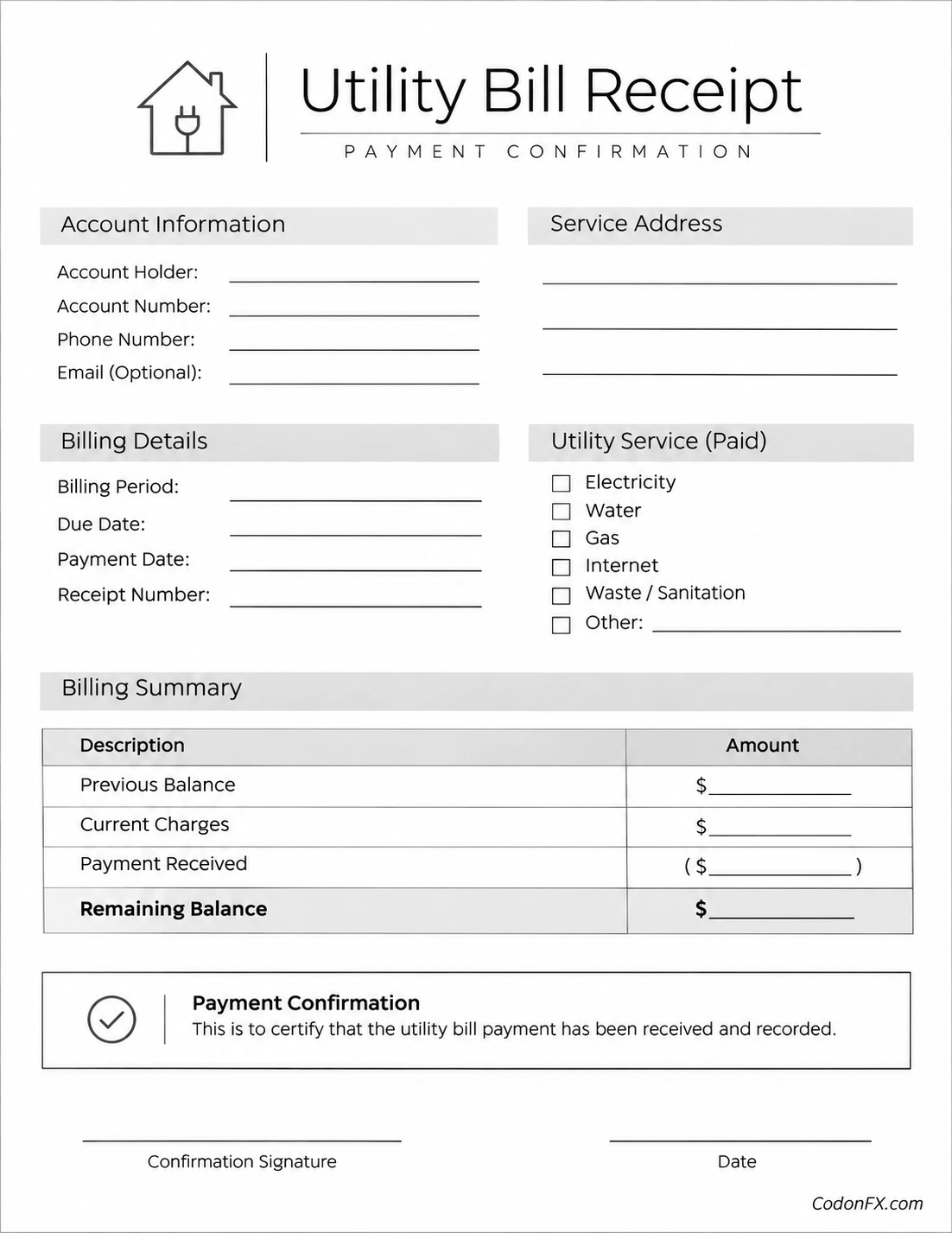
A utility bill receipt is used to document payments for essential household or commercial services. Common examples include electricity, water, natural gas, internet, and waste collection.
In addition to standard payment details, this receipt may include an account number, service address, billing period, due date, and previous balance. These fields help customers identify exactly which utility account and billing cycle the payment covers.
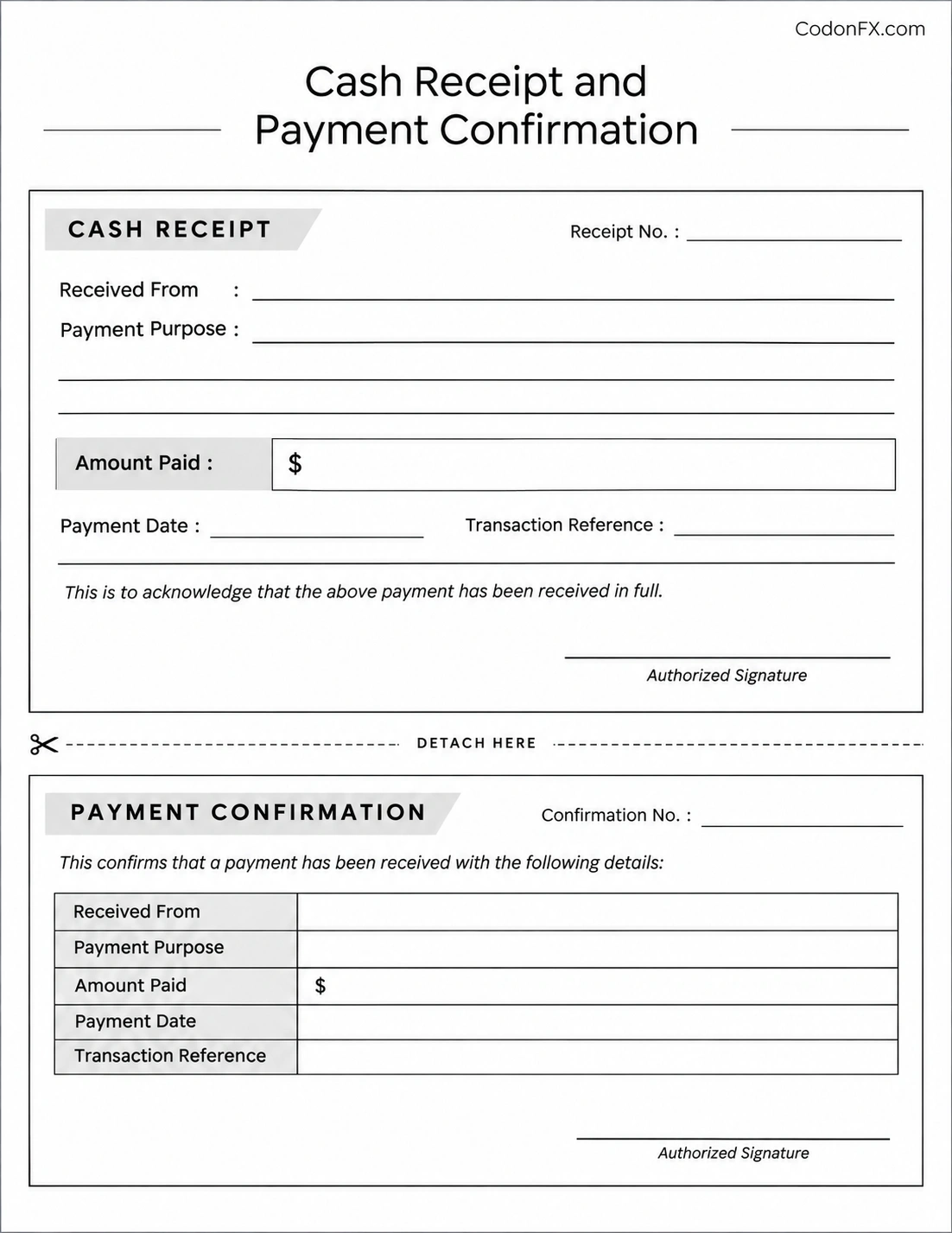
4. Cash Receipt and Payment Confirmation
A cash receipt is a document issued when money is received directly from a customer. It can be used for service payments, personal transactions, small business purchases, and other cash-based payments.
A combined cash receipt and payment confirmation format can also provide a detachable record. One section stays with the business, while the other can be given to the customer.
How to Fill Out a Bill Receipt Correctly
Completing a bill receipt is straightforward when you follow a consistent process. Use these steps to make sure the document contains accurate and complete information.
Step 1: Enter the Receipt Number and Date
Start by assigning a unique receipt number and entering the date the payment was received. If your business issues multiple receipts, use a consistent numbering system to avoid duplicate records.
Step 2: Add Supplier and Customer Details
Enter the business or service provider’s information, followed by the customer’s name and contact details. Check the spelling and account information before proceeding.
Step 3: Identify the Bill Being Paid
Include the original invoice number, bill reference, billing period, or a short payment description. This makes it easier to connect the receipt with the correct transaction.
Step 4: Record the Payment Amount
Write down the amount received and specify the applicable currency. If the customer makes a partial payment, record the remaining balance separately so the account status is clear.
Step 5: Specify the Payment Method
Indicate whether the payment was made by cash, bank transfer, check, credit card, debit card, or another accepted method. Include a transaction reference when available.
Step 6: Confirm and Issue the Receipt
Review all information, confirm that the payment has actually been received, and provide the customer with a copy. Keep another copy for your business records when appropriate.
Tips for Creating a Professional Bill Receipt
A well-designed receipt should be easy to read, simple to complete, and consistent with your business documentation. Consider these practical tips when preparing your own payment receipt format.
- Keep the layout simple: Use clear headings, readable fonts, and sufficient space for handwritten information.
- Use consistent numbering: Assign a unique receipt number to every transaction.
- Separate payment details: Display the amount received, additional charges, discounts, and outstanding balance in clearly labeled fields.
- Choose a practical format: Use a printable layout for handwritten receipts or a digital format for electronic recordkeeping.
- Include business information: Add your business name and contact details so customers know who issued the receipt.
- Check the calculations: Verify totals, taxes, and balances before issuing the document.
- Keep organized copies: Store receipts securely so they can be retrieved when needed.
It is also important to remember that a receipt is not necessarily a substitute for a tax invoice or another document required by local regulations. Businesses should follow the applicable accounting and tax requirements in their jurisdiction.
Bill Receipt vs. Invoice: What Is the Difference?
Although receipts and invoices are both common business documents, they serve different purposes. Understanding the distinction helps businesses issue the correct document at each stage of a transaction.
- Invoice: A document sent to request payment for products or services. It generally includes the amount due, payment terms, and due date.
- Bill: A statement of charges that tells a customer how much they owe for a product, service, or other obligation.
- Bill Receipt: A document confirming that a payment has been received against a bill or outstanding amount.
For example, a contractor may first send an invoice for completed work. After the customer pays, the contractor issues a receipt confirming the amount received. Both documents serve different purposes and may be needed for proper financial recordkeeping.
Frequently Asked Questions About Bill Receipts
1. What is the purpose of a bill receipt?
The purpose of a bill receipt is to provide written proof that a payment has been received. It records important transaction details, such as the payment date, amount, customer information, and bill reference number.
2. Is a bill receipt the same as an invoice?
No. An invoice requests payment, while a bill receipt confirms that payment has been received. An invoice is generally issued before payment, whereas a receipt is issued after a payment transaction.
3. Can I use a bill receipt template for partial payments?
Yes. You can use a bill receipt template for partial payments by recording the amount received and the remaining outstanding balance. Clearly identifying the payment as partial helps prevent confusion about whether the bill has been fully settled.
4. What should I write on a bill receipt?
Include the receipt number, payment date, supplier and customer details, bill reference, payment description, amount received, payment method, and authorized acknowledgment. If applicable, include the remaining balance.
5. Can I create a bill receipt in Word or Excel?
Yes. Microsoft Word is useful for designing printable receipt forms, while Excel can help calculate totals and organize payment records. You can also use a PDF template when you need a consistent document that is easy to print or share.
6. Should a bill receipt include a signature?
A signature can provide additional acknowledgment that the payment was received. Whether it is necessary depends on the transaction, business procedures, and applicable requirements. Digital receipts may use electronic confirmations instead.
7. How long should I keep bill receipts?
The recommended retention period depends on local tax laws, accounting regulations, and business requirements. Keep receipts for the period required in your jurisdiction and store them securely for future reference.
8. Can a bill receipt be used as proof of full payment?
Yes, provided the receipt accurately identifies the transaction and clearly confirms that the full amount has been received. Including a statement such as “Paid in Full” and showing a zero remaining balance can make the payment status easier to understand.
Conclusion
A bill receipt is an essential document for confirming payments and maintaining accurate financial records. It provides customers with proof of payment while helping businesses organize transactions, monitor outstanding balances, and reduce potential disputes.
Using a well-structured bill receipt template makes the process faster and more consistent. Whether you need a general payment receipt, a service payment receipt, a paid bill receipt, or a utility bill receipt, choosing a clear and professional format helps ensure that every transaction is properly documented.
Use the printable bill receipt format in this guide as a starting point and customize the fields to match your business or personal payment requirements.
Bill Receipt Template Word – Download
