In the world of business, especially for Limited Liability Companies (LLCs), having a well-drafted business operating agreement is crucial. This internal rulebook acts as a contract among owners (members) that defines the company’s structure, management, ownership, and operational procedures. It provides crucial clarity, prevents future disputes, protects personal assets through limited liability, and allows for customizing rules beyond state defaults.
Ultimately, it outlines how profits and losses are shared, voting rights, member responsibilities, and decision-making processes, ensuring smooth operations while reinforcing the legal separation of the LLC from its owners.
What is a Business Operating Agreement?
A business operating agreement is a document that outlines the rules and regulations that govern the internal operations of an LLC. It acts as a blueprint for how the company will be managed, including details on ownership, management structure, decision-making processes, profit sharing, and more. While not all states legally require LLCs to have an operating agreement, having one in place is highly recommended for the smooth functioning and protection of the business.
Why is a Business Operating Agreement Important?
1. Preventing Disputes: By clearly outlining the roles, responsibilities, and rights of each member, a business operating agreement helps to prevent misunderstandings and disputes in the future.
2. Protecting Personal Assets: One of the key benefits of an operating agreement is that it helps to establish the limited liability protection of the members. This means that their personal assets are shielded from any debts or legal liabilities of the business.
3. Customizing Rules: State default rules may not always align with the specific needs and preferences of the LLC. An operating agreement allows members to customize rules according to their unique requirements.
4. Clarity and Structure: Having a written agreement in place provides clarity on how the business will be run, who makes decisions, and how profits and losses will be distributed.
5. Legal Requirement: While not mandated in all states, some states require LLCs to have an operating agreement. Even if not required, having one can still be beneficial for the reasons mentioned above.
Key Elements of a Business Operating Agreement
When drafting a business operating agreement for an LLC, several key elements should be included:
1. Introduction: Clearly state the name of the LLC, its purpose, and the date of formation.
2. Organization: Outline the ownership structure, management roles, voting rights, and decision-making processes.
3. Capital Contributions: Detail the initial contributions made by each member and how additional contributions will be handled.
4. Profit and Loss Allocation: Specify how profits and losses will be distributed among members.
5. Distributions: Define when and how distributions will be made to members.
6. Membership Changes: Address how new members can join the LLC and how existing members can transfer or sell their interests.
7. Dissolution: Include provisions for how the LLC will be dissolved if needed.
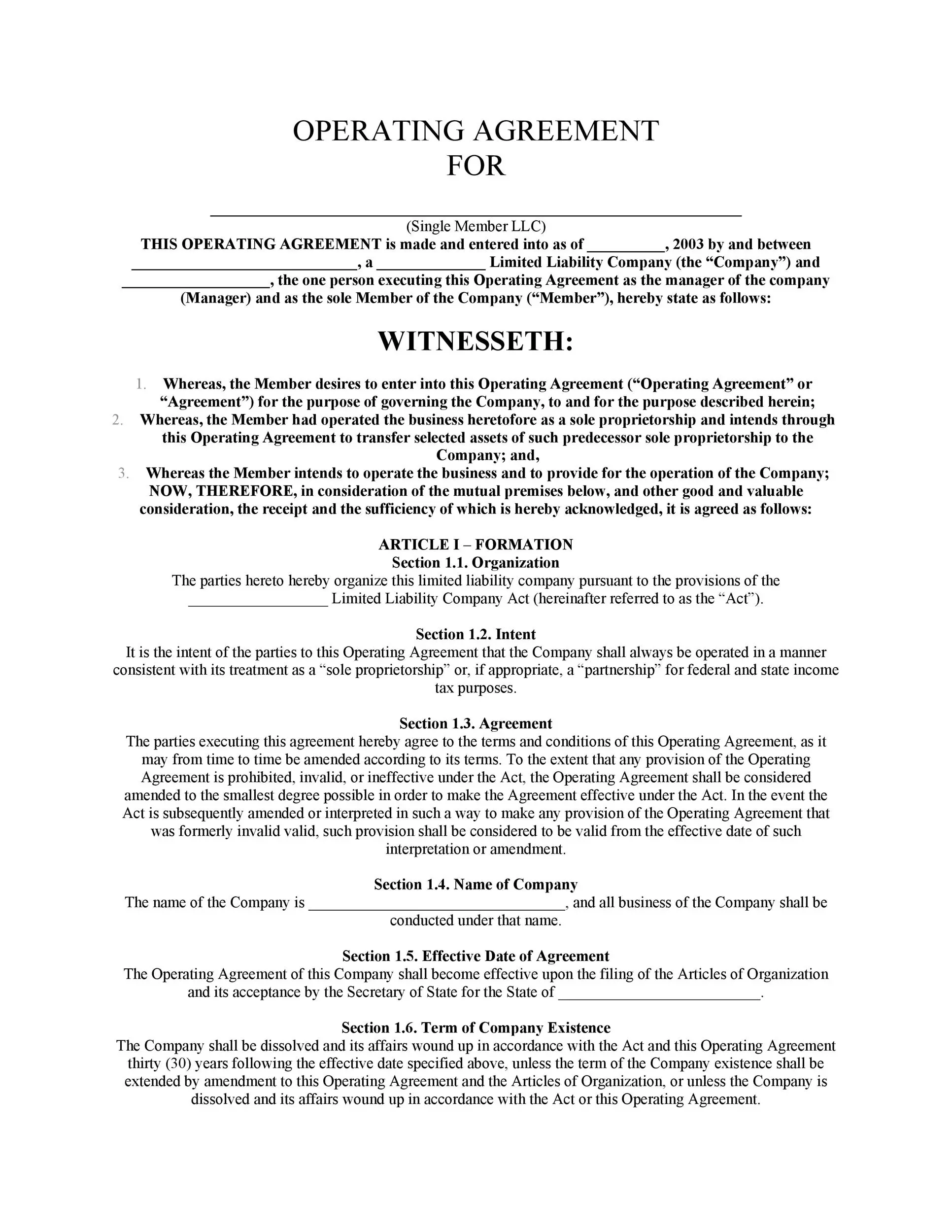
How to Draft a Business Operating Agreement
1. Consult with Legal Professionals: It is advisable to seek the guidance of a legal professional who specializes in business law to ensure that the operating agreement complies with state laws and meets the specific needs of the LLC.
2. Customize the Agreement: Tailor the operating agreement to the unique requirements of the LLC, taking into account the preferences and goals of the members.
3. Be Clear and Specific: Clearly define the terms and provisions in the agreement to avoid ambiguity and potential disputes in the future.
4. Regularly Review and Update: As the business evolves, it is important to review and update the operating agreement to reflect any changes in ownership, management, or operational procedures.
5. Keep a Signed Copy: Once the operating agreement is finalized, make sure that all members sign and keep a copy for their records.
Tips for Successful Business Operating Agreements
– Communicate Openly: Encourage open communication among members to ensure that everyone is on the same page regarding the terms of the operating agreement.
– Seek Consensus: Whenever possible, strive for consensus among members when making decisions that impact the business.
– Document Everything: Keep detailed records of all decisions, meetings, and transactions to maintain transparency and accountability.
– Seek Legal Advice: If in doubt about any aspect of the operating agreement, do not hesitate to seek legal advice to ensure compliance and protection.
In conclusion, a well-crafted business operating agreement is a vital tool for the smooth functioning and protection of an LLC. By outlining the structure, management, ownership, and operational procedures of the company, it provides clarity, prevents disputes, protects personal assets, and allows for customization beyond state defaults. Every LLC needs to have a comprehensive operating agreement in place to ensure the success and longevity of the business.
