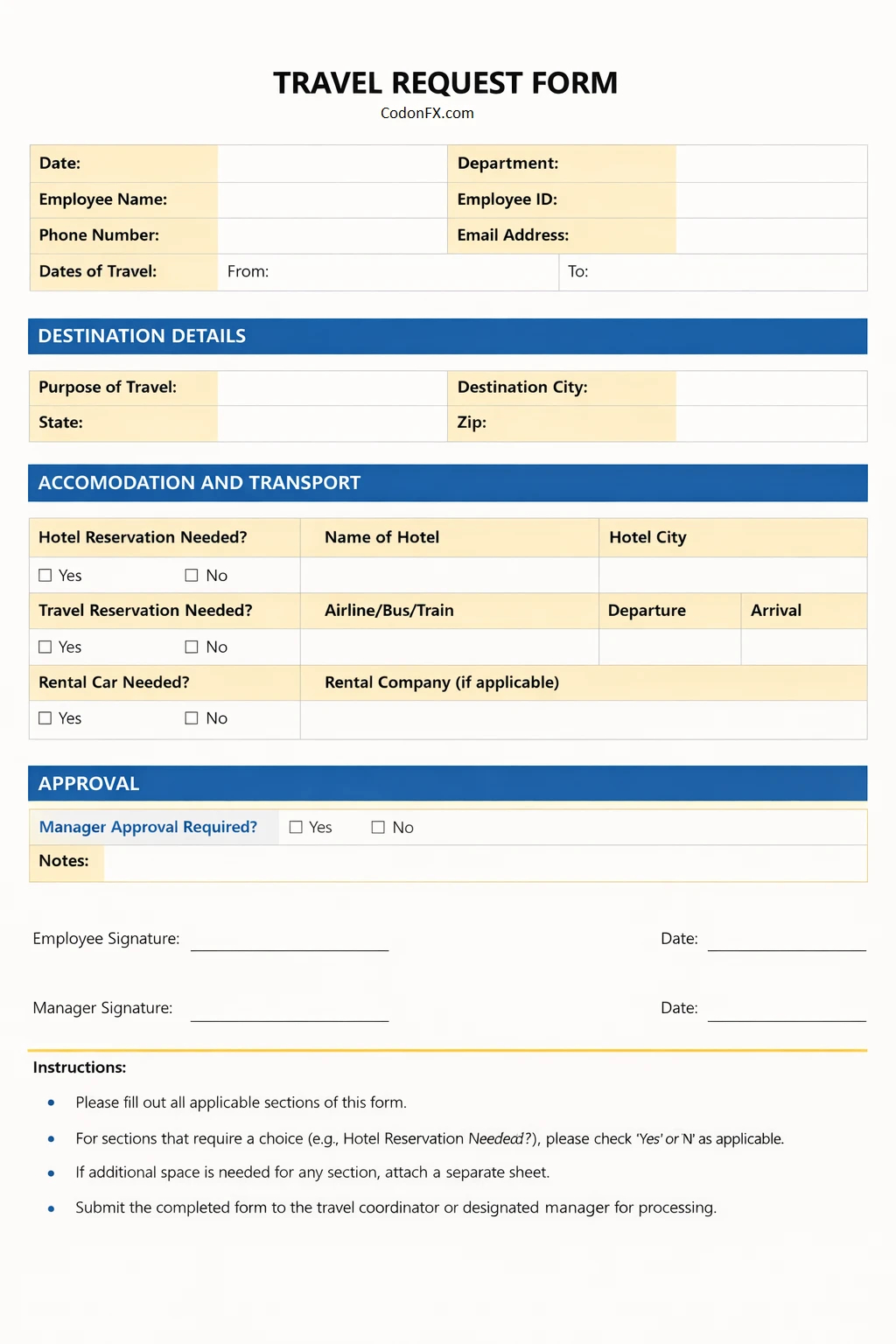
What is a Travel Request Form?
A travel request form is a standardized document used by companies to streamline the process of requesting and approving business travel. It serves as a formal request for authorization and provides essential details such as the purpose of the trip, dates of travel, estimated costs, and any special requirements.
This form is a critical tool for ensuring that all travel-related activities adhere to company policies and guidelines.
Importance of Travel Request
Travel requests are essential for maintaining control over travel-related expenses, ensuring compliance with company policies, and providing a clear record of all business travel activities. By requiring employees to submit a formal request before embarking on a trip, organizations can better manage costs, monitor travel patterns, and minimize the risk of unauthorized or unnecessary travel.
Cost Management
One of the primary reasons why travel requests are important is cost management. By having employees outline the purpose of their trip, estimated expenses, and justification for travel, companies can assess the financial impact of each trip and make informed decisions about budget allocation. This transparency helps prevent overspending, identify cost-saving opportunities, and align travel expenses with strategic objectives.
Compliance with Policies
Travel requests also play a crucial role in ensuring compliance with company policies and regulatory requirements. By having employees adhere to predefined guidelines for booking travel, using approved vendors, and following spending limits, organizations can mitigate risks related to fraud, noncompliance, and unauthorized expenses. This adherence to policies helps maintain consistency, transparency, and accountability in travel-related activities.
Record-Keeping and Audit Trail
Another key aspect of the importance of travel requests is the creation of a comprehensive record of all business travel activities. By documenting each trip taken by employees, including the purpose, dates, expenses, and approvals, companies can establish an audit trail for accounting and auditing purposes. This record-keeping not only ensures accurate financial reporting but also helps organizations demonstrate compliance with internal controls, regulatory standards, and industry best practices.
Steps Involved in the Travel Request Process
The travel request process consists of several key steps that help ensure a systematic and efficient approach to managing business travel. From initial submission to final approval and post-trip reporting, each step plays a critical role in tracking expenses, gaining approvals, and maintaining compliance with company policies.
Submission of Travel Request
The first step in the travel request process is for employees to submit a formal request for authorization to travel. This typically involves completing a designated travel request form with details such as the purpose of the trip, dates of travel, estimated costs, and any special requirements. By providing comprehensive information upfront, employees can expedite the approval process and receive timely feedback on their travel plans.
Review and Approval
Once the travel request is submitted, it undergoes a review and approval process to ensure that it aligns with company policies, budget constraints, and business objectives. Depending on the organization’s hierarchy and approval workflow, the request may need to be reviewed by the employee’s supervisor, department head, finance team, or other relevant stakeholders. This step helps validate the necessity of the trip, assess its impact on operations, and secure the required authorizations before making any travel arrangements.
Booking Travel Arrangements
After the travel request is approved, employees can proceed with booking their travel arrangements, such as flights, accommodations, ground transportation, and other logistical details. By following the approved itinerary and adhering to company guidelines for booking travel, employees can ensure that their trip is aligned with the approved budget, timelines, and preferred vendors. This step requires careful coordination and attention to detail to secure cost-effective options, minimize disruptions, and optimize the overall travel experience.
Expense Reporting and Reimbursement
Upon returning from the trip, employees are typically required to submit expense reports detailing all incurred expenses during their travels. This includes receipts for airfare, lodging, meals, transportation, and any other related costs. The expense reporting process allows employees to seek reimbursement for eligible expenses and provides finance teams with a clear breakdown of travel expenditures for accounting and budgeting purposes. By reconciling actual expenses with the approved budget, companies can track variances, identify trends, and make informed decisions for future travel planning.
Record Keeping and Documentation
Once the travel request is completed and expenses are reconciled, all related documentation, including the travel request form, receipts, approvals, and expense reports, should be accurately recorded and stored for record-keeping purposes. This documentation serves as a comprehensive record of all business travel activities and provides a valuable resource for accounting, auditing, and compliance functions. By maintaining organized records of travel requests and expenses, companies can demonstrate transparency, accountability, and adherence to internal controls and external regulations.
Handling a Travel Request Form
Effectively managing travel request forms requires a systematic approach that ensures compliance with company policies, timely approvals, and accurate record-keeping. By following established procedures and best practices for handling travel requests, organizations can optimize the efficiency of their travel management processes and enhance overall control over travel-related activities.
Communication and Guidance
One key aspect of handling a travel request form is providing clear communication and guidance to employees on how to complete the form accurately and what information is required. By offering detailed instructions, examples, and templates, companies can help employees understand the expectations for travel requests and streamline the submission process. Effective communication fosters transparency, reduces errors, and expedites the approval workflow.
Timely Submission and Approval
To ensure that travel requests are processed efficiently, it is essential to establish clear timelines for submission, review, and approval. By setting deadlines for submitting travel requests and communicating the expected turnaround time for approvals, organizations can prevent delays, avoid last-minute requests, and maintain control over travel planning. Timely submission and approval of travel requests help employees make informed decisions, secure necessary authorizations, and plan their trips effectively.
Thorough Review and Validation
When handling a travel request form, it is crucial to conduct a thorough review of each submission to validate the necessity of the trip, assess the accuracy of the information provided, and ensure compliance with company policies. This review process may involve cross-checking details against approved budgets, verifying the appropriateness of travel dates, confirming the alignment with business objectives, and seeking additional approvals as needed. By conducting a comprehensive review, organizations can mitigate risks, prevent unauthorized expenses, and enhance overall control over travel-related activities.
Expense Monitoring and Reporting
As employees incur expenses during their travels, it is essential to monitor spending closely to ensure alignment with approved budgets and policies. By tracking expenses in real-time, companies can identify any deviations from the planned budget, address potential overspending, and provide timely feedback to travelers. Expense reporting plays a critical role in capturing all incurred costs, documenting receipts, and facilitating reimbursement processes. By maintaining accurate expense records, companies can optimize cost management, improve financial transparency, and support effective decision-making for future travel initiatives.
Feedback and Continuous Improvement
Handling travel request forms also involves providing feedback to employees on their submissions and seeking opportunities for continuous improvement. By offering constructive feedback on the completeness, accuracy, and compliance of travel requests, companies can help employees enhance their understanding of company policies, improve their submission quality, and contribute to a culture of accountability and transparency. Feedback loops enable organizations to identify trends, address recurring issues, and implement corrective actions to streamline the travel request process and enhance overall efficiency in travel management.
Travel Request Form Template – DOWNLOAD
