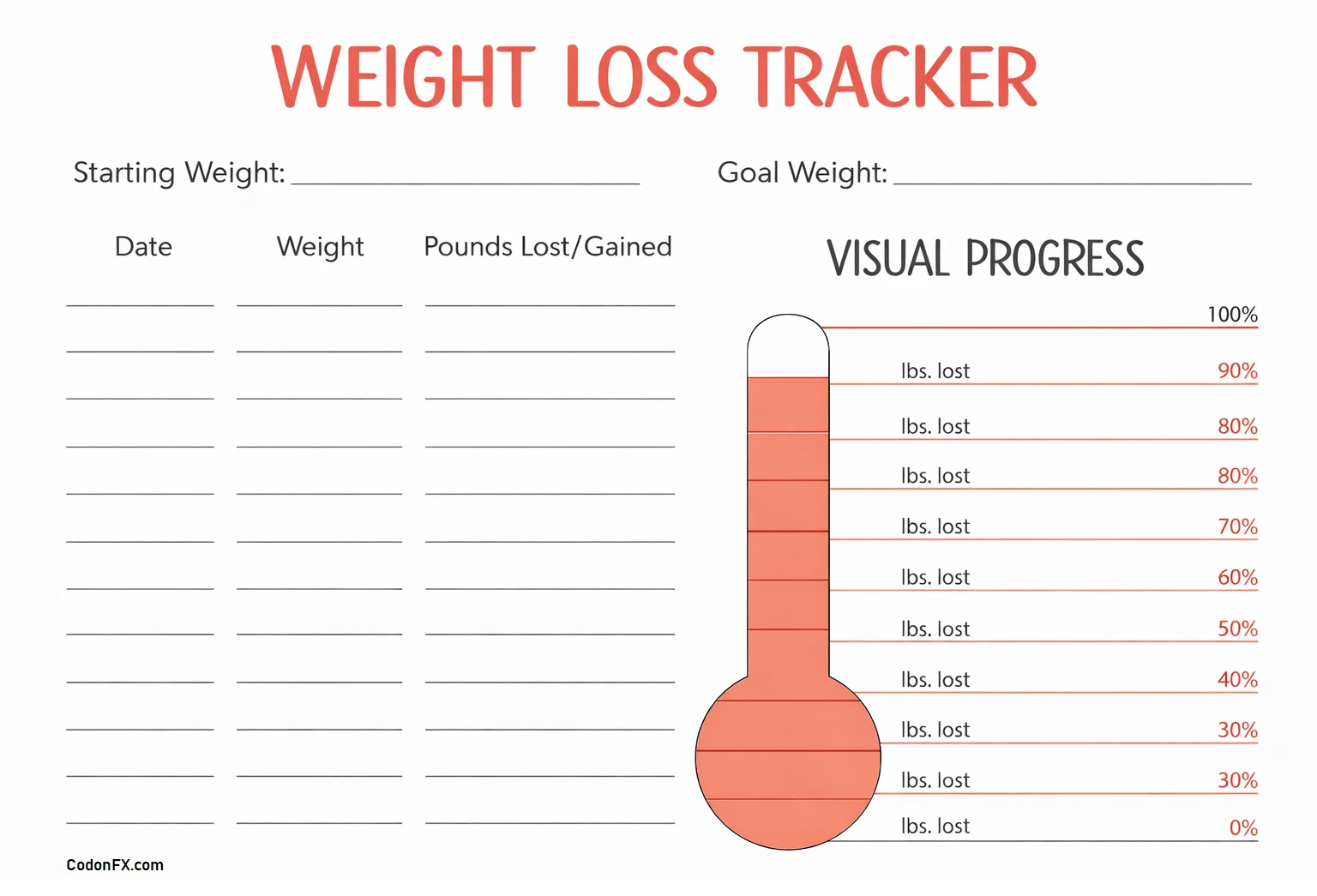
Tracking your weight loss journey can be a powerful tool to help you stay accountable, motivated, and aware of your eating and activity patterns.
A weight loss tracker is a valuable tool that can assist you in monitoring your progress towards your weight goals by recording your weight, diet, and exercise. By using a weight loss tracker, you can visualize your progress through charts, set realistic goals, identify triggers for weight changes, and gain insights into how your diet and exercise habits impact your body over time.
What Is A Weight Loss Tracker?
A weight loss tracker is a tool that allows you to monitor and record key metrics related to your weight loss journey, such as your weight, diet, and exercise. It helps you keep track of your progress over time by providing visual representations of your data, such as charts and graphs.
By using a weight loss tracker, you can track your daily food intake, exercise routines, weight fluctuations, and other relevant information to help you stay on track towards your weight loss goals.
How It Can Help You Achieve Your Weight Loss Goals
Using a weight loss tracker can be instrumental in helping you achieve your weight loss goals. By monitoring your progress and tracking your behaviors, you can increase your accountability, motivation, and awareness of your eating and activity patterns.
A weight loss tracker can help you stay focused on your goals, identify areas for improvement, and make necessary adjustments to your diet and exercise routines. Additionally, by visualizing your progress through charts and graphs, you can see how your efforts are paying off and stay motivated to continue on your weight loss journey.
What To Include In A Weight Loss Tracker
When setting up a weight loss tracker, there are several key components that you should include to effectively monitor your progress towards your weight goals. Some important elements to include in a weight loss tracker are:
- Weight: Record your weight regularly to track changes over time.
- Diet: Keep track of your daily food intake, including calories, macronutrients, and meal times.
- Exercise: Log your daily exercise routines, including duration, intensity, and type of workout.
- Water intake: Monitor your daily water intake to ensure proper hydration.
- Sleep: Track your sleep patterns to see how they may impact your weight loss progress.
- Goals: Set realistic and achievable weight loss goals to work towards.
- Triggers: Identify triggers for weight changes, such as stress, emotions, or environmental factors.
Tips To Help You Lose Weight
In addition to using a weight loss tracker, several tips and strategies can help you lose weight and reach your fitness goals. Some tips to help you lose weight include:
- Focus on whole foods: Eat a balanced diet rich in whole foods, such as fruits, vegetables, lean proteins, and whole grains.
- Stay active: Incorporate regular exercise into your daily routine, such as walking, jogging, or strength training.
- Stay hydrated: Drink plenty of water throughout the day to stay hydrated and support your weight loss efforts.
- Get enough sleep: Aim for 7-9 hours of quality sleep each night to support your metabolism and overall health.
- Avoid processed foods: Limit your intake of processed and sugary foods, which can contribute to weight gain.
- Manage stress: Practice stress-reducing techniques, such as meditation, yoga, or deep breathing exercises.
- Seek support: Surround yourself with a supportive network of friends, family, or a health professional to help you stay motivated and accountable.
Conclusion
A weight loss tracker can be a valuable tool to help you monitor your progress towards your weight goals and stay on track with your weight loss journey. By recording your weight, diet, and exercise habits, you can increase your accountability, motivation, and awareness of your eating and activity patterns.
Additionally, a weight loss tracker can provide visual progress through charts, help you set realistic goals, identify triggers for weight changes, and offer insights into how your diet and exercise habits impact your body over time. Incorporating a weight loss tracker into your daily routine can help you achieve your weight loss goals and lead a healthier, more active lifestyle.
Weight Loss Tracker Template – DOWNLOAD
