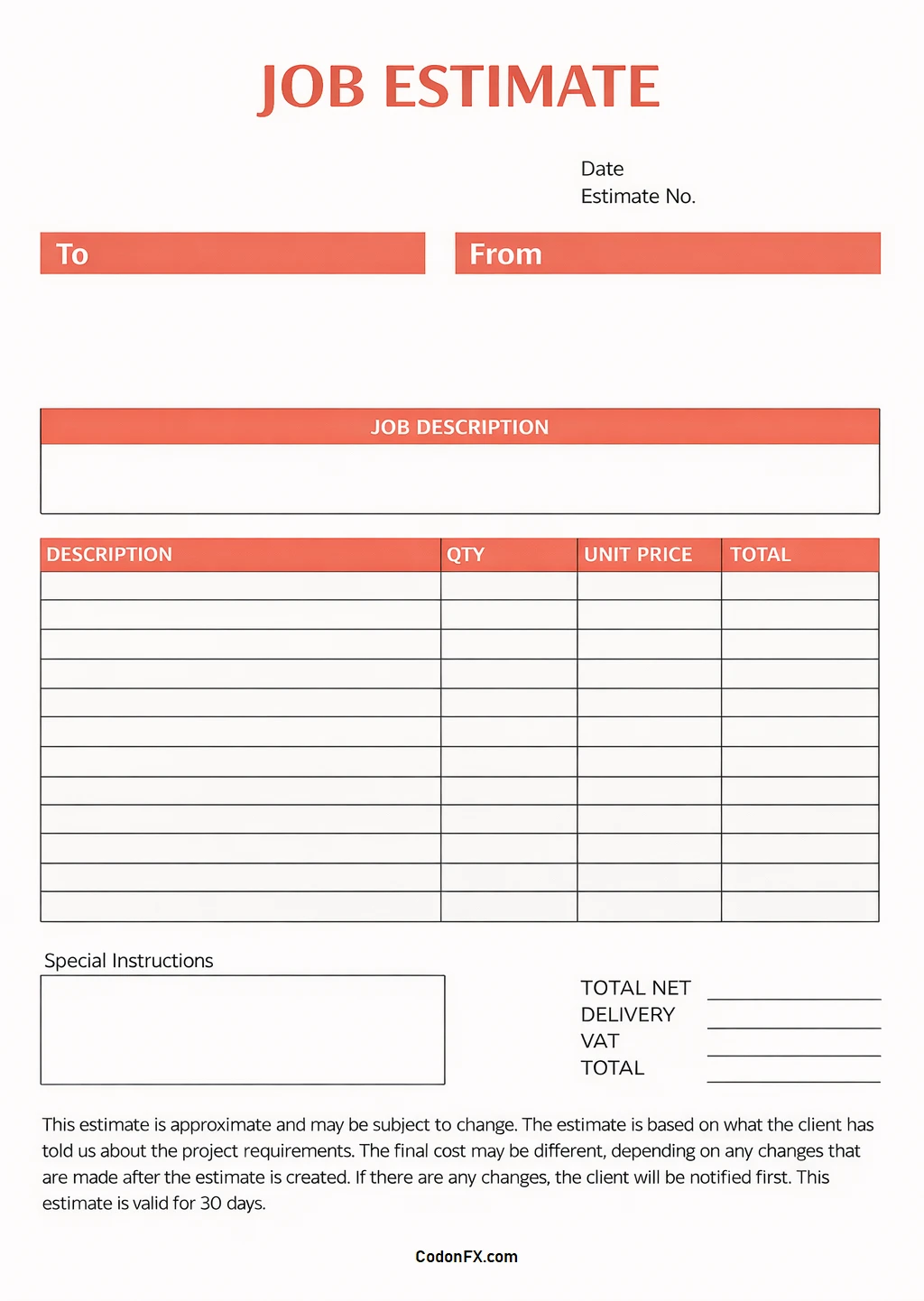
When completing a job for a client, one of the most crucial documents you will encounter is the work estimate. This document plays a significant role in the contract phase as it outlines the projected cost of the job for the buyer.
It serves as a tool for negotiating the price between the potential buyer and the supplier. In this guide, we will delve into all aspects of work estimates, from what they are to key elements to consider, and tips for creating successful estimates.
What is a Work Estimate?
A work estimate is a document that lists the projected cost for completing a job for the buyer. It is provided to the prospective client during the contract phase to give them an idea of how much the job will cost.
This document is essential for both parties as it helps in setting expectations, negotiating the price, and ensuring that there are no misunderstandings regarding the scope of work and the associated costs.
Why Are Work Estimates Important?
Work estimates are crucial in any business transaction as they lay the foundation for a successful project. Here are some reasons why work estimates are important:
- Setting Expectations: Work estimates help in setting clear expectations for both parties regarding the scope of work and the associated costs.
- Cost Negotiation: The estimate serves as a starting point for negotiating the price of the job, ensuring that both parties are in agreement before starting the project.
- Legal Protection: Work estimates can also serve as a legal document in case of disputes, outlining the agreed-upon terms and conditions of the project.
- Professionalism: Providing a detailed work estimate shows professionalism and transparency, building trust with the client.
Key Elements to Include in a Work Estimate
When creating a work estimate, there are several key elements that should be included to ensure clarity and accuracy. Here are some of the essential elements to consider:
- Client Information: Include the client’s name, contact information, and any other relevant details.
- Project Description: Provide a detailed description of the project, including the scope of work, deliverables, and timeline.
- Cost Breakdown: Break down the costs involved in the project, including labor, materials, and any other expenses.
- Terms and Conditions: Outline the payment terms, project timeline, and any other relevant terms and conditions.
- Signature Section: Include a section for both parties to sign, indicating their acceptance of the estimate.
How to Create a Work Estimate
Creating a work estimate can seem daunting, but with the right approach, it can be a straightforward process. Here are some steps to follow when creating a work estimate:
1. Gather Project Information
Start by gathering all the necessary information about the project, including the scope of work, timeline, and budget.
2. Break Down Costs
Break down the costs involved in the project, including labor, materials, overhead, and any other expenses.
3. Calculate Total Cost
Add up all the costs to calculate the total cost of the project. Be sure to include a buffer for any unforeseen expenses.
4. Outline Terms and Conditions
Clearly outline the payment terms, project timeline, and any other relevant terms and conditions in the estimate.
5. Review and Finalize
Review the estimate with the client to ensure accuracy and clarity. Make any necessary revisions before finalizing the estimate.
6. Obtain Signatures
Once both parties are in agreement, have the client sign the estimate to indicate their acceptance of the terms.
7. Keep a Record
Be sure to keep a record of the signed estimate for your records. This document will serve as a reference point throughout the project.
Tips for Successful Work Estimates
Creating accurate and successful work estimates is essential for the success of any project. Here are some tips to help you create effective estimates:
- Be Thorough: Take the time to gather all the necessary information and provide a detailed breakdown of costs.
- Communicate Clearly: Ensure that the estimate is clear and easy to understand for the client.
- Set Realistic Expectations: Be realistic in your cost projections and timelines to avoid any surprises later on.
- Follow Up: Follow up with the client after providing the estimate to address any questions or concerns they may have.
- Update Regularly: Keep your estimates up to date as the project progresses to reflect any changes in scope or costs.
- Seek Feedback: Ask for feedback from clients on your estimates to identify areas for improvement in the future.
- Use a Template: Consider using a template to streamline the estimate creation process and ensure consistency.
By following these tips and best practices, you can create accurate and professional work estimates that set the stage for successful projects. Remember, a well-prepared estimate not only helps in securing the project but also builds trust and credibility with your clients.
Work Estimate Template – DOWNLOAD
