A staff confidentiality agreement is a crucial document that helps companies protect their sensitive and proprietary information from being shared or misused by employees. This agreement plays a vital role in safeguarding trade secrets, customer lists, plans, and intellectual property (IP) from falling into the wrong hands.
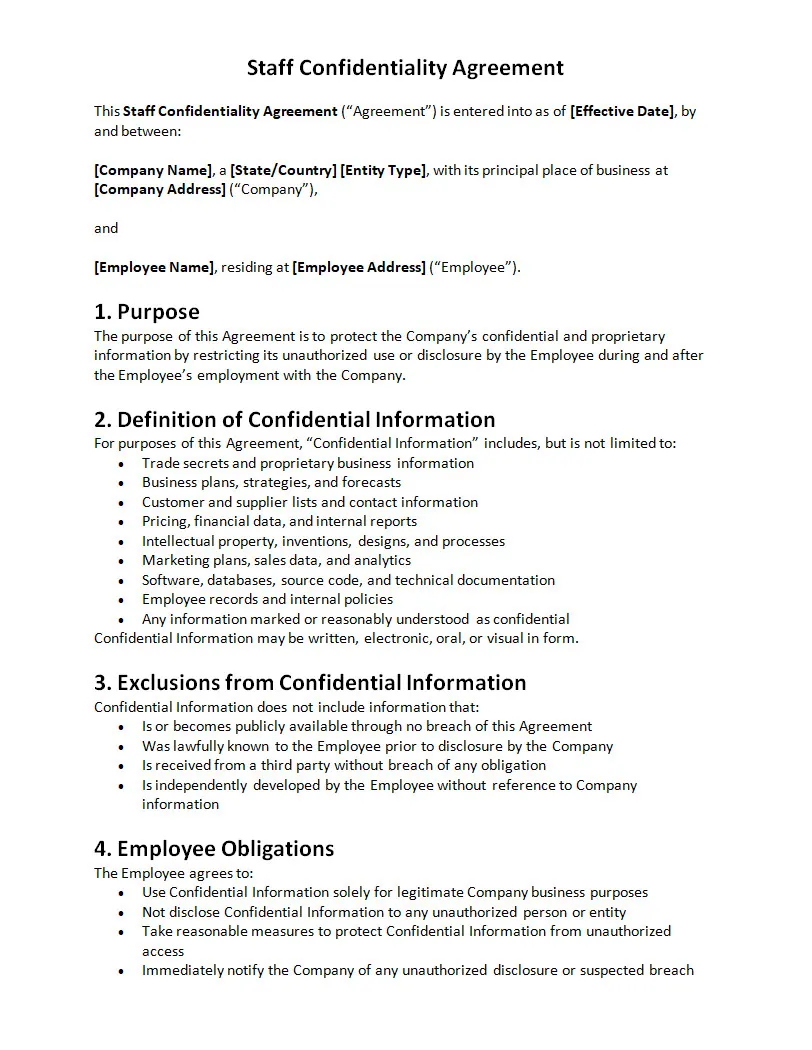
By setting clear rules on what data is considered confidential, defining obligations, and establishing consequences for breaches, a confidentiality agreement ensures that business secrets remain within the company, thereby maintaining its competitive advantage and providing legal recourse in the event of violations. This document not only fosters trust between employers and employees but also helps in safeguarding the company’s value.
What Is a Staff Confidentiality Agreement?
A staff confidentiality agreement, also known as a non-disclosure agreement (NDA), is a legal document that employees are required to sign to protect a company’s sensitive information.
This agreement outlines the specific data that is considered confidential, the obligations of the employees to keep this information secure, and the consequences of breaching the contract. By signing this document, employees agree not to disclose or misuse any confidential information during or after their employment with the company.
Why Are Staff Confidentiality Agreements Important?
Staff confidentiality agreements are essential for businesses to protect their valuable information and maintain a competitive edge in the market. Here are some key reasons why these agreements are crucial:
Protecting Business Secrets
Confidentiality agreements play a critical role in protecting a company’s trade secrets, which are often among its most valuable assets. Trade secrets can include proprietary formulas, processes, algorithms, customer lists, and other information that give the company a competitive advantage. By requiring employees to keep this information confidential, the company can safeguard its intellectual property and prevent competitors from gaining access to valuable secrets.
Maintaining Competitive Advantage
By protecting sensitive information through confidentiality agreements, companies can preserve their competitive advantage in the market. If competitors were to gain access to key strategies, customer data, or product plans, they could use this information to replicate the company’s success or exploit its vulnerabilities. Maintaining confidentiality helps companies stay ahead of the competition and continue to innovate without the risk of their ideas being stolen or misused.
Legal Recourse for Breaches
One of the primary benefits of staff confidentiality agreements is that they provide a legal basis for recourse in case of breaches. If an employee violates the terms of the agreement by sharing confidential information or using it for personal gain, the company can take legal action to enforce the agreement and seek damages for any harm caused. Having a confidentiality agreement in place strengthens the company’s position in legal disputes and deters employees from engaging in misconduct that could harm the business.
Fostering Trust
By requiring employees to sign confidentiality agreements, companies demonstrate their commitment to protecting sensitive information and fostering a culture of trust within the organization. When employees know that their employer values confidentiality and takes steps to protect their proprietary data, they are more likely to feel secure in their roles and trust that their contributions will be kept confidential. This trust can lead to stronger employee engagement, loyalty, and a sense of shared responsibility for safeguarding the company’s interests.
Protecting Company Value
Confidentiality agreements are essential for protecting the value of a company, both in terms of its intellectual property and its reputation. If sensitive information were to be leaked or shared inappropriately, the company could suffer financial losses, damage to its brand, and a loss of trust from customers, partners, and investors. By maintaining strict confidentiality measures, companies can mitigate these risks and preserve their value in the marketplace, ensuring long-term sustainability and growth.
What to Include in a Staff Confidentiality Agreement?
When drafting a staff confidentiality agreement, it is important to include the following key elements:
Definition of Confidential Information
The confidentiality agreement should begin by defining what constitutes confidential information. This section should be comprehensive and cover all types of sensitive data that the company wishes to protect, including but not limited to trade secrets, business plans, financial information, customer lists, marketing strategies, and proprietary technology. Providing a clear definition of confidential information helps employees understand the scope of their obligations and prevents misunderstandings about what information is off-limits.
Obligations of Employees
Outline in detail the obligations that employees have under the confidentiality agreement. This may include requirements to keep information confidential, not disclose it to third parties without authorization, and use it only for the purposes outlined by the company. Employees should also be informed of their responsibility to return or destroy confidential materials upon the termination of their employment. By clearly stating these obligations, the agreement sets expectations for employee behavior and helps prevent accidental or intentional breaches of confidentiality.
Duration of Confidentiality
Specify how long the obligations of confidentiality will last under the agreement. This can vary depending on the type of information involved and the industry in which the company operates. Some information may need to be kept confidential indefinitely, while other data may only require protection for a specific period after an employee leaves the company. Clear guidelines on the duration of confidentiality help prevent disputes and ensure that sensitive information remains secure for the appropriate length of time.
Exceptions to Confidentiality
Include any exceptions to confidentiality that may apply in certain circumstances. These exceptions should be clearly defined to prevent confusion about when disclosure of confidential information is permitted. Common exceptions may include disclosures required by law, disclosures with the company’s consent, or disclosures of information that becomes publicly known through no fault of the employee. By addressing these exceptions upfront, the agreement provides clarity on when confidentiality can be waived and when it must be upheld.
Remedies for Breach
Detail the actions that the company can take in the event of a breach of the confidentiality agreement. This may include seeking injunctive relief to prevent further disclosure of confidential information, pursuing legal action against the responsible party, and potentially seeking damages for any harm caused by the breach. By outlining these remedies, the agreement establishes consequences for violating confidentiality obligations and deters employees from engaging in misconduct that could harm the company.
How to Implement a Staff Confidentiality Agreement
Implementing a staff confidentiality agreement in your organization involves the following steps:
Drafting the Agreement
Work with legal counsel to create a comprehensive confidentiality agreement that meets the specific needs of your company and complies with relevant laws and regulations. Consider the types of information your company needs to protect, the duration of confidentiality required, and any industry-specific requirements that may apply. Tailor the agreement to address the unique circumstances of your business and ensure that it provides adequate protection for your sensitive information.
Communicating the Agreement
Once the confidentiality agreement has been drafted, communicate the terms of the agreement to all employees who will be required to sign it. Provide a clear explanation of the obligations and expectations outlined in the agreement, and allow employees to ask questions or seek clarification on any points that may be unclear. Ensuring that employees understand the agreement and its implications is essentialto successful implementation and compliance.
Collecting Signatures
Require all employees who have access to sensitive information to sign the confidentiality agreement as a condition of their employment. Make sure that each employee reads and understands the agreement before signing it to demonstrate their commitment to upholding confidentiality. Keep signed copies of the agreement on file for reference and enforcement purposes, and provide employees with a copy for their records.
Enforcing the Agreement
Monitor compliance with the confidentiality agreement and take prompt action in case of any suspected breaches. Establish procedures for reporting violations, investigating allegations of misconduct, and enforcing the terms of the agreement. If a breach is confirmed, follow the disciplinary measures outlined in the agreement, which may include warnings, termination of employment, and legal action to protect the company’s interests and hold the responsible party accountable.
Updating the Agreement
Regularly review and update the confidentiality agreement to reflect changes in the company’s operations, technologies, or legal requirements. As your business evolves, new types of sensitive information may emerge that need protection, or regulations governing data privacy and security may change. By keeping the agreement up to date, you ensure that it remains effective in safeguarding your company’s valuable information and addressing any emerging threats to confidentiality.
Providing Training
Offer training sessions to employees on the importance of confidentiality and how to handle sensitive information securely. Educate employees on the types of information that are considered confidential, the obligations they have under the agreement, and the consequences of breaching confidentiality. Provide guidance on best practices for data protection, secure communication, and maintaining confidentiality in various work settings to empower employees to fulfill their obligations and protect the company’s assets.
Tips for Successful Implementation of Staff Confidentiality Agreements
Here are some tips to ensure the successful implementation of staff confidentiality agreements in your organization:
Customize the Agreement
Tailor the confidentiality agreement to suit the specific needs and requirements of your company. Consider the types of information you need to protect, the duration of confidentiality required, and any industry-specific regulations that may apply. Customizing the agreement ensures that it addresses the unique challenges and risks faced by your business and provides adequate protection for your sensitive data.
Provide Clear Guidelines
Clearly communicate the expectations and obligations of employees regarding confidentiality. Make sure that employees understand what information is considered confidential, how they are expected to protect it, and the consequences of failing to uphold confidentiality. Offer examples of the types of information that should be kept confidential to help employees recognize sensitive data and handle it appropriately in their day-to-day work.
Seek Legal Advice
Consult with legal experts to ensure that your confidentiality agreement is legally sound and enforceable. Legal counsel can help you draft a comprehensive agreement that complies with relevant laws and regulations, addresses potential liabilities, and provides the necessary protections for your company’s sensitive information. By seeking legal advice, you can minimize the risks of legal challenges and strengthen the effectiveness of your confidentiality measures.
Regularly Review and Update
Periodically review and update the confidentiality agreement to ensure that it remains relevant and effective. As your business evolves and new threats to confidentiality emerge, make the necessary adjustments to the agreement to address these changes. Stay informed about developments in data privacy and security regulations that may impact your agreement, and proactively update it to stay ahead of potential risks to your company’s sensitive information.
Train Employees
Offer regular training sessions to educate employees on the importance of confidentiality and provide them with the tools and resources they need to fulfill their obligations. Training should cover the types of information that are considered confidential, best practices for data protection, secure communication methods, and how to recognize and report potential breaches of confidentiality. By investing in employee training, you empower your workforce to safeguard sensitive information and uphold the terms of the confidentiality agreement.
Monitor Compliance
Implement systems to monitor compliance with the confidentiality agreement and address any breaches promptly. Regularly review access controls, data handling procedures, and employee behavior to identify potential risks to confidentiality. Investigate any suspected breaches thoroughly, document the findings, and take appropriate action to enforce the terms of the agreement and protect your company’s sensitive information from unauthorized disclosure.
By implementing a staff confidentiality agreement effectively and ensuring that employees understand the importance of protecting sensitive information, your company can safeguard its valuable data, maintain its competitive advantage, and mitigate the risk of breaches that could harm its reputation and bottom line. With clear guidelines, regular training, and robust enforcement measures, you can create a culture of confidentiality that promotes trust, security, and success within your organization.
Staff Confidentiality Agreement Template – DOWNLOAD
