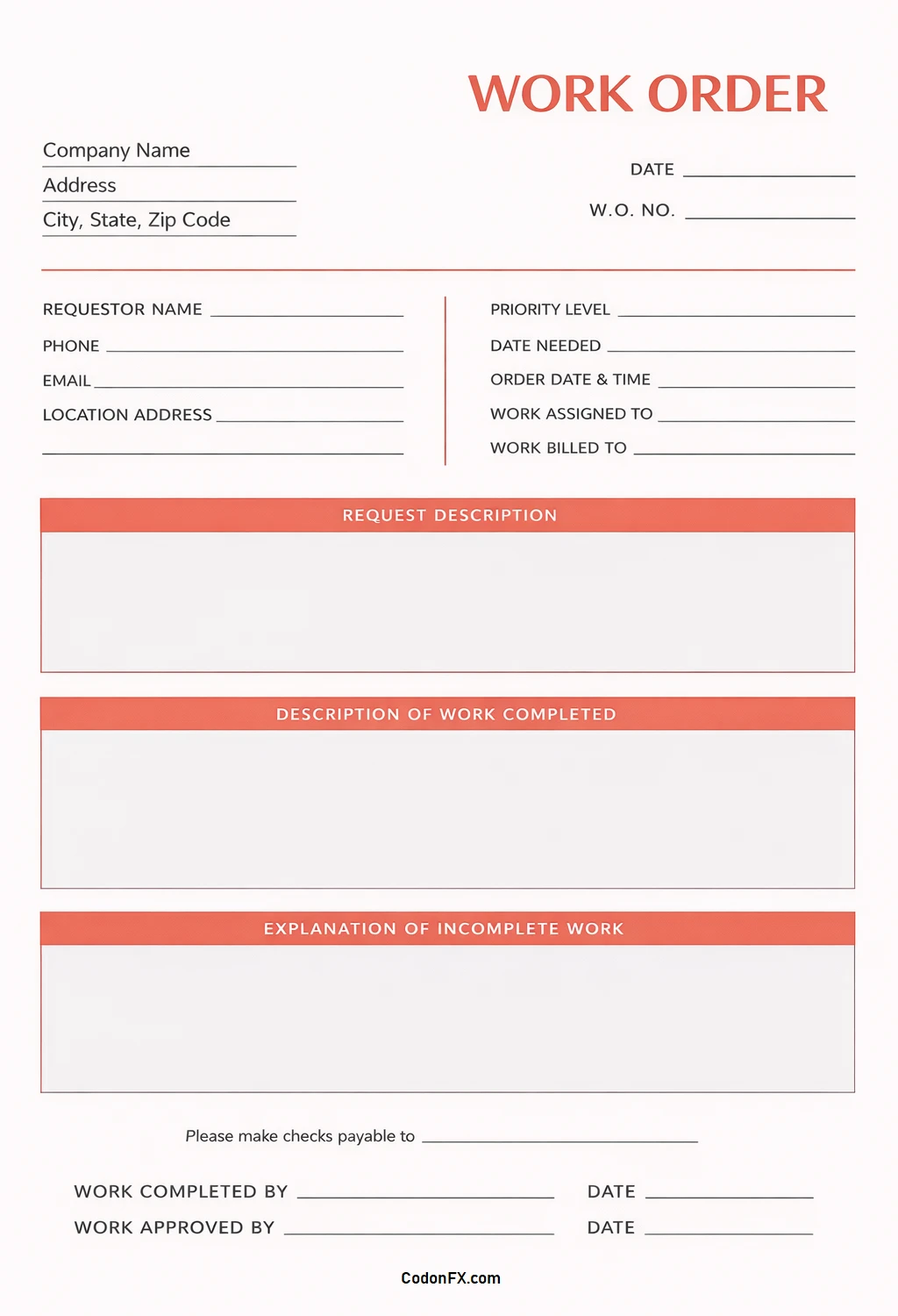
Work orders play a crucial role in any business operation, serving as a formal request, authorization, and documentation for specific tasks such as maintenance or repair. They provide clear instructions, assign responsibilities, detail required resources, set timelines, and track completion to ensure efficiency and accountability.
By acting as a central communication tool, work orders streamline operations by turning requests into actionable steps for teams.
What is a Work Order?
A work order is a document that formally requests, authorizes, and documents a specific job, such as maintenance, repair, or other tasks within a business.
It provides detailed instructions on what needs to be done, assigns responsibility to the appropriate individual or team, outlines the resources required (such as labor and parts), sets timelines for completion, and tracks the progress to ensure tasks are done efficiently and accountably.
Why Are Work Orders Important?
Work orders are essential in business operations for several reasons:
- Clear Communication: Work orders provide clear and detailed instructions, ensuring that everyone involved understands the task at hand.
- Accountability: By assigning specific responsibilities to individuals or teams, work orders help hold them accountable for completing the task within the specified timeline.
- Efficiency: Work orders streamline the process of requesting and completing tasks, saving time and resources for the organization.
- Documentation: Work orders create a record of the job requested and completed, providing valuable information for future reference and analysis.
What to Include in a Work Order
When creating a work order, it is important to include the following key elements:
- Job Description: Clearly define the task that needs to be done.
- Assigned Responsibility: Specify who is responsible for completing the job.
- Required Resources: Detail the labor, parts, tools, and equipment needed to complete the task.
- Timeline: Set a deadline for when the job should be completed.
- Tracking Mechanism: Establish a system for monitoring and tracking the progress of the task.
How to Create an Effective Work Order
To ensure that work orders are effective in facilitating business operations, follow these tips:
- Be Specific: Provide detailed instructions and requirements to avoid confusion.
- Set Clear Expectations: Clearly communicate the scope of work and expected outcomes.
- Assign Responsibilities Clearly: Specify who is accountable for each task within the work order.
- Monitor Progress: Regularly track the status of the work order to ensure timely completion.
- Document Completion: Keep a record of completed work orders for future reference and analysis.
Benefits of Using Work Orders
Utilizing work orders in business operations offers several benefits:
1. Improved Organization
Work orders help organize tasks and ensure that they are completed in a systematic manner, leading to increased productivity and efficiency.
2. Enhanced Communication
Work orders serve as a communication tool that facilitates clear instructions and expectations between different teams and departments.
3. Cost-Effective Operations
By streamlining processes and reducing the likelihood of errors or delays, work orders help businesses save time and resources.
4. Enhanced Accountability
Assigning responsibilities in work orders ensures that employees are held accountable for their tasks, promoting a culture of accountability within the organization.
5. Data Analysis
Work orders provide valuable data for analyzing trends, patterns, and areas for improvement within the business operations, leading to informed decision-making.
In Conclusion
Work orders are an essential tool in business operations, helping to formalize requests, assign responsibilities, track progress, and document completion. By following best practices and incorporating work orders into your organization’s processes, you can enhance efficiency, accountability, and overall productivity. Remember to be specific, clear, and organized when creating work orders to maximize their effectiveness in streamlining operations.
Work Order Template – DOWNLOAD
