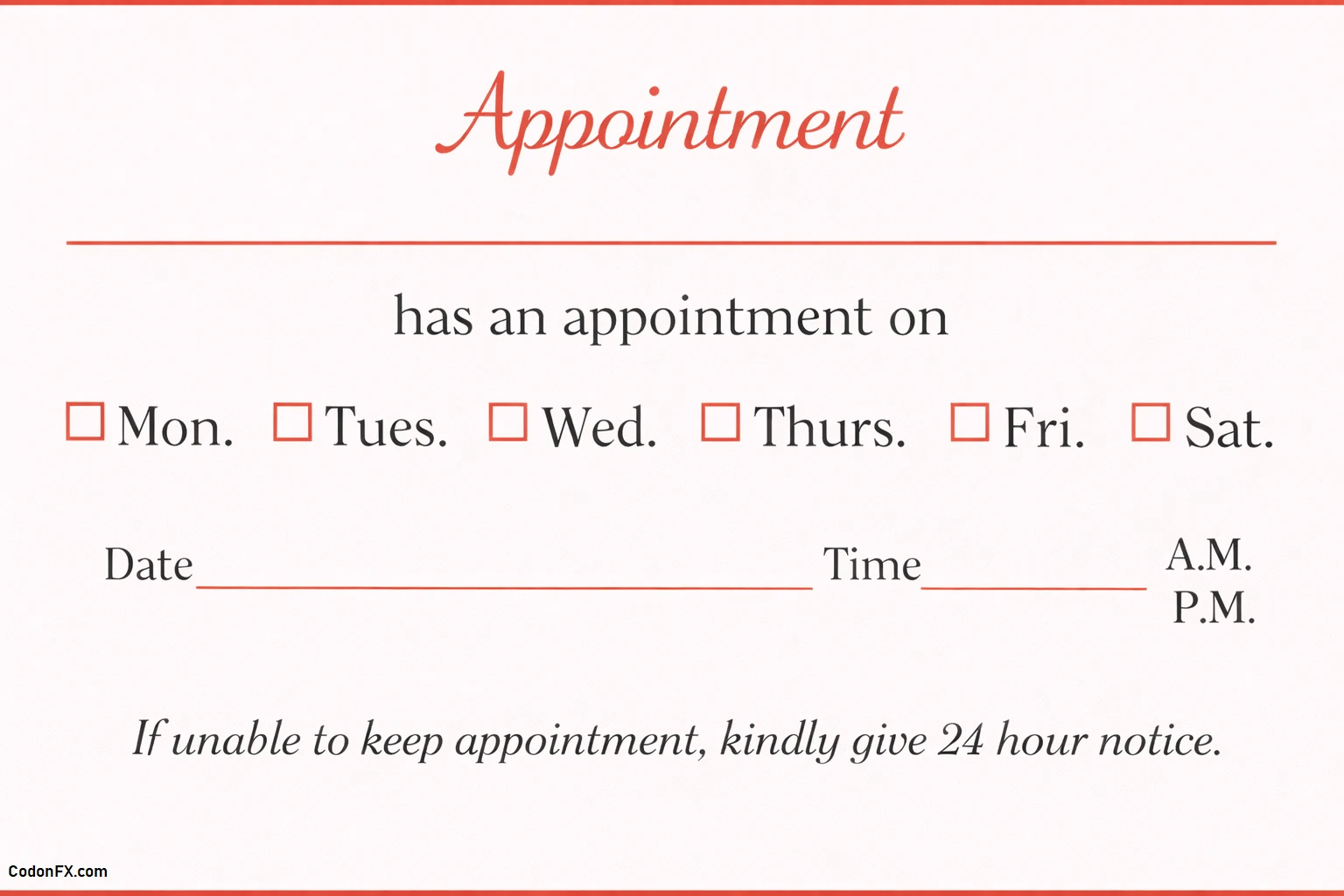
In the fast-paced world we live in today, it’s easy to forget important dates and appointments. That’s where appointment cards come in. These small, yet powerful tools serve as physical reminders for clients’ next scheduled appointments, helping them remember the date, time, and location.
Not only do they act as a practical reminder for clients, but they also serve as a promotional and branding tool for businesses. Appointment cards offer clients a tangible, accessible record to avoid missed appointments, while also providing businesses with a cost-effective way to maintain a consistent brand presence and contact details.
What is an Appointment Card?
Appointment cards are small cards that are typically given to clients after they schedule an appointment with a business. These cards contain important information such as the date, time, and location of the appointment. They serve as a physical reminder for clients, helping them remember their upcoming appointments and reducing the likelihood of no-shows.
Appointment cards also double as a branding tool for businesses. They often feature the business’s logo, contact information, and any special promotions or offers. This helps to reinforce the brand in the client’s mind and encourages repeat business.
Importance of Appointment Reminder Cards
Appointment reminder cards play a crucial role in reducing no-shows and missed appointments. By providing clients with a physical reminder of their upcoming appointment, businesses can significantly decrease the likelihood of cancellations or forgotten appointments. This not only helps businesses maintain a steady flow of customers but also ensures that clients receive the services they need on time.
Furthermore, appointment cards serve as a cost-effective marketing tool for businesses. By including branding elements such as the business’s logo and contact information, businesses can promote their services to clients in a non-intrusive way. This constant exposure helps to build brand recognition and loyalty among clients.
Types of Appointment Cards
Appointment cards come in various shapes, sizes, and designs to cater to different businesses and target audiences. Some common types of appointment cards include:
- Traditional paper appointment cards: These are the most common type of appointment cards and are typically handed out to clients after booking an appointment.
- Electronic appointment cards: In today’s digital age, some businesses opt for electronic appointment cards that can be sent via email or text message.
- Magnetic appointment cards: These cards have a magnetic backing, making it easy for clients to stick them on their fridge or other magnetic surfaces for easy reference.
- Fold-over appointment cards: These cards have a fold-over design with the appointment details inside, providing a sleek and compact option.
- Custom-designed appointment cards: Businesses can create custom-designed appointment cards that reflect their brand identity and stand out to clients.
- Appointment card key tags: Some businesses offer appointment cards that double as key tags, making it convenient for clients to carry them around.
Key Components of Appointment Cards
Appointment cards typically include the following key components:
- Date and time: The date and time of the appointment are essential for clients to remember.
- Location: The address or location of the appointment venue.
- Contact information: The business’s phone number, email address, and website for clients to reach out if needed.
- Business logo: The logo helps to reinforce the brand and create brand recognition.
- Promotional offers: Any special promotions or discounts can encourage clients to book additional services.
Who Needs an Appointment Card?
Appointment cards are beneficial for a wide range of businesses, including:
- Salons and spas: To remind clients of their next hair or spa appointment.
- Medical offices: To ensure patients remember their doctor or dentist appointments.
- Legal offices: To schedule client consultations or court appearances.
- Auto repair shops: To remind clients of their upcoming service appointments.
- Retail stores: To schedule personal shopping appointments or fittings.
Designing Effective Appointment Cards
When designing appointment cards, it’s essential to consider the following factors:
- Branding: Incorporate the business’s logo, colors, and fonts to maintain brand consistency.
- Readability: Ensure that the text and information on the card are easy to read and understand.
- Contact information: Include the business’s phone number, email address, and website for easy client communication.
- Promotions: Add any special offers or discounts to incentivize clients to book future appointments.
- Durability: Choose a high-quality material that will withstand daily use and handling.
Implementing Appointment Cards
To effectively use appointment cards in your business, consider the following tips:
- Hand out cards immediately: Give clients their appointment cards right after booking to ensure they have enough time to plan.
- Follow up with reminders: Send out additional reminders via email or text message closer to the appointment date.
- Collect feedback: Use appointment cards to gather feedback from clients on their experience and satisfaction level.
- Track results: Monitor the effectiveness of appointment cards by tracking no-show rates and client retention.
- Update regularly: Make sure to update appointment cards with any changes in contact information or promotions regularly.
In conclusion, appointment cards are a valuable tool for businesses to remind clients of their upcoming appointments, promote their brand, and reduce no-shows. By designing effective and eye-catching appointment cards, businesses can enhance their professional image and build lasting relationships with clients.
When implemented correctly, appointment cards can be a cost-effective and efficient way to improve customer retention and loyalty.
Appointment Card Template – Word
