A consulting bill is an essential document for consultants who need to charge clients for professional services. It provides a clear record of the work performed, the fees charged, and the total amount due. A well-prepared consulting bill helps clients understand what they are paying for and gives consultants a professional way to manage billing and payments.
Whether you work as an independent consultant, run a consulting firm, or provide specialized business advice, an organized billing process can improve client communication and financial recordkeeping. A consistent invoice format also makes it easier to track outstanding balances, payment deadlines, and completed projects.
In this guide, you will learn what a consulting bill is, what information it should include, how to prepare one, and how to avoid common billing mistakes. You will also find practical tips for creating a professional consulting invoice and using a printable consulting bill template to simplify your billing process.
What Is a Consulting Bill?
A consulting bill is a document that lists the professional services provided by a consultant and the amount a client must pay. It typically includes consultant and client details, an invoice number, the billing date, a description of services, fees, payment terms, and the total amount due.
Consultants may issue a bill after completing a project, at agreed milestones, or at regular intervals during an ongoing engagement. The billing schedule usually depends on the service agreement between the consultant and the client.
A consulting bill may also be called a consulting invoice, professional services invoice, or consultant billing statement. Although the terminology varies, the purpose is similar: to document charges and communicate payment expectations clearly.
Why Is a Consulting Bill Important?
A professional consulting bill does more than request payment. It supports accurate financial records, encourages clear communication, and helps establish a consistent billing process.
1. Communicates Service Charges Clearly
A detailed bill explains which services were provided and how the fees were calculated. Clients can review consulting hours, agreed rates, project expenses, and applicable taxes before making payment.
2. Supports Timely Payments
Clear payment instructions and due dates help clients understand when and how to pay. Including the invoice number and accepted payment methods can also reduce unnecessary follow-up questions.
3. Maintains Professional Client Relationships
Transparent billing demonstrates organization and attention to detail. When clients can easily understand the charges, billing discussions are more straightforward and the consulting relationship is easier to manage.
4. Improves Financial Recordkeeping
Consulting bills provide a record of revenue earned, services delivered, and amounts still outstanding. These records help consultants monitor cash flow, reconcile payments, and prepare financial reports.
5. Helps Manage Multiple Projects
Consultants who serve several clients need a reliable way to separate project charges and track payment status. Unique invoice numbers and consistent billing records make it easier to identify each transaction.
What Should a Consulting Bill Include?
A useful consulting bill contains enough information for the client to identify the transaction, understand the charges, and complete payment. The exact requirements depend on the agreement and applicable tax or invoicing rules.
Consultant and Business Information
Include the consultant’s name or business name, business address where appropriate, and relevant contact details. Depending on the jurisdiction and business structure, additional registration or tax information may be required.
Client Information
Identify the client or organization responsible for payment. Include the appropriate billing contact, company name, and billing address when necessary.
Invoice Number and Dates
Assign a unique invoice number to each bill. Record the invoice date and payment due date so both parties can identify the transaction and understand the payment deadline.
A consistent numbering system can make it easier to organize invoices chronologically and locate records later.
Description of Consulting Services
Describe the work performed in clear, specific language. Depending on the engagement, service descriptions might include:
- Business strategy consultation
- Market research and analysis
- Project management services
- Financial planning consultation
- Technology implementation advice
- Training, workshops, or professional assessments
Whenever possible, connect the description to the agreed scope of work or project milestone. Avoid vague descriptions that make it difficult for the client to understand the charges.
Hours, Rates, and Service Fees
If you charge by the hour, list the billable hours and hourly rate. For fixed-fee projects, identify the agreed project fee or milestone charge. If several services are provided, list each item separately to improve transparency.
For example, 8 consulting hours at $125 per hour would result in a service charge of $1,000 before applicable taxes, discounts, or additional fees.
Subtotal, Taxes, and Total Amount Due
Show the subtotal, any agreed discounts, applicable taxes, and the final amount payable. Make sure the calculations are accurate and that taxes are applied according to the relevant rules.
Payment Terms and Instructions
State the payment deadline, accepted payment methods, and any other relevant payment instructions. If the agreement includes late fees or other charges, disclose them clearly and ensure they are permitted by the contract and applicable law.
Keep payment instructions secure and provide only the information necessary for the transaction.
How to Create a Consulting Bill Step by Step
Creating a consulting bill becomes easier when you follow a consistent process. Use these steps to prepare an invoice that is accurate, professional, and easy for clients to understand.
Step 1: Review the Consulting Agreement
Check the agreed scope of work, billing method, payment schedule, and any expense reimbursement terms. Confirm whether the invoice should cover completed work, a project milestone, or a recurring billing period.
Step 2: Gather the Billing Information
Collect the client details, invoice number, relevant dates, service descriptions, billable hours, and approved expenses. Verify the information before preparing the document.
Step 3: Calculate the Charges
Calculate each service charge using the agreed rate or project fee. Add approved expenses where applicable, then calculate the subtotal, discounts, taxes, and final amount due.
Review the figures carefully to prevent calculation errors and billing disputes.
Step 4: Set the Payment Due Date
Use the payment terms established in the consulting agreement. If the arrangement specifies payment within a certain number of days, calculate the due date accurately and display it clearly.
Step 5: Review and Send the Bill
Check the invoice for missing information, unclear descriptions, duplicate charges, and incorrect calculations. Send it through the agreed delivery method, such as email, an invoicing platform, or a client portal.
Step 6: Track Payment Status
Record when the bill is issued, when payment is received, and whether any balance remains outstanding. Send a polite reminder when appropriate and update your records after the payment is processed.
Consulting Bill Example
The following example illustrates how a consulting invoice can present professional fees and the final amount due. The figures are illustrative and assume that no additional expenses or discounts apply.
- Consulting service: Business strategy consultation
- Hours worked: 8 hours
- Hourly rate: $125
- Subtotal: $1,000
- Tax: $0 in this example
- Total amount due: $1,000
- Payment terms: Due within 14 days
The invoice should also include the consultant’s information, client details, invoice number, invoice date, payment due date, and a description of the consulting work performed.
This format helps the client verify the charges and gives the consultant a clear record of the amount billed.
Printable Consulting Bill Template
A printable consulting bill template provides a ready-made structure for documenting professional service charges. It saves time compared with creating a new invoice from scratch and helps maintain a consistent appearance across client invoices.
A useful template should include space for business information, client details, invoice dates, consulting services, billable hours, rates, totals, payment instructions, and additional notes.
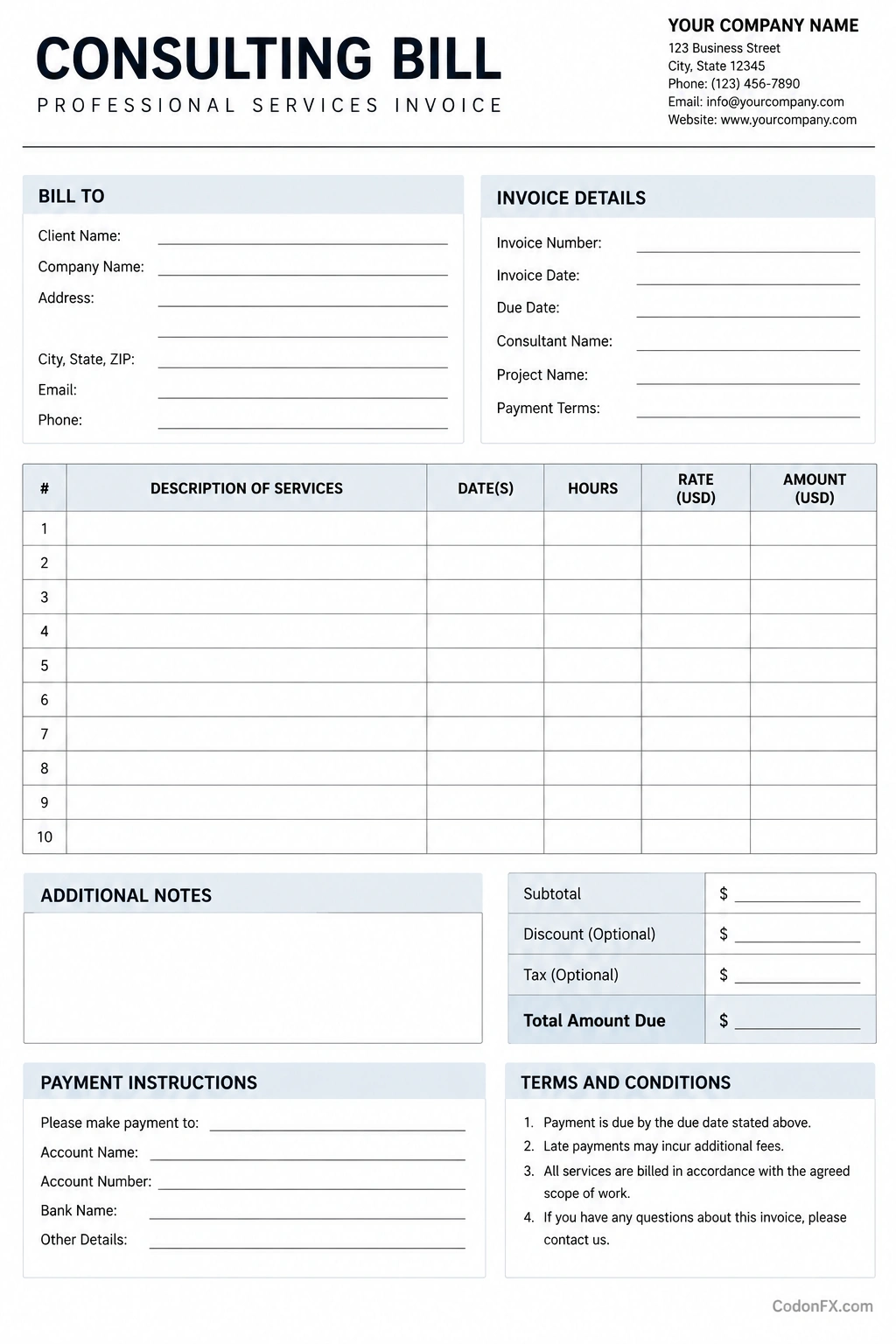
You can print the template and complete it by hand or use its layout as a reference when creating a digital invoice. Replace the sample business information with your own details and adjust the service table to match your billing method.
Before sending the invoice, confirm that the service descriptions, rates, totals, and payment instructions match the consulting agreement. Keep a copy for your records and store client information securely.
Best Practices for Consulting Billing
A reliable billing process can reduce administrative work and make it easier to manage client payments. Apply these practices to keep your consulting invoices accurate and consistent.
Agree on Fees Before Starting Work
Discuss hourly rates, fixed fees, payment schedules, reimbursable expenses, and project milestones before beginning the engagement. Written agreements help both parties understand the financial terms.
Use Consistent Invoice Numbers
Create a numbering system that makes each invoice easy to identify. Avoid reusing invoice numbers, and keep your invoice register updated as new bills are issued.
Invoice Promptly
Send invoices according to the agreed schedule rather than allowing completed work to accumulate without billing. Prompt invoicing helps maintain accurate records and supports predictable cash flow.
Keep Service Descriptions Specific
Describe the work performed in a way that clients can recognize and verify. Where relevant, include project names, service dates, milestones, or hours worked.
Follow Up Professionally
If a payment becomes overdue, send a courteous reminder that identifies the invoice number, outstanding balance, and original due date. Keep a record of communications and follow the agreed collection process.
Maintain Organized Records
Store invoices, consulting agreements, expense receipts, and payment confirmations together. Organized records make it easier to reconcile accounts, respond to client questions, and prepare tax documentation.
Common Consulting Bill Mistakes to Avoid
Small billing errors can create confusion, delay payments, or weaken client confidence. Avoid these common mistakes when preparing consulting invoices.
- Missing invoice details: Include the invoice number, relevant dates, client information, and payment instructions.
- Vague service descriptions: Explain the services provided and connect charges to the agreed work.
- Incorrect calculations: Verify hours, rates, subtotals, discounts, taxes, and the final balance.
- Unclear payment terms: State the due date and accepted payment methods clearly.
- Unexpected charges: Bill only for agreed services and properly authorized expenses.
- Poor recordkeeping: Retain copies of invoices and track payments consistently.
Frequently Asked Questions About Consulting Bills
What is the difference between a consulting bill and a receipt?
A consulting bill requests payment for services provided or agreed charges. A receipt confirms that a payment has been made. A consultant may issue a bill first and provide a receipt or payment confirmation after receiving the money.
Is a consulting bill the same as a consulting invoice?
The terms are often used interchangeably. Both generally describe a document that lists consulting services and the amount payable. The exact terminology and required information may vary by industry and jurisdiction.
Should a consulting bill include hourly rates?
If the consultant charges by the hour, listing billable hours and hourly rates improves transparency. For fixed-fee engagements, the invoice can instead show the agreed project fee or milestone charge.
When should a consultant send a bill?
A consultant should follow the billing schedule established in the service agreement. Depending on the arrangement, invoices may be sent before work begins, after a milestone, when a project is completed, or at regular intervals.
Can I use a printable consulting bill template?
Yes. A printable consulting bill template can help organize client details, service descriptions, fees, payment terms, and invoice totals. Customize it to reflect your business information and the requirements of your consulting agreement.
What payment terms should a consulting bill include?
Payment terms may specify the due date, accepted payment methods, applicable discounts, and any permitted late fees. The terms should match the service agreement and comply with applicable laws.
How can consultants reduce late payments?
Consultants can reduce payment delays by agreeing on terms in advance, sending accurate invoices promptly, providing clear payment instructions, and following up professionally on overdue balances. For larger engagements, deposits or milestone billing may also be appropriate when agreed upon.
Conclusion
A consulting bill is an important tool for communicating professional service charges, managing client payments, and maintaining accurate financial records. A clear invoice helps clients understand what they are paying for and gives consultants a consistent way to track amounts due.
To create an effective consulting bill, include accurate client and consultant details, describe the services provided, calculate fees carefully, and state the payment terms clearly. Review each invoice before sending it and keep organized copies for future reference.
A printable consulting bill template can simplify this process by bringing essential billing information together in one professional document. Customize the template to suit your services, follow the terms of your agreement, and maintain a consistent billing routine to support stronger client relationships and better business administration.
Download: Consulting Bill Template
