A daily lesson planner helps teachers organize each part of the instructional day with greater confidence. It provides a structured place to record learning objectives, lesson activities, teaching materials, assessments, and additional support for students. Instead of relying on memory or making decisions throughout the day, teachers can follow a practical roadmap that keeps instruction focused and purposeful.
Whether you teach elementary, middle, or high school students, a daily teaching plan can make classroom preparation more manageable. It also creates a useful record of completed lessons, student progress, and ideas for future instruction.
What Is a Daily Lesson Planner?
A daily lesson planner is a planning worksheet or organizational document that helps teachers prepare and manage their classroom instruction for one school day. It outlines what students should learn, which activities will support those goals, what resources are needed, and how learning will be evaluated.
Unlike a general weekly schedule, a daily lesson plan focuses on the details of individual lessons. Teachers can divide instructional time into manageable sections, identify important teaching steps, and prepare appropriate activities for different learning needs.
A typical daily lesson planner includes:
- Date and subject: Identifies the teaching day, class, grade level, and subject.
- Learning objectives: Describes what students should know or accomplish.
- Materials and resources: Lists textbooks, worksheets, technology, and classroom supplies.
- Lesson activities: Outlines warm-ups, direct instruction, guided practice, and independent work.
- Differentiation: Identifies additional support or enrichment opportunities.
- Assessment: Explains how teachers will measure student understanding.
- Notes and reflection: Records observations and adjustments for future lessons.
Why Teachers Need a Daily Lesson Planner
Effective teaching requires more than presenting information. Teachers must manage instructional time, maintain student engagement, and make sure classroom activities support curriculum expectations. A structured lesson planning template helps bring these responsibilities together.
1. Keeps Learning Objectives Clear
Every lesson should have a specific purpose. Writing learning objectives before class helps teachers identify the knowledge and skills students are expected to develop. It also makes it easier to select activities that directly support the intended outcomes.
For example, instead of writing a general objective such as “learn about fractions,” a more specific objective might be “identify equivalent fractions using visual models.” Clear objectives make lesson preparation more focused and help teachers evaluate whether students have achieved the expected results.
2. Makes Better Use of Classroom Time
Classroom time is limited, and unexpected delays can affect the entire schedule. A daily teaching planner allows teachers to estimate how long each activity should take and organize lessons in a logical sequence.
Teachers can allocate time for introductions, explanations, guided practice, independent activities, and lesson reviews. This structure reduces unnecessary transitions and helps prevent important activities from being overlooked.
3. Improves Classroom Preparation
Preparing materials before students arrive can make instruction smoother. A lesson planner provides a dedicated checklist for books, handouts, presentations, equipment, and other teaching resources.
By reviewing the materials section in advance, teachers can identify missing supplies and prepare alternatives before the lesson begins.
4. Supports Different Learning Needs
Students do not always learn at the same pace or in the same way. Some may need additional explanations, while others are ready for more challenging assignments. A well-designed daily lesson planner gives teachers space to prepare differentiated activities.
Teachers can plan small-group instruction, additional practice, visual learning materials, extended activities, or individual support. This makes it easier to create a more inclusive classroom experience.
5. Creates a Record for Future Planning
Lesson planning should not end when the school day finishes. Teachers can use their daily notes to record which activities worked well, which concepts students found difficult, and what needs to be reviewed.
These observations provide useful information when preparing future lessons. Over time, a collection of daily lesson plans can become a valuable teaching reference.
What to Include in a Daily Lesson Plan
A useful daily lesson plan should contain enough information to guide instruction without becoming unnecessarily complicated. The following sections cover the essential elements teachers can include in their planning worksheet.
Learning Objectives and Curriculum Standards
Start by identifying the main learning objectives. These should describe measurable outcomes rather than simply list the topics that will be covered.
When applicable, include the relevant curriculum standards or learning competencies. Aligning objectives with curriculum expectations helps ensure that classroom instruction supports broader academic goals.
Lesson Activities and Instructional Sequence
Organize activities in the order they will take place. A practical instructional sequence may include:
- Warm-up: Introduce the topic with a short question, review activity, or discussion.
- Introduction: Explain the lesson objectives and connect the topic to previous learning.
- Direct instruction: Present new information, demonstrate concepts, or model a skill.
- Guided practice: Let students practice with teacher support and feedback.
- Independent practice: Give students opportunities to apply what they have learned.
- Closure: Review the main ideas and check whether learning objectives were achieved.
Teachers can adjust this sequence depending on the subject, grade level, and teaching approach.
Teaching Materials and Resources
List everything required to deliver the lesson effectively. These resources may include textbooks, printed worksheets, presentation slides, digital learning tools, manipulatives, or classroom equipment.
Keeping materials in one place makes preparation easier and reduces interruptions during instruction.
Differentiation and Student Support
Include specific strategies for students who need additional assistance as well as those who are ready for enrichment. Consider different reading levels, learning preferences, available support, and the complexity of assigned tasks.
Possible strategies include simplified instructions, visual examples, additional practice questions, flexible grouping, peer collaboration, and extension projects.
Assessment and Evidence of Learning
Assessment helps teachers determine whether students understand the lesson content. Choose assessment methods that match the learning objectives.
- Classroom observation and participation.
- Question-and-answer sessions.
- Short quizzes or knowledge checks.
- Completed worksheets and class assignments.
- Group presentations or individual projects.
- Exit tickets and short written reflections.
Recording assessment results can help teachers identify concepts that require additional explanation or review.
How to Use a Daily Lesson Planner Effectively
Having a planning worksheet is helpful, but using it consistently is what makes it valuable. Follow these practical steps to create an organized and manageable teaching routine.
Step 1: Review the Curriculum and Learning Goals
Begin by checking the curriculum requirements and identifying the learning goals for the day. Make sure the planned activities support the expected knowledge and skills.
Step 2: Break the Lesson Into Time Blocks
Estimate how much time each instructional activity requires. Include time for transitions, student questions, and unexpected classroom situations. Avoid filling every minute with activities because flexibility is also important.
Step 3: Prepare Activities and Materials
Write down the teaching activities and gather the required resources. Check that worksheets, presentations, and other materials are ready before class begins.
Step 4: Plan for Different Student Needs
Consider which students may need additional guidance and which students could benefit from more challenging work. Prepare suitable adjustments before instruction starts.
Step 5: Choose Appropriate Assessments
Decide how you will check student understanding. Use assessment methods that provide meaningful evidence of progress rather than relying only on whether students complete an assignment.
Step 6: Reflect After the Lesson
At the end of the day, record a few observations. Note whether the lesson objectives were achieved, which activities were effective, and what should be improved. Use these reflections to make your next lesson more effective.
Free Daily Lesson Planner Template for Teachers
A printable daily lesson planner can simplify preparation by providing ready-made sections for the information teachers need most. Instead of creating a new document every day, teachers can use a reusable worksheet to organize their instructional plans.
Here are three different daily lesson planner layouts designed to support classroom organization, instructional planning, and student assessment.
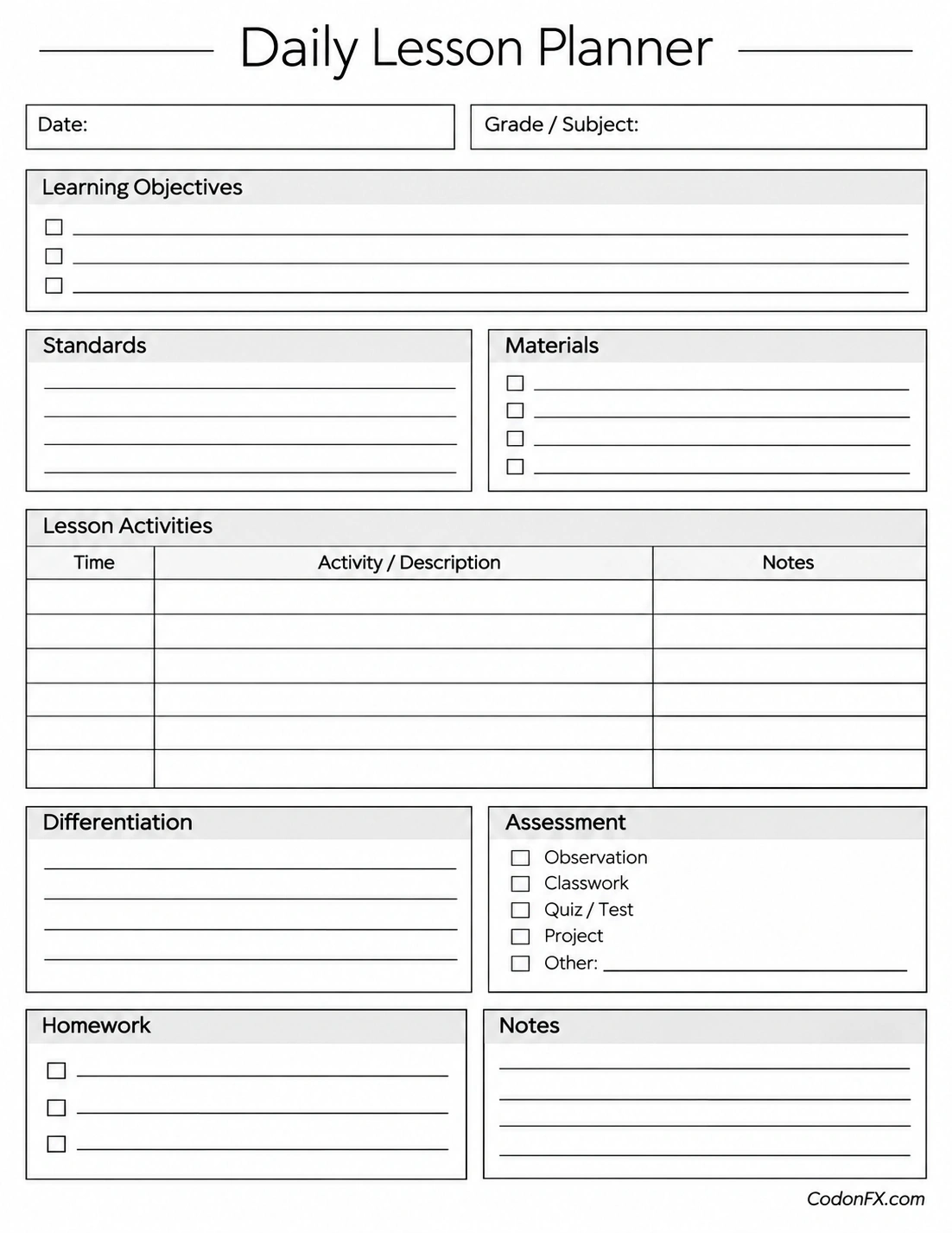
1. Classic Daily Lesson Planner Template
This traditional layout includes learning objectives, curriculum standards, teaching materials, lesson activities, differentiation, assessment, homework, and notes. It works well for teachers who prefer a comprehensive daily planning sheet.
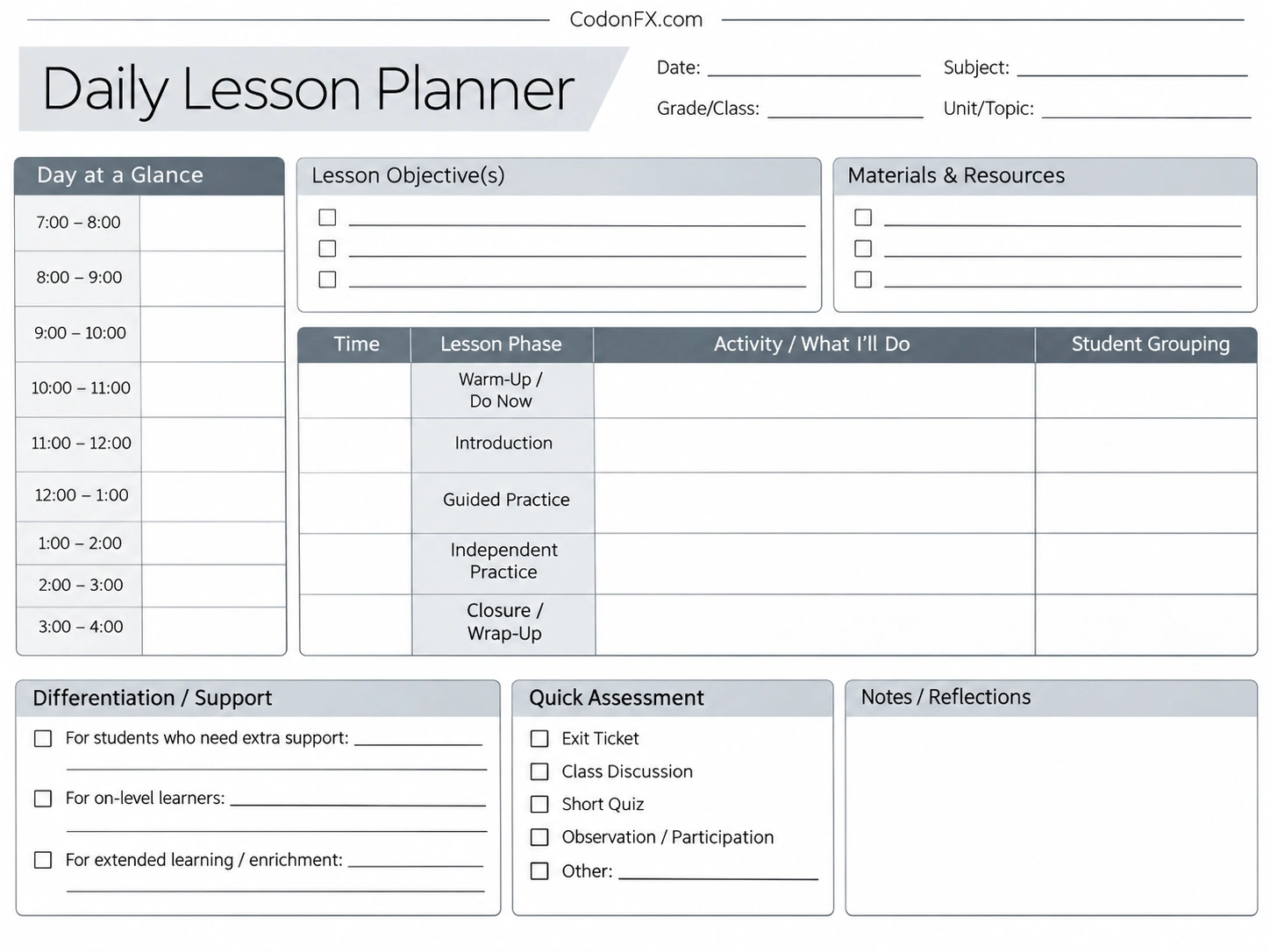
2. Daily Lesson Planner for Differentiated Instruction
This layout focuses on instructional sequences, student needs, accommodations, evidence of learning, and teacher reflection. It is especially useful for educators who want to make differentiation an intentional part of their daily planning routine.
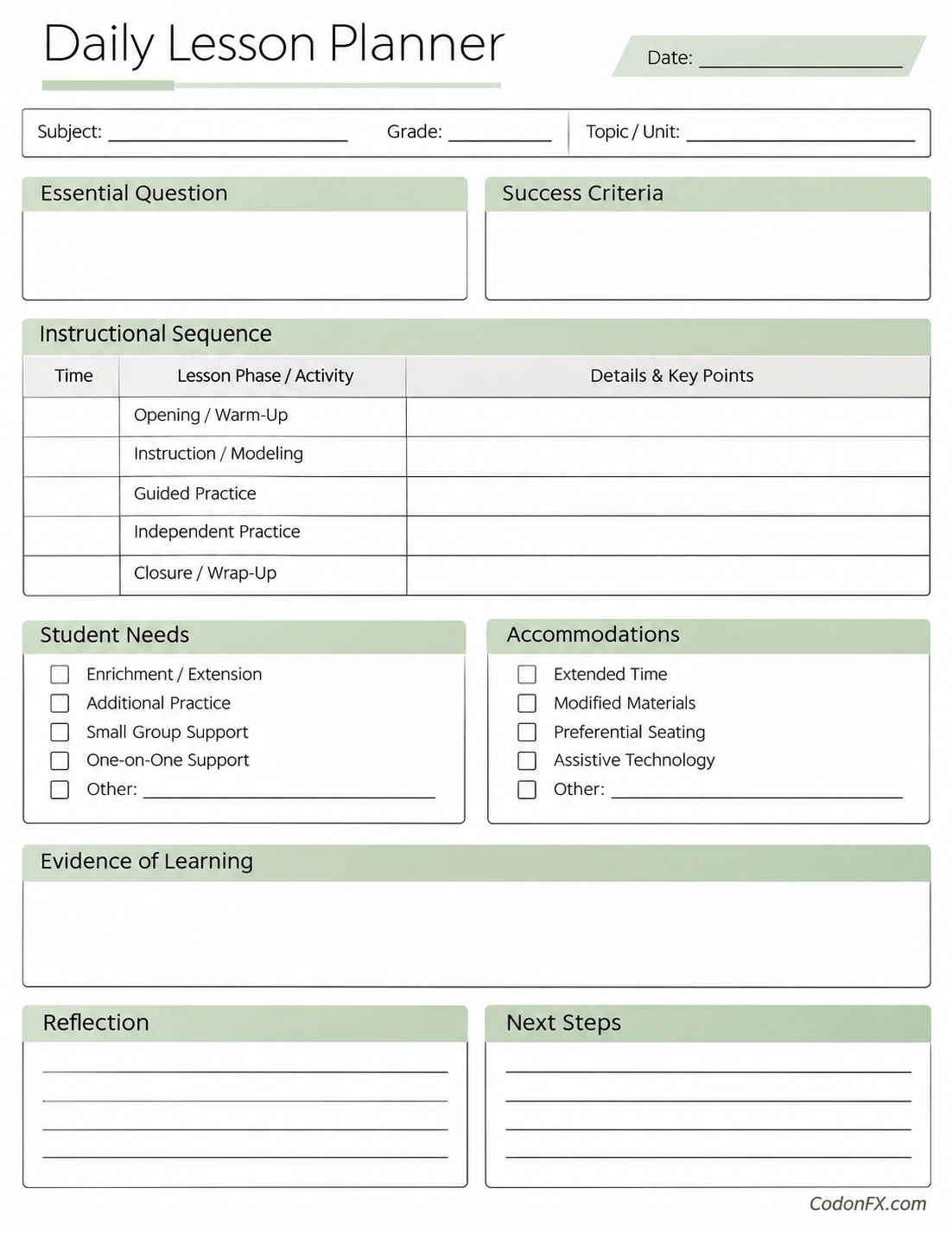
3. Daily Lesson Planner Schedule Template
This landscape layout provides a daily schedule alongside a detailed lesson flow. Teachers can organize hourly activities, lesson objectives, student grouping, assessment methods, and classroom reflections in one convenient worksheet.
Choose the layout that best matches your teaching routine. You can print a fresh copy for each school day or adapt the sections to fit your subject, grade level, and classroom requirements.
Tips for Creating More Effective Daily Lesson Plans
A good lesson plan should be practical, flexible, and easy to follow. These tips can help teachers get more value from their daily planning routine.
- Keep objectives realistic: Focus on a manageable number of meaningful learning outcomes for each lesson.
- Prioritize important activities: Give essential instruction and practice enough time before adding optional activities.
- Use clear instructions: Write short, specific notes that are easy to understand while teaching.
- Include flexible time: Allow room for questions, additional explanations, and classroom transitions.
- Prepare alternative activities: Have backup tasks available in case a planned activity takes less or more time than expected.
- Review student progress: Use assessment results to adjust upcoming lessons.
- Reuse successful strategies: Keep effective activities and resources for future planning, adapting them when necessary.
Common Daily Lesson Planning Mistakes to Avoid
Even experienced teachers can encounter planning challenges. Recognizing common mistakes can help make lesson preparation more effective.
Planning Too Many Activities
Trying to cover too much material in one lesson can leave students with limited time to understand important concepts. Prioritize essential learning goals and select activities that support them.
Ignoring Student Learning Differences
Using the same activity for every student may not address different learning needs. Consider opportunities for additional support, alternative explanations, and enrichment activities.
Forgetting to Include Assessment
A lesson is not complete simply because the teacher has presented the material. Include a way to check student understanding so that instructional decisions are based on evidence.
Making the Plan Too Complicated
A daily lesson plan should be a helpful teaching tool, not an additional administrative burden. Use concise notes, practical sections, and a consistent format that fits your classroom routine.
Frequently Asked Questions About Daily Lesson Planners
What is the purpose of a daily lesson planner?
The purpose of a daily lesson planner is to help teachers organize learning objectives, instructional activities, teaching materials, assessments, and classroom time. It provides a clear roadmap for delivering focused and effective lessons.
What should a daily lesson planner include?
A daily lesson planner should include the date, subject, grade level, learning objectives, curriculum standards, lesson activities, materials, differentiation strategies, assessment methods, and space for notes or reflections.
What is the difference between a daily lesson planner and a weekly lesson planner?
A daily lesson planner focuses on the details of instruction for one school day, including individual activities and time allocations. A weekly lesson planner provides a broader overview of topics, objectives, and activities across several days.
How long should it take to complete a daily lesson plan?
The time required depends on the subject, teaching experience, and complexity of the lesson. Teachers can often prepare routine lessons more quickly by using a reusable template and adapting previously developed instructional materials.
Why is differentiation important in daily lesson planning?
Differentiation helps teachers address differences in student readiness, learning needs, and academic progress. Planning appropriate support and enrichment activities makes instruction more inclusive and gives students different ways to work toward learning objectives.
Can I use a printable daily lesson planner for different subjects?
Yes. A printable daily lesson planner can be adapted for subjects such as mathematics, science, English, social studies, and other classroom topics. Teachers can customize the activities, materials, and assessment sections to match their instructional requirements.
Should teachers review their lesson plans after class?
Yes. Reviewing a lesson plan after class helps teachers identify successful activities, recognize learning difficulties, and determine which topics need additional attention. These reflections can improve future instruction and make lesson preparation more efficient.
Conclusion
A well-organized daily lesson planner can make a meaningful difference in how teachers prepare and deliver classroom instruction. By organizing learning objectives, activities, materials, assessments, and differentiation strategies, teachers can approach each school day with greater clarity and confidence.
More importantly, daily lesson planning creates an opportunity to reflect on student progress and improve future instruction. Whether you prefer a traditional planning worksheet, a differentiation-focused layout, or a detailed classroom schedule, choosing a practical template can help you stay organized and make better use of instructional time.
Start with a simple daily lesson planner, customize it to your teaching needs, and build a consistent planning routine that supports effective learning every day.
Download: Daily Lesson Planner Template
