A communication planner is a practical tool for organizing an organization’s communication activities and making sure the right message reaches the right audience at the right time. Instead of sending messages without a clear direction, a communication planner provides a structured roadmap for planning goals, audiences, key messages, communication channels, schedules, and success measures.
Whether you are planning an internal announcement, marketing campaign, product launch, organizational change, community initiative, or public relations campaign, a communication planner can help keep communication focused and consistent.
A well-organized communication plan can also help teams coordinate their efforts, maintain a consistent brand voice, manage expectations, and measure whether communication activities are achieving their intended goals.
What Is a Communication Planner?
A communication planner is a worksheet, document, or planning framework used to organize communication activities before they are delivered. It helps define what needs to be communicated, who needs to receive the information, which channels should be used, when communication should happen, and how results will be measured.
A communication planning template can be used by businesses, nonprofit organizations, schools, government organizations, project teams, marketing departments, and other groups that need to coordinate messages across different audiences and channels.
Instead of treating every communication activity as a separate task, a communication planner brings important information together in one place. This makes it easier for teams to understand the overall communication strategy and stay aligned.
Why Use a Communication Planner?
Communication can become confusing when multiple people are responsible for creating and distributing information. Different teams may use different messages, channels, schedules, or tones without realizing that their activities overlap.
A communication planner helps create a more organized approach by establishing a clear structure before communication begins.
Some common benefits include:
- Better organization: Keep communication goals, messages, channels, and schedules together.
- Greater consistency: Help different team members communicate the same core information.
- Clearer responsibilities: Identify who is responsible for each communication activity.
- Better audience targeting: Match messages and channels to specific audience groups.
- Improved timing: Schedule communication activities around important dates and milestones.
- Easier measurement: Define metrics that can be used to evaluate communication performance.
- Reduced confusion: Create a central reference point for the communication team.
Key Elements of a Communication Planner
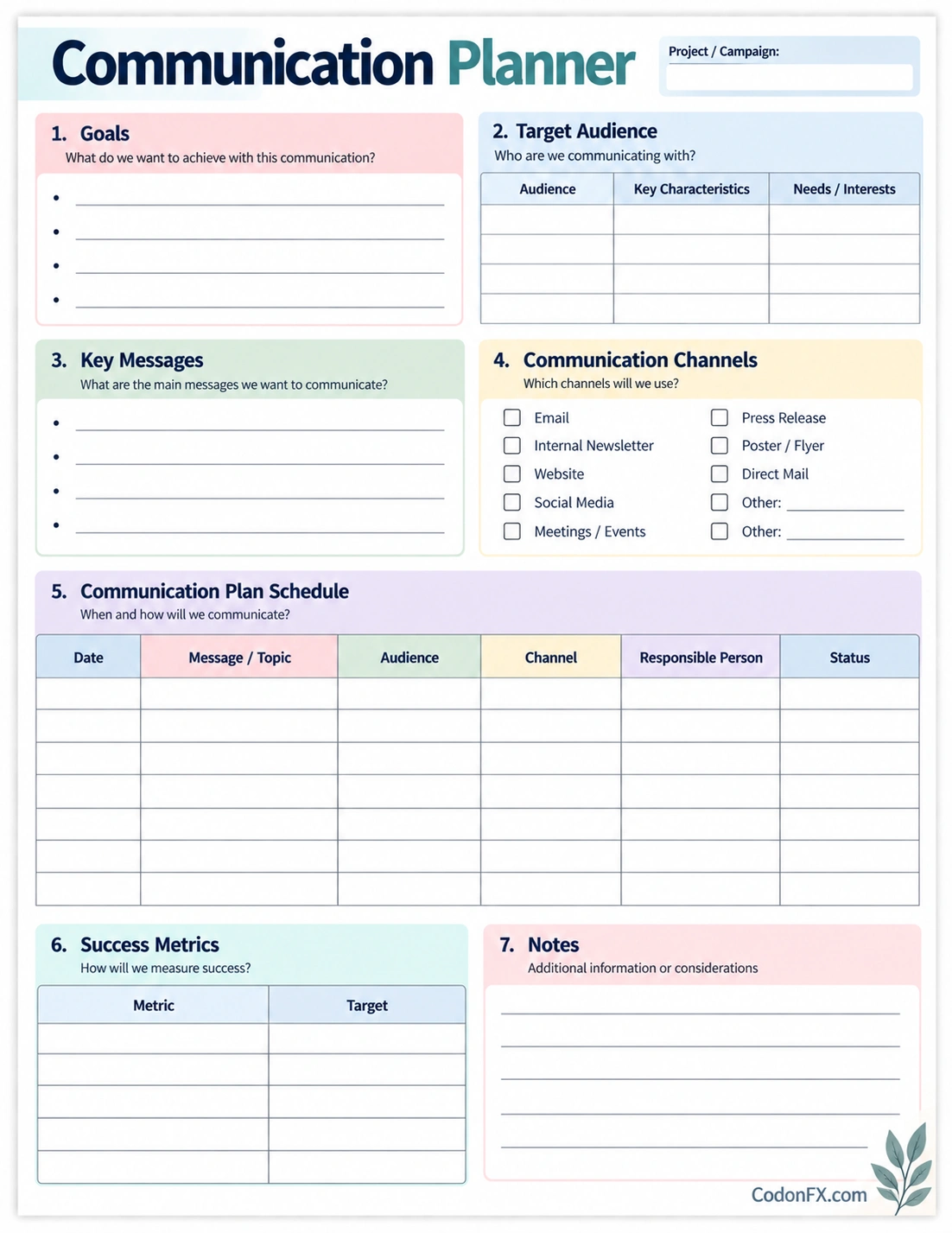
A useful communication planner should contain the information a team needs to move from communication goals to actual execution. The exact format can vary, but several components are commonly useful.
1. Communication Goals
Start by defining what the communication is intended to accomplish. A goal provides direction and helps the team determine what information needs to be shared.
Communication goals might include increasing awareness, explaining a change, encouraging participation, supporting a product launch, improving employee understanding, or maintaining stakeholder engagement.
Try to make each goal specific enough that the team can later determine whether the communication was successful.
2. Target Audience
The next step is identifying who needs to receive the message. Different audiences may have different needs, concerns, interests, and levels of knowledge.
A communication planner can divide audiences into groups such as employees, customers, managers, partners, investors, community members, media contacts, or other stakeholders.
For each audience, consider:
- Who they are
- What information they need
- What they already know
- What questions or concerns they may have
- Which communication channels they are most likely to use
3. Key Messages
Key messages are the main points the audience should understand after receiving the communication. They help maintain consistency when several people or departments are communicating about the same initiative.
Strong key messages should be clear, relevant, concise, and appropriate for the intended audience. Avoid filling the communication with unnecessary information that could distract from the main point.
4. Communication Channels
The communication channel determines how the message will reach the audience. Different situations may require different channels.
Common communication channels include:
- Internal newsletters
- Company websites
- Social media
- Meetings
- Presentations
- Press releases
- Posters and flyers
- Direct mail
- Internal communication platforms
The best channel depends on the audience, purpose, urgency, complexity, and type of information being communicated.
5. Communication Schedule
A communication schedule turns the overall strategy into specific activities. It can identify when each message will be prepared, approved, published, distributed, or followed up.
A simple communication schedule may include the date, message or topic, target audience, channel, responsible person, and status.
This makes it easier to see upcoming communication activities and identify potential scheduling conflicts.
6. Responsible Team Members
Communication activities often involve multiple people. Assigning responsibility helps prevent important tasks from being overlooked.
Depending on the project, responsibilities may include writing, reviewing, approving, designing, publishing, distributing, monitoring, or reporting results.
Adding a responsible person or team to each activity creates greater accountability and makes it easier to follow up on unfinished tasks.
7. Success Metrics
A communication plan should also explain how success will be evaluated. The appropriate metrics depend on the purpose of the communication.
Possible communication metrics include:
- Email open rates
- Click-through rates
- Website visits
- Event registrations
- Content engagement
- Employee participation
- Survey responses
- Audience feedback
- Media coverage
- Completion rates
Not every communication activity needs the same measurement. Choose metrics that are directly connected to the communication objective.
How to Create a Communication Planner
Creating a communication planner does not have to be complicated. A simple process can help transform a broad communication goal into an organized action plan.
Step 1: Define the Purpose
Begin by explaining why the communication is needed. Identify the situation, project, campaign, announcement, or organizational objective that requires communication.
A clear purpose helps prevent unnecessary messages and keeps the communication strategy focused.
Step 2: Identify the Audience
Determine who needs to receive the information. If there are several audience groups, list them separately and consider whether each group requires a different message or communication channel.
Step 3: Develop the Key Messages
Write down the most important points the audience needs to understand. Keep the messages consistent with the overall communication goal and adapt the language to the audience.
Step 4: Select the Right Channels
Choose communication channels based on the audience and purpose. An urgent internal announcement may require a different channel from a long-term marketing campaign or public information campaign.
Step 5: Create the Schedule
Assign dates to each communication activity. Include preparation, review, approval, publication, and follow-up when these steps are relevant.
Step 6: Assign Responsibilities
Identify who will create, review, approve, distribute, and monitor each communication. Clear ownership makes the plan easier to execute.
Step 7: Define Success Measures
Choose measurable indicators that can show whether the communication achieved its intended purpose. Review the results after the communication has been delivered.
Communication Planner for Different Types of Projects
A communication planner can be adapted to many different situations. The structure may remain similar while the messages, audiences, channels, and measurements change.
Internal Communication
Organizations can use a communication planner to coordinate employee announcements, policy updates, organizational changes, training programs, and internal initiatives.
Marketing Campaigns
Marketing teams can use a communication plan to organize campaign messages, promotional content, social media posts, email campaigns, website updates, and other activities.
Product Launches
A product launch communication plan can help coordinate messages across customers, employees, sales teams, partners, and other stakeholders.
Project Communication
Project teams can use a communication planner to establish how progress updates, milestones, decisions, risks, and important changes will be communicated.
Change Management
When an organization introduces a significant change, communication planning can help ensure that affected groups receive timely and relevant information. The plan can also identify opportunities for questions, feedback, and follow-up.
Tips for Creating an Effective Communication Plan
A communication planner is most useful when it is simple enough to maintain and detailed enough to guide execution.
- Keep the goals clear: Make sure every major communication activity supports a defined objective.
- Know the audience: Avoid using the same approach for every audience when their needs are different.
- Prioritize important messages: Make the most important information easy to identify.
- Use appropriate channels: Select channels based on audience behavior and communication needs.
- Create realistic deadlines: Allow enough time for writing, review, approval, and distribution.
- Assign ownership: Make it clear who is responsible for each activity.
- Keep the plan updated: Revise dates, responsibilities, and messages when circumstances change.
- Measure results: Review performance and use the findings to improve future communication.
Common Communication Planning Mistakes
Even a detailed communication plan can become ineffective if important planning issues are overlooked.
Trying to Reach Everyone With the Same Message
Different audiences may have different priorities and levels of knowledge. A message that works for employees may not be appropriate for customers or external stakeholders.
Choosing Channels Without Considering the Audience
A communication channel should be selected based on where and how the intended audience is most likely to receive and engage with the information.
Ignoring Timing
Even a well-written message can have limited impact if it arrives too early, too late, or without enough context. A communication schedule helps teams coordinate timing with important events and deadlines.
Failing to Measure Results
Without appropriate measurements, it can be difficult to determine whether communication achieved its intended objective. Include meaningful success metrics from the beginning.
Making the Planner Too Complicated
A communication planner should support the team rather than create unnecessary administrative work. Include the information needed to make decisions and execute the plan, but avoid adding fields that provide little practical value.
Frequently Asked Questions
What is a communication planner used for?
A communication planner is used to organize communication goals, target audiences, key messages, channels, schedules, responsibilities, and success metrics. It provides a structured roadmap for coordinating communication activities.
What should a communication planner include?
A basic communication planner can include communication goals, target audiences, key messages, communication channels, a schedule, responsible team members, success metrics, and notes.
What is the difference between a communication planner and a communication plan?
A communication plan is the overall strategy for how an organization or project will communicate. A communication planner is often the practical worksheet or tool used to organize and manage the information needed to execute that plan.
Who can use a communication planner?
Businesses, nonprofits, schools, project teams, marketing departments, communication professionals, and other organizations can use a communication planner to organize internal or external communication activities.
How often should a communication planner be updated?
A communication planner should be updated whenever important information changes, such as deadlines, responsibilities, audiences, communication channels, or key messages. For active projects, regular reviews can help keep the plan accurate.
Can a communication planner be used for marketing?
Yes. A communication planner can help organize marketing messages, target audiences, communication channels, campaign dates, content responsibilities, and performance measurements.
Why is audience identification important in communication planning?
Audience identification helps ensure that messages are relevant to the people who need to receive them. It can also help teams choose appropriate language, communication channels, timing, and supporting information.
What makes a communication plan effective?
An effective communication plan connects clear goals with specific audiences, relevant messages, appropriate channels, realistic schedules, assigned responsibilities, and measurable outcomes. The plan should also be simple enough for the team to use consistently.
Conclusion
A communication planner provides a practical framework for organizing communication activities and keeping teams aligned. By defining goals, identifying audiences, developing key messages, selecting communication channels, creating a schedule, assigning responsibilities, and measuring results, organizations can approach communication with greater structure and consistency.
Whether you are managing an internal announcement, marketing campaign, product launch, organizational change, or project update, a communication planner can help turn communication objectives into clear and manageable actions.
The most useful planner is not necessarily the most complicated one. A simple, well-organized communication planning template can give teams a clear view of what needs to be communicated, who needs to receive it, when it should happen, and how success will be evaluated.
Download: Communication Planner Template
