Staying organized throughout the month can be easier when you have a planning system that is both practical and enjoyable to use. A cute monthly planner gives you a clear overview of your schedule while adding a little personality to your everyday routine. With space for appointments, deadlines, special occasions, goals, and notes, it helps you keep important commitments in one convenient place.
Whether you are organizing work projects, school assignments, family activities, or personal plans, a monthly planner can help you see what is coming and decide how to use your time. Instead of keeping every reminder in your head, you can write things down, review your priorities, and plan ahead with greater confidence.
A well-designed cute monthly planner combines useful planning sections with attractive colors, simple illustrations, and an easy-to-read calendar layout. This guide explains how to use one effectively, what features to look for, and how to make monthly planning a habit.
What Is a Cute Monthly Planner?
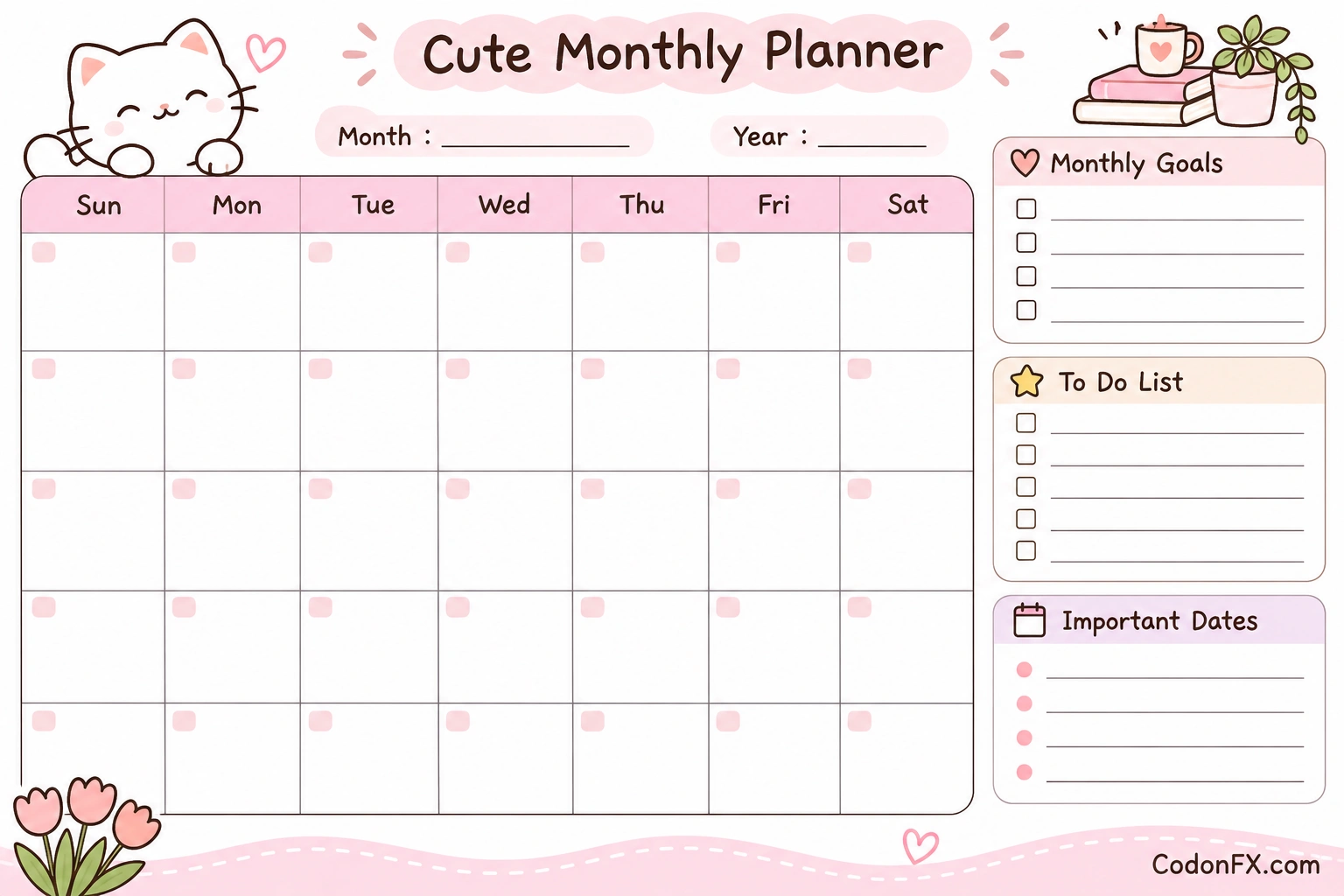
A cute monthly planner is a calendar-based planning tool designed to help you organize an entire month in a visually appealing format. It typically includes a monthly calendar grid along with additional spaces for goals, important dates, tasks, and notes.
Unlike a daily planner, which focuses on individual days and detailed schedules, a monthly planner provides a broader view. You can quickly identify busy periods, upcoming deadlines, birthdays, appointments, and other commitments without turning through multiple pages.
The word “cute” usually refers to the planner’s visual style. Popular designs may feature pastel colors, soft illustrations, flowers, stars, hearts, animals, rounded headings, and friendly typography. These decorative details make planning feel more personal while keeping the calendar functional.
Why Use a Monthly Planner?
A monthly planner is useful because it turns scattered plans and reminders into one organized overview. It can support better time management, reduce forgotten commitments, and make it easier to balance personal and professional responsibilities.
See Your Whole Month at a Glance
A monthly calendar gives you a clear picture of upcoming events and deadlines. You can see which weeks are busy, identify open days, and avoid scheduling too many activities close together. This overview is especially helpful when several responsibilities need your attention.
Remember Important Dates
Writing down appointments, birthdays, bill due dates, school events, and project deadlines makes them easier to remember. A dedicated important dates section can also keep essential reminders visible without overcrowding the calendar grid.
Improve Time Management
Planning ahead helps you distribute tasks more evenly across the month. Instead of waiting until a deadline is close, you can assign preparation tasks to earlier dates and leave enough time to complete them.
Stay Focused on Personal Goals
A monthly planner can include a small goal-setting area for priorities such as exercise, reading, saving, learning, or completing a personal project. Reviewing these goals regularly helps you stay aware of what matters beyond your daily tasks.
Make Planning More Enjoyable
A visually appealing planner can make organization feel less like a chore. Cute illustrations, gentle colors, and clean layouts add character without taking attention away from your schedule. Choosing a design you enjoy may also encourage you to use it consistently.
Useful Features to Look for in a Cute Monthly Planner
The best monthly planner is one that gives you enough space to organize your commitments without making the page feel crowded. Before choosing a design, consider the sections that will support your planning routine.
Monthly Calendar Grid
The calendar grid is the main part of the planner. It should have clearly labeled weekdays and enough room to write short reminders, appointments, and deadlines. A Sunday-start or Monday-start layout can work well, depending on your preference.
Monthly Goals Section
A monthly goals area helps you identify the results you want to achieve. Keep the list focused on a few realistic priorities rather than filling it with too many unrelated tasks.
To-Do List
A separate to-do list is useful for tasks that need to be completed during the month but do not belong to a specific date yet. You can review the list each week and move tasks into the calendar when you decide when to complete them.
Important Dates and Events
This section is ideal for birthdays, holidays, appointments, meetings, school activities, and other events you do not want to overlook. It can also serve as a quick reference when you are planning the weeks ahead.
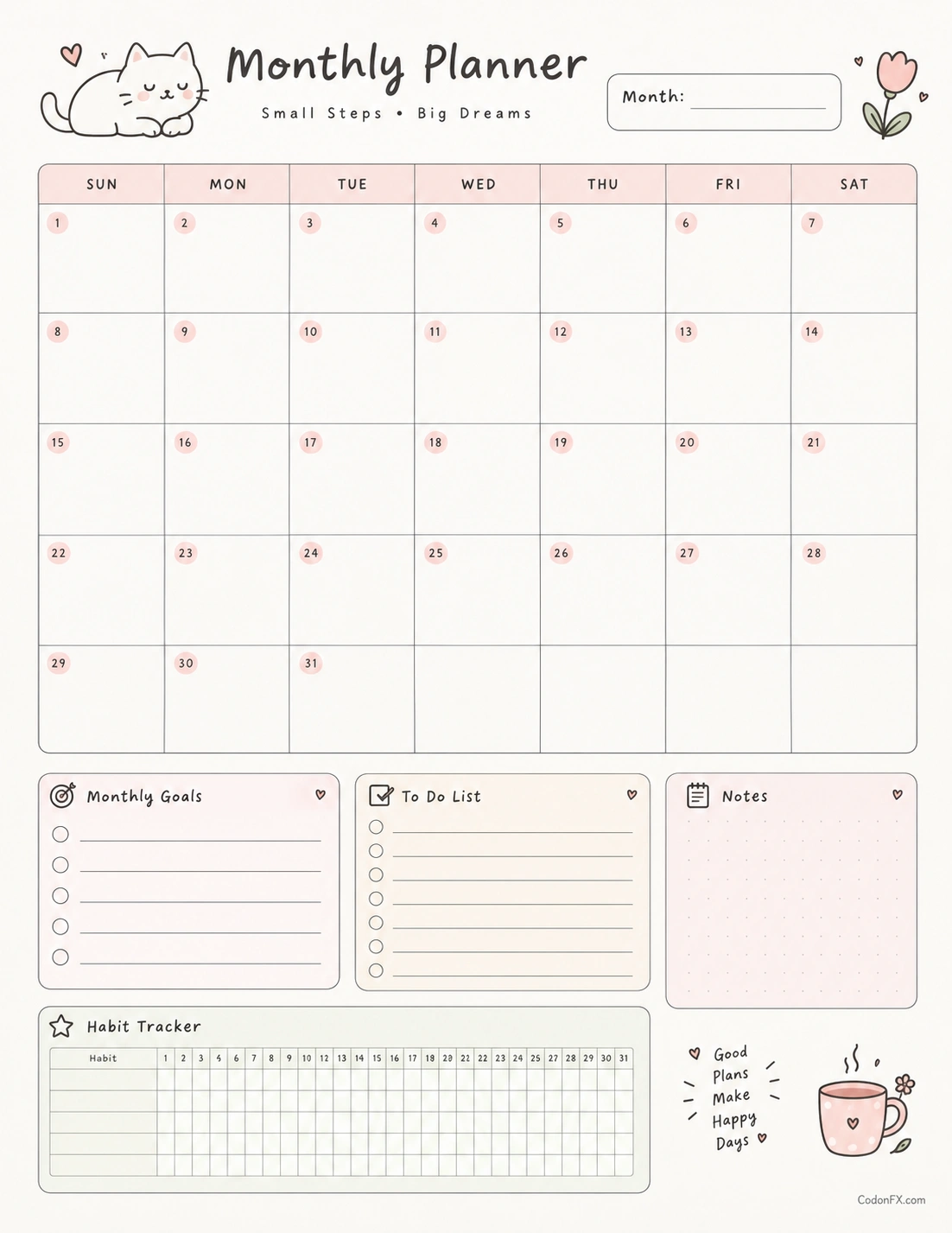
Notes and Habit Tracker
A notes area gives you room for extra details, ideas, or reminders that do not fit inside the calendar boxes. Some cute monthly planners also include a habit tracker, allowing you to mark daily progress on routines such as reading, exercise, hydration, or studying.
How to Use a Cute Monthly Planner Effectively
Using a planner successfully does not require a complicated system. A short planning routine at the beginning of the month, followed by regular updates, can help you stay organized.
1. Add Fixed Appointments First
Start by entering events that already have confirmed dates and times. These may include work meetings, medical appointments, classes, family occasions, travel plans, and scheduled activities. Adding fixed commitments first helps you see how much flexible time remains.
2. Mark Deadlines and Important Dates
Next, write down payment due dates, assignment deadlines, project milestones, application dates, and other time-sensitive responsibilities. Use a consistent symbol or color to make these items easy to recognize.
3. Choose Your Monthly Priorities
Identify two or three important outcomes you want to accomplish. These might relate to work, education, personal development, home organization, or health routines. Keep your goals specific enough that you can recognize when they are complete.
4. Break Large Tasks Into Smaller Steps
A major project can feel difficult to manage when it appears as one large task. Divide it into smaller actions and assign realistic dates throughout the month. This approach makes progress easier to track and reduces last-minute pressure.
5. Review Your Planner Every Week
Set aside a few minutes each week to review upcoming appointments, check unfinished tasks, and adjust your schedule. Move flexible activities when necessary, but keep important deadlines visible.
6. Update It as Plans Change
Schedules can change unexpectedly. When an appointment is moved or a task is completed, update the planner as soon as possible. A planner is most useful when it reflects your current commitments rather than an outdated schedule.
Creative Ways to Organize Your Monthly Calendar
Simple visual techniques can make a cute monthly planner easier to read. The goal is to create a consistent system, not to decorate every available space.
- Use color categories: Choose one color for work, another for personal activities, and a third for family or school commitments.
- Add simple symbols: Use stars for important deadlines, hearts for personal events, and check marks for completed tasks.
- Highlight busy weeks: Add a light marker or border to weeks with several appointments or deadlines.
- Keep entries brief: Write short descriptions in calendar boxes and use the notes section for extra details.
- Leave open space: Avoid filling every day with tasks. Flexible time can help you manage unexpected responsibilities.
Choose a small color palette and repeat it throughout the page. Too many colors or decorative elements can make important information harder to find.
Printable vs. Digital Monthly Planner
Both printable and digital monthly planners can help you organize your schedule. The right choice depends on how you prefer to record information and access your plans.
Printable Monthly Planner
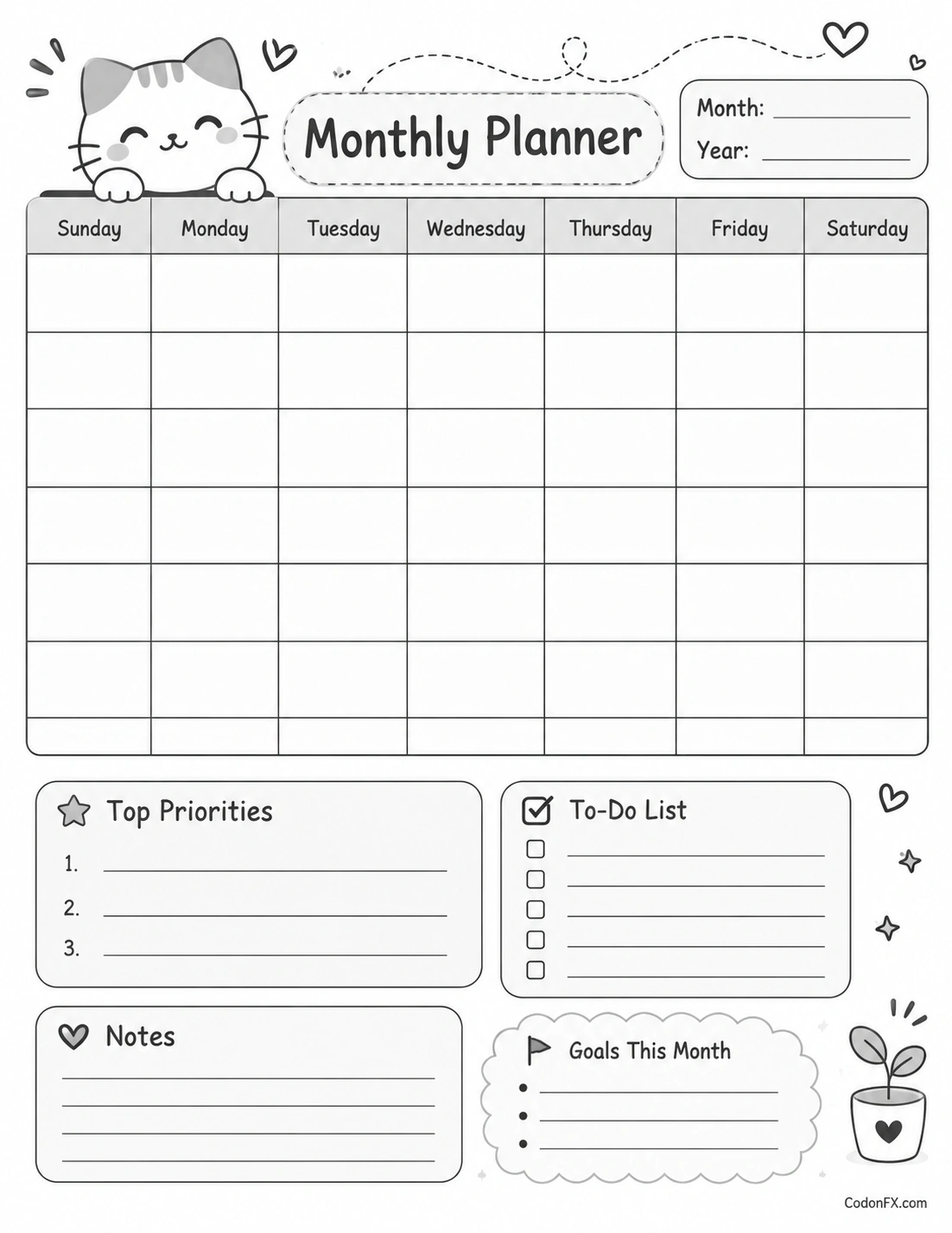
A printable monthly planner is a good option for people who enjoy writing by hand and keeping a visible calendar on a desk, wall, or binder. You can print a fresh page for each month, personalize it with pens or highlighters, and keep completed pages for reference.
Printable planners are also easy to customize. You can choose a cute pastel design, a minimalist calendar, or a layout with additional sections for goals and notes.
Digital Monthly Planner
A digital planner is convenient when you want to access your schedule across devices. Depending on the app, you may be able to set reminders, move events quickly, repeat appointments, and connect tasks with other calendars.
Digital planning can be useful for people with frequently changing schedules. However, some users prefer a printed calendar because it provides a simple visual overview without opening an app.
Which Option Should You Choose?
Choose a printable planner if you enjoy handwriting, decorating pages, and seeing your month on paper. Choose a digital planner if notifications, synchronization, and quick editing are more important. You can also combine both: use a digital calendar for timed appointments and a printable monthly planner for goals, priorities, and general planning.
Tips for Building a Consistent Monthly Planning Habit
A planner only works when you use it regularly. Building a simple routine can help you turn monthly planning into a manageable habit.
- Choose a regular planning day: Review the coming month near the end of the previous month or on the first day of the new month.
- Keep your planner accessible: Place a printable calendar somewhere you naturally look during the day.
- Start with essential information: Add appointments, deadlines, and priorities before optional details.
- Make realistic plans: Estimate how long tasks will take and avoid assigning too many activities to one day.
- Review unfinished tasks: Decide whether each task should be rescheduled, simplified, delegated, or removed.
- Celebrate completed goals: Mark progress so you can see what you have accomplished by the end of the month.
Remember that your planner should support your life, not create extra pressure. It is perfectly fine to leave some days open or change your plans when circumstances require it.
Frequently Asked Questions About Cute Monthly Planners
What should I write in a monthly planner?
Write appointments, deadlines, birthdays, meetings, holidays, bill due dates, monthly goals, and important reminders. You can also use separate sections for to-do lists, notes, and habit tracking.
How do I organize a monthly planner?
Start with fixed appointments and deadlines, then add monthly priorities and flexible tasks. Use simple color categories or symbols to distinguish different types of activities, and review the calendar every week.
Is a printable monthly planner useful?
Yes. A printable monthly planner provides a clear overview of your schedule and can be placed in a binder, notebook, or visible workspace. It is especially useful for people who prefer writing by hand and reviewing their plans on paper.
What is the difference between a monthly planner and a daily planner?
A monthly planner shows events and commitments across an entire month, while a daily planner focuses on a specific day’s schedule and tasks. Many people use both to manage long-term priorities and daily activities.
Can I use a cute monthly planner for work and personal life?
Yes. You can use different colors or symbols to separate professional commitments from personal activities. This makes it easier to see how work deadlines, family events, appointments, and personal goals fit together.
How many goals should I include in my monthly planner?
Start with two or three meaningful goals. A shorter list makes it easier to focus and track progress. You can add smaller tasks beneath each goal as needed.
How often should I update my monthly planner?
Update it whenever an important appointment or deadline changes. A quick daily check and a more detailed weekly review can help keep your calendar accurate and useful.
Conclusion
A cute monthly planner is more than an attractive calendar. It is a practical tool for organizing appointments, tracking deadlines, remembering important events, and working toward personal and professional goals. By bringing your commitments together in one place, it gives you a clearer view of the month and helps you plan your time more intentionally.
Choose a layout that fits your routine, keep your entries simple, and review your plans regularly. Whether you prefer a cute printable monthly calendar or a digital planning system, a consistent approach can make everyday responsibilities easier to manage and help you approach each new month with greater confidence.
Download: Cute Monthly Planner Template PDF
