Planning what to eat every day can feel overwhelming, especially when you have a busy schedule. Without a clear plan, it is easy to skip meals, order expensive takeout, or choose convenient foods that do not support your health goals. A simple daily meal plan can make everyday eating more organized, affordable, and enjoyable.
By deciding what to eat ahead of time, you can create balanced meals, prepare a practical grocery list, control portions, and reduce unnecessary food waste. Whether you want to eat healthier, save money, or spend less time thinking about meals, having a structured meal plan can help you build better habits.
This guide explains how to create a daily meal schedule, choose nutritious foods, organize your grocery shopping, and make meal planning easier to maintain.
What Is a Daily Meal Plan?
A daily meal plan is a simple schedule that outlines the meals and snacks you intend to eat throughout the day. It typically includes breakfast, lunch, dinner, and optional snacks, along with notes about ingredients, portions, and preparation.
Instead of deciding what to eat at the last minute, you make those decisions in advance. This approach gives you more control over your food choices and makes it easier to build meals around your nutritional needs, preferences, and daily routine.
A basic meal plan may include:
- Breakfast: A nutritious meal to start the day.
- Lunch: A balanced meal that provides energy for the afternoon.
- Dinner: A satisfying meal with a combination of vegetables, protein, and other nutritious foods.
- Snacks: Optional foods such as fruit, yogurt, or nuts.
- Water: A reminder to stay hydrated throughout the day.
The best daily meal plan is one that fits your lifestyle, food preferences, budget, and nutritional requirements.
Benefits of Following a Daily Meal Plan
Meal planning is more than simply writing down what you want to eat. It is a practical habit that can make everyday routines easier and help you make more intentional food choices.
1. Encourages Healthier Eating Habits
Planning meals in advance makes it easier to include different food groups throughout the day. You can prepare meals with vegetables, fruits, whole grains, lean proteins, and healthy fats instead of relying on whatever food is most convenient.
Having a plan also helps you become more aware of your eating patterns and make adjustments when your meals lack variety.
2. Saves Time During Busy Days
Deciding what to cook every day takes time. A meal schedule reduces repeated decisions because you already know what is planned for each meal.
You can also prepare ingredients in advance, cook larger portions, and use leftovers for another meal. These small steps make daily cooking more manageable.
3. Helps Reduce Food Expenses
When you plan meals before shopping, you can purchase ingredients based on what you actually need. This reduces unnecessary purchases and helps limit expensive last-minute takeout orders.
A grocery list also makes it easier to compare prices, use ingredients across multiple recipes, and stay within your food budget.
4. Reduces Food Waste
Meal planning helps you use ingredients more efficiently. For example, vegetables purchased for lunch can also be included in dinner, while leftover cooked chicken can become part of a salad or sandwich the next day.
Planning meals around ingredients you already have in your refrigerator, freezer, or pantry can further reduce food waste.
5. Makes Portion Planning Easier
Writing down meals and approximate portions encourages more awareness of how much food you prepare and serve. You can adjust quantities based on your appetite, activity level, and individual nutritional needs.
How to Create a Daily Meal Plan
Creating a useful meal plan does not need to be complicated. Start with a simple structure and gradually adjust it to suit your routine.
Step 1: Identify Your Eating Goals
Before choosing meals, decide what you want to achieve. Your goal might be to eat more vegetables, prepare meals at home more often, reduce food expenses, or establish a consistent eating schedule.
Keep your goals realistic. Choosing one or two habits to improve is often easier than changing your entire eating routine at once.
Step 2: Choose Your Daily Meals
Plan breakfast, lunch, dinner, and any snacks you prefer. Select foods that are satisfying, practical to prepare, and appropriate for your nutritional needs.
For inspiration, consider these simple meal combinations:
- Breakfast: Oatmeal with banana and yogurt.
- Lunch: Grilled chicken, brown rice, and mixed vegetables.
- Dinner: Baked fish, roasted potatoes, and steamed broccoli.
- Snack: Fresh fruit, nuts, or plain yogurt.
These are examples rather than a fixed diet. You can substitute ingredients based on your preferences, availability, and dietary requirements.
Step 3: Include a Variety of Nutritious Foods
A balanced eating pattern benefits from variety. Try to include several food groups throughout the day rather than relying on the same ingredients for every meal.
- Vegetables and fruits: Provide fiber, vitamins, minerals, and other beneficial nutrients.
- Protein sources: Include eggs, fish, chicken, beans, tofu, or other preferred options.
- Whole grains: Consider oats, brown rice, whole-wheat bread, and other whole-grain foods.
- Healthy fats: Include foods such as avocado, nuts, seeds, and olive oil.
- Dairy or alternatives: Choose milk, yogurt, or suitable fortified alternatives.
Adjust your choices and portions to your personal needs rather than following a one-size-fits-all meal schedule.
Step 4: Create a Grocery Shopping List
Once your meals are selected, write down all the ingredients required. Check your kitchen first so you do not purchase items you already have.
Organize your grocery list into useful categories:
- Fresh vegetables and fruits.
- Meat, fish, eggs, and plant-based proteins.
- Rice, bread, oats, and other grains.
- Milk, yogurt, and dairy alternatives.
- Cooking essentials, herbs, and seasonings.
A categorized shopping list makes grocery shopping faster and helps prevent unnecessary spending.
Step 5: Prepare Ingredients in Advance
Meal preparation can make your daily schedule much easier. You do not need to cook every meal for the entire week. Even a little preparation can save time.
Consider washing vegetables, portioning ingredients, cooking grains, or preparing a few protein options ahead of time. Store prepared food safely in appropriate containers and refrigerate or freeze it as needed.
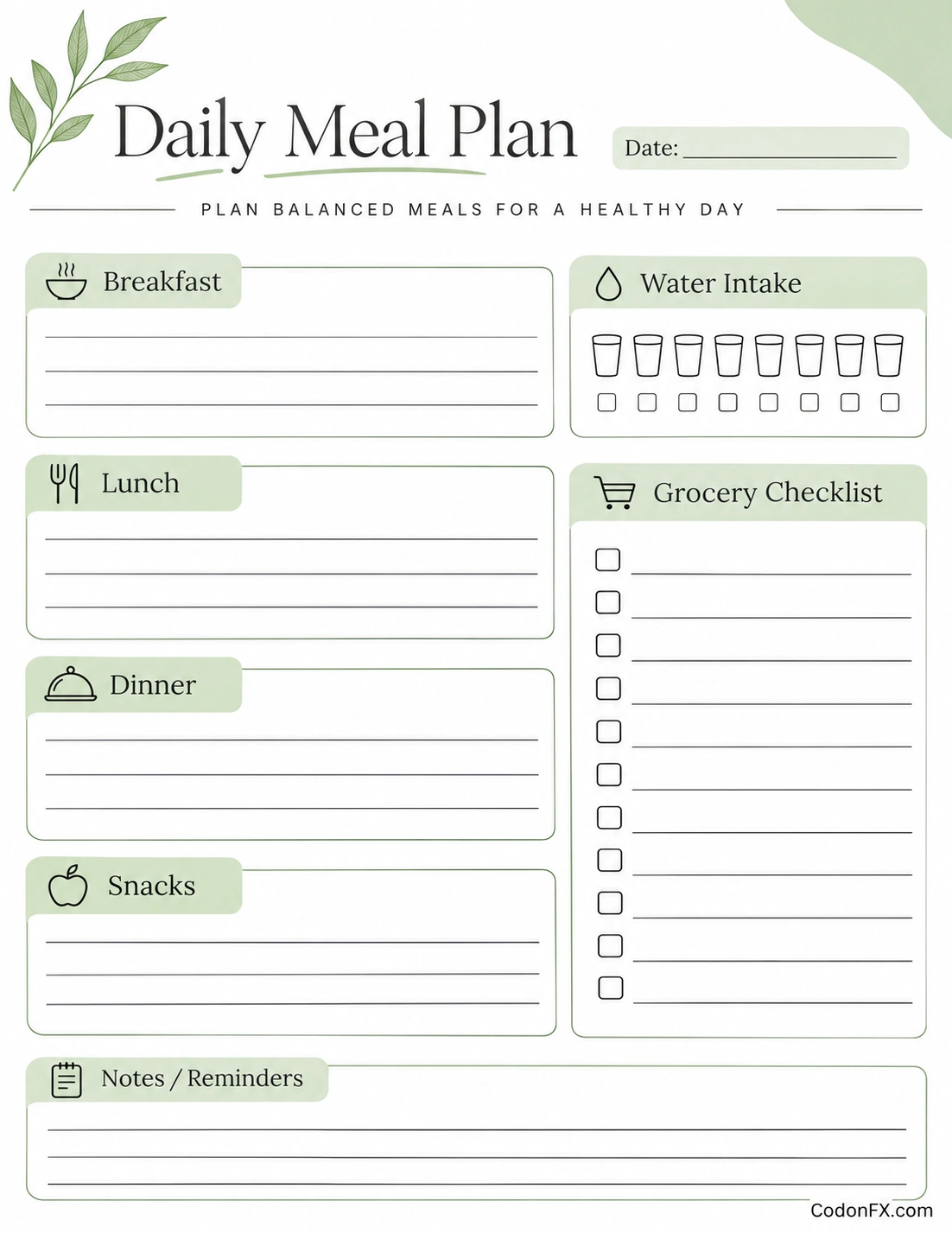
Daily Meal Plan Template: What Should It Include?
A printable daily meal plan template provides a convenient place to organize your meals and keep important information together. Instead of writing notes on separate pieces of paper, you can use one worksheet to manage your daily food schedule.
A practical template should include the following sections:
- Date: Record the day you are planning.
- Breakfast: Write down your morning meal.
- Lunch: Record your midday meal.
- Dinner: Decide what you will prepare in the evening.
- Snacks: List any snacks you intend to have.
- Water intake: Track your hydration reminders.
- Grocery checklist: Note ingredients you need to purchase.
- Notes: Add preparation reminders or other useful information.
Choose a layout that is easy to read and provides enough writing space. Keeping the worksheet somewhere visible, such as on a refrigerator or inside a meal-planning binder, can help you use it consistently.
Weekly Meal Planning for Better Organization
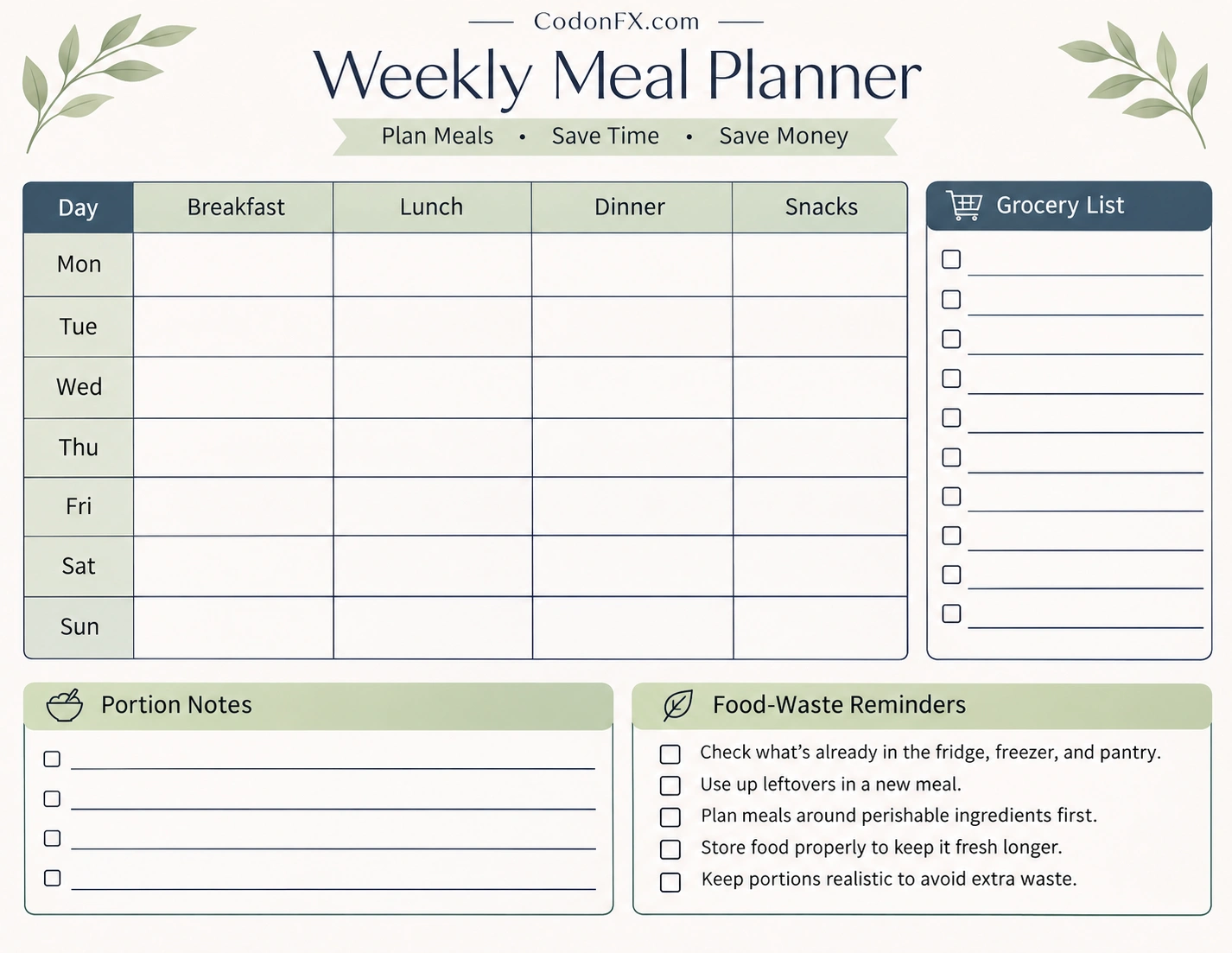
Although a daily meal schedule is useful, planning several days at once can make the process even more efficient. A weekly meal planner allows you to see your meals in advance and organize grocery shopping around your complete schedule.
For example, you might prepare a large batch of brown rice for several meals, use the same vegetables in different recipes, or schedule a leftover dinner to use ingredients before they spoil.
When creating a weekly meal schedule, consider:
- Your work, school, and family commitments.
- Days when you have more time to cook.
- Ingredients already available at home.
- Meals that can be prepared in advance.
- Your grocery budget for the week.
- Opportunities to reuse ingredients in different recipes.
This approach gives you a clearer overview of your food choices while reducing the number of daily decisions.
Simple Meal Prep Tips to Save Time
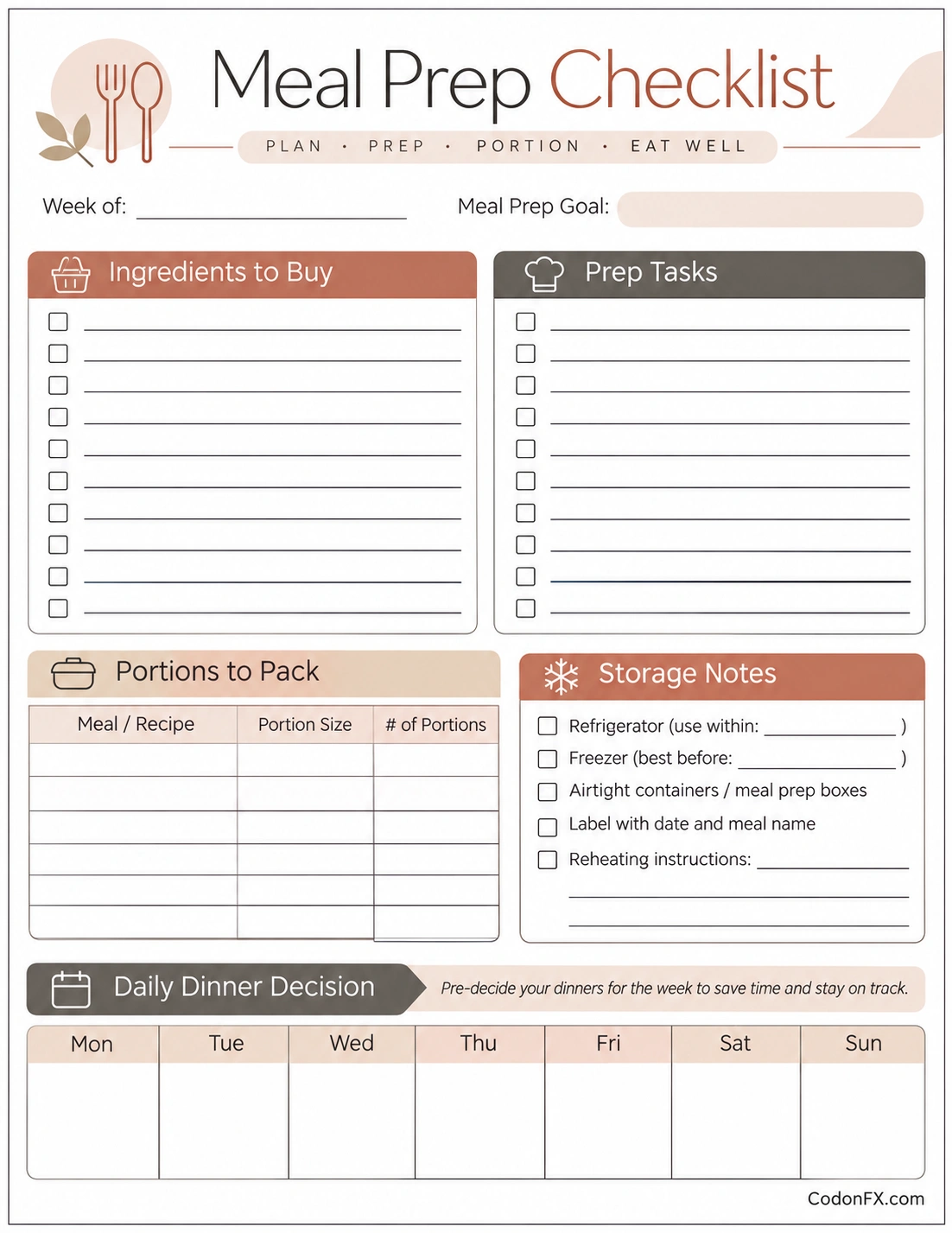
Preparing meals in advance can help you follow your meal schedule even when life gets busy. Use these practical tips to make meal preparation more manageable.
Prepare Ingredients Instead of Every Complete Meal
If preparing several complete meals feels overwhelming, start by preparing individual ingredients. Cook rice, wash vegetables, portion proteins, and prepare simple sauces. You can combine them in different ways throughout the week.
Choose Recipes With Shared Ingredients
Look for recipes that use some of the same ingredients. For example, spinach can be used in an omelet, salad, or pasta dish. This makes grocery shopping more efficient and reduces the chance of unused ingredients.
Store Food Properly
Use suitable airtight containers and label prepared food with the storage date. Refrigerate perishable foods promptly and follow recommended food storage and reheating practices to maintain food safety.
Keep Your Plan Flexible
Unexpected events can change your schedule. Keep a few quick meal options available and allow yourself to switch meals when necessary. A meal plan should support your routine, not create additional stress.
Common Meal Planning Mistakes to Avoid
Even a well-organized meal schedule can become difficult to maintain if it is too complicated. Avoid these common mistakes when creating your plan.
- Planning too many complicated recipes: Start with simple meals that fit your cooking skills and available time.
- Ignoring your grocery budget: Choose affordable seasonal ingredients and compare prices before shopping.
- Making unrealistic portions: Prepare quantities that match your household’s needs and eating habits.
- Forgetting existing ingredients: Check your refrigerator and pantry before creating a shopping list.
- Repeating meals too often: Introduce variety to make your eating routine more enjoyable.
- Following a rigid schedule: Leave room for changes, unexpected events, and personal preferences.
Frequently Asked Questions About Daily Meal Plans
1. What should a daily meal plan include?
A daily meal plan should include breakfast, lunch, dinner, and optional snacks. You can also add water intake reminders, grocery items, portion notes, and meal preparation instructions to make the schedule more useful.
2. Is it better to plan meals daily or weekly?
Both approaches can work well. Daily planning offers flexibility, while weekly planning provides a broader overview and makes grocery shopping easier. Many people use a weekly plan to organize their meals and a daily template to manage individual details.
3. How can I create a healthy daily meal plan?
Start by choosing a variety of vegetables, fruits, whole grains, protein sources, and healthy fats. Consider your nutritional needs, food preferences, and portion sizes. For specific dietary requirements, consult a qualified healthcare professional or registered dietitian.
4. Can meal planning help save money?
Yes. Planning meals in advance helps you create a focused grocery list, reduce unnecessary purchases, use ingredients more efficiently, and avoid frequent last-minute takeout orders.
5. How far in advance should I plan my meals?
Planning meals three to seven days ahead is a practical starting point for many households. Choose a timeframe that matches your shopping routine, food storage capacity, and schedule.
6. What is the easiest way to start meal planning?
Begin with a simple printable worksheet. Write down your meals for the next day, check the ingredients you already have, and prepare a short grocery list. Once the routine becomes familiar, you can expand your plan to cover an entire week.
Conclusion
A practical daily meal plan can make healthier eating easier to organize while helping you save time, control grocery expenses, and reduce food waste. By planning meals in advance, choosing a variety of nutritious ingredients, and preparing food when convenient, you can build a routine that supports your everyday needs.
You do not need a complicated schedule to get started. Begin with breakfast, lunch, dinner, and a simple grocery list. Use a printable meal planner to keep everything organized, make adjustments as your routine changes, and focus on creating habits you can maintain over time.
With a little preparation, answering the question “What’s for dinner?” can become one less thing to worry about each day.
Download: Daily Meal Plan Template
