A busy schedule can quickly become overwhelming when you have multiple responsibilities, appointments, and tasks to manage. A daily planner with hours makes organizing your day easier by dividing your schedule into specific time slots. Instead of keeping a long list of things to do, you can decide exactly when each activity should happen.
Whether you are a student, professional, business owner, or busy parent, an hourly daily planner can help you stay organized and make better use of your time. It provides a clear overview of your daily commitments while helping you prioritize important activities.
In this guide, you will discover how an hourly planner works, its benefits, practical ways to use it, and how to choose the right layout for your daily routine. You will also find printable daily planner templates that you can use to organize your schedule.
What Is a Daily Planner with Hours?
A daily planner with hours is a time-management worksheet that organizes one day into specific hourly or half-hourly intervals. Each time slot provides space to write down appointments, activities, work sessions, and personal responsibilities.
Unlike a traditional daily to-do list, which only records what needs to be completed, an hourly planner also helps you decide when to complete each task. This approach is commonly known as time blocking.
Most hourly daily planners include several useful sections, such as:
- Hourly schedule: A timeline with specific time slots for planning activities.
- Top priorities: Space to identify the most important tasks of the day.
- To-do list: A checklist for additional responsibilities.
- Appointments: Space for meetings, classes, and scheduled commitments.
- Notes: An area for reminders and additional information.
Depending on the design, some planners also include habit trackers, meal planning sections, break schedules, and daily reflections.
Free Printable Daily Planner with Hours Templates
Choosing a planner that matches your routine can make daily organization much easier. These printable hourly planner templates offer different layouts for managing appointments, personal tasks, and focused work sessions.
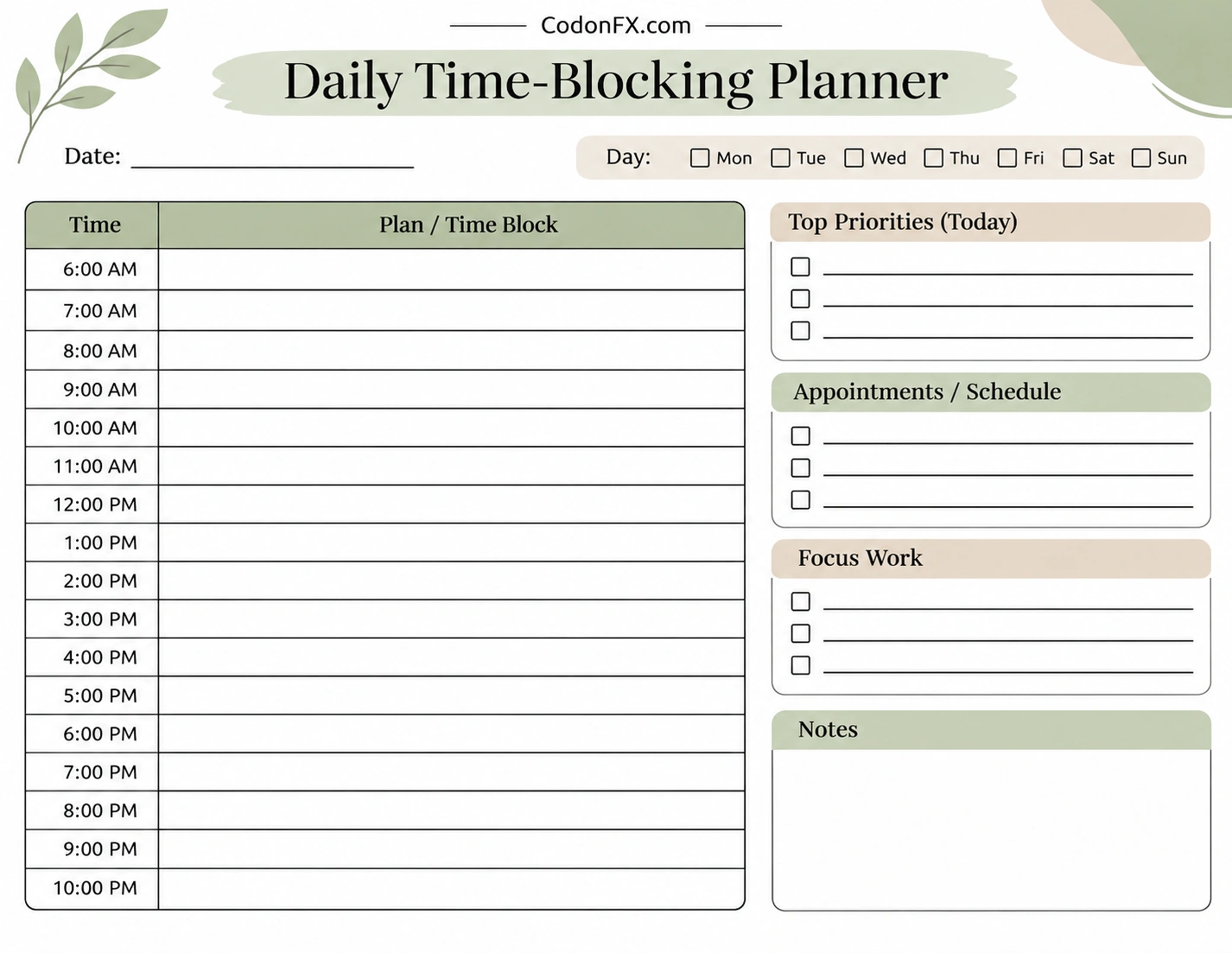
1. Daily Time-Blocking Planner Template
This daily time-blocking planner is designed for people who want a structured overview of their entire day. Its hourly schedule provides dedicated writing space for activities, while the additional sections help you identify priorities and organize appointments.
It is particularly useful for professionals, entrepreneurs, and anyone managing several responsibilities throughout the day.
2. Simple Daily Planner with Hours Template
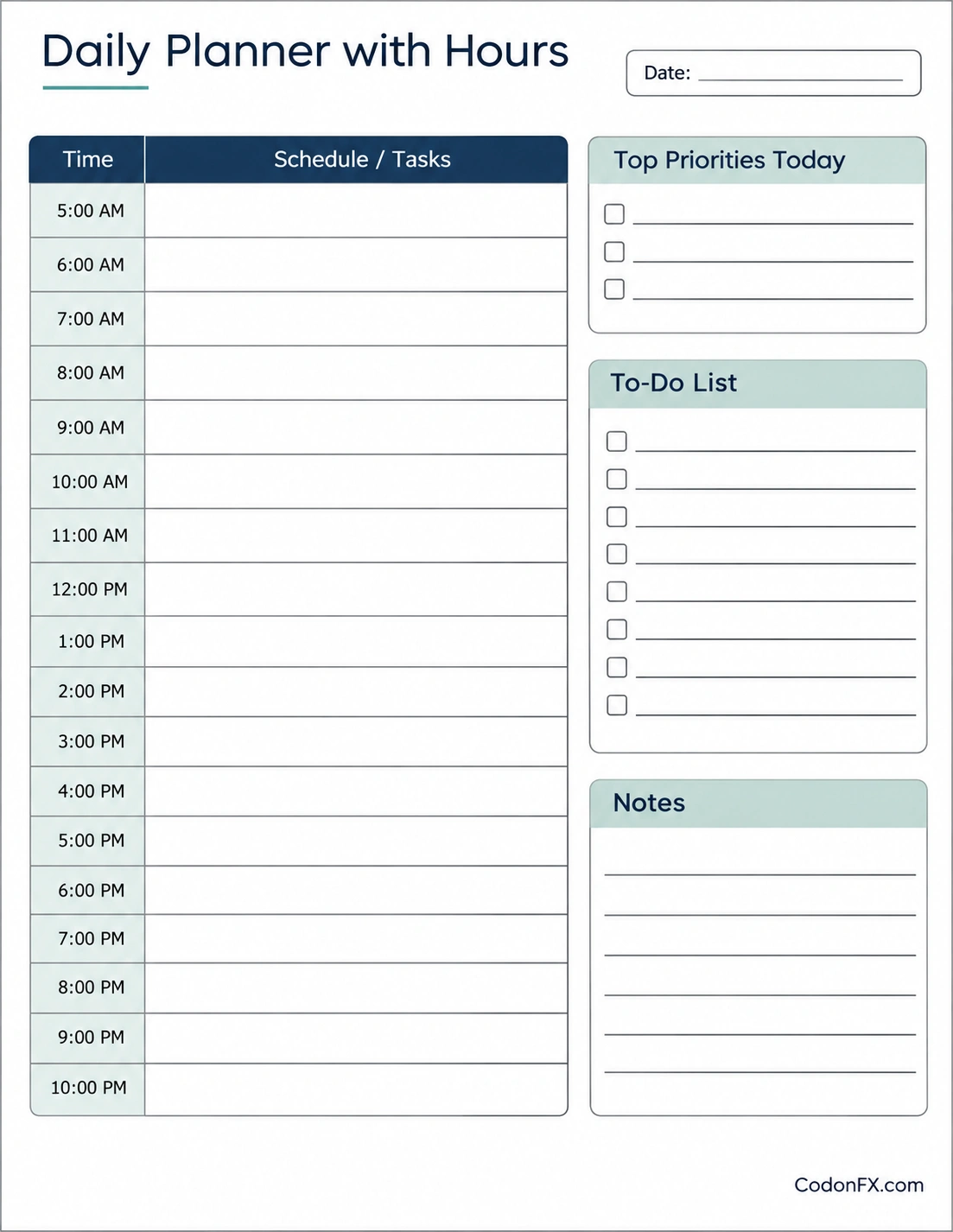
If you prefer a straightforward planning system, this simple hourly daily planner is a practical option. It features a clear timeline, a dedicated to-do list, and a notes section without unnecessary design elements.
The layout makes it easy to record appointments, work hours, study sessions, and personal activities. Its clean appearance also makes the template suitable for everyday printing.
3. Hourly Focus Planner Template
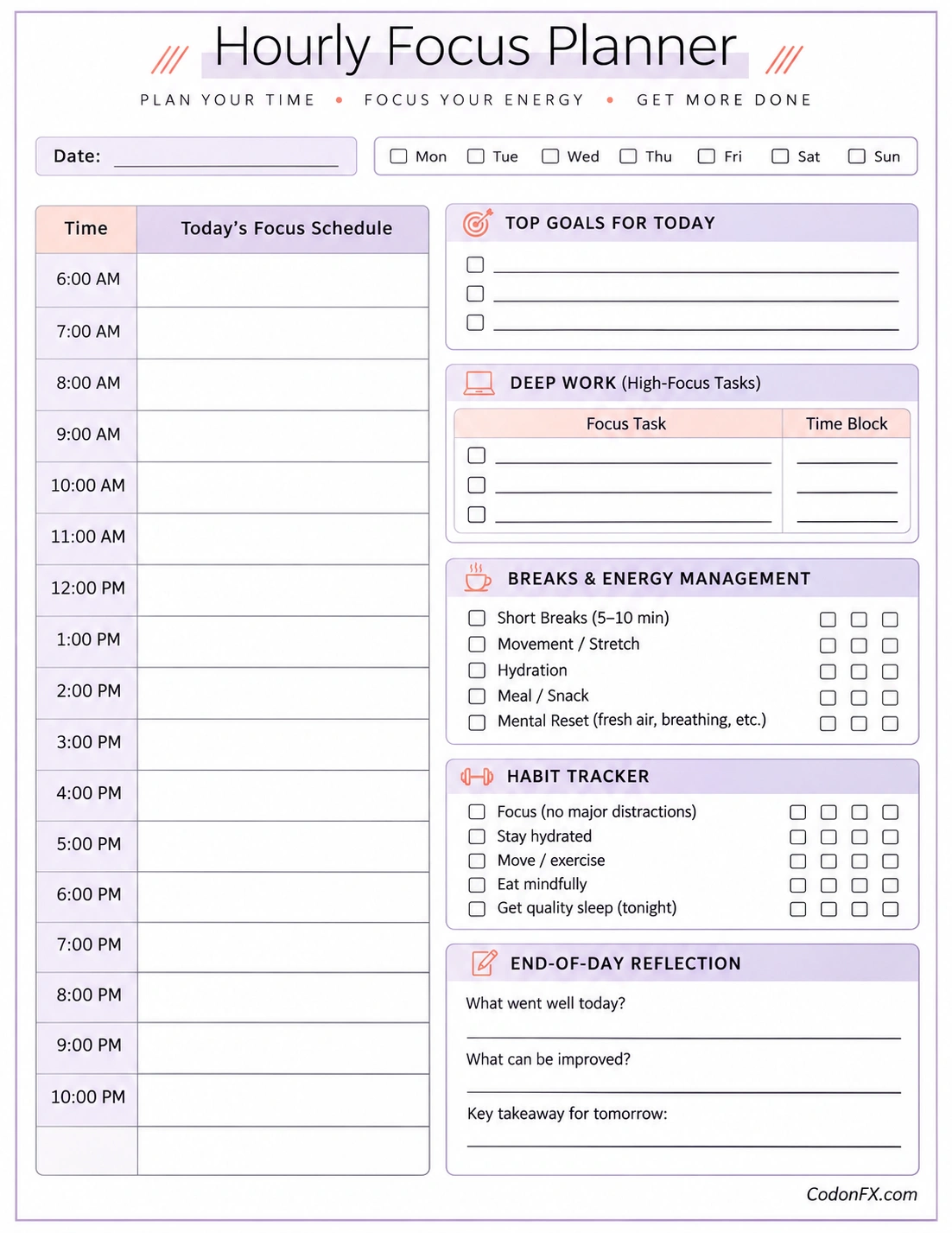
This hourly focus planner is designed for people who want to balance productivity with personal well-being. In addition to its hourly schedule, it includes sections for deep work, breaks, daily habits, and end-of-day reflection.
Use this template to plan important projects, schedule focused work sessions, remember regular breaks, and review your progress before the day ends.
Benefits of Using an Hourly Daily Planner
Planning your day by the hour offers several advantages beyond simply remembering your responsibilities. It gives you a practical structure for managing time and completing tasks more efficiently.
1. Better Time Management
An hourly schedule helps you understand how much time is available throughout the day. By assigning activities to specific time slots, you can reduce unnecessary delays and avoid spending too much time on less important tasks.
2. Improved Productivity
When you know what to work on and when to start, it becomes easier to maintain focus. A daily time-blocking planner also helps reduce the time spent deciding what to do next.
3. Clearer Daily Priorities
Writing down your most important tasks helps you distinguish essential responsibilities from optional activities. You can complete high-priority work before moving on to smaller tasks.
4. A More Balanced Routine
An hourly planner is not only for work. You can also schedule meals, exercise, family time, relaxation, and other personal activities. This makes it easier to create a realistic daily routine that includes time for yourself.
5. Less Mental Clutter
Keeping appointments and responsibilities in one place reduces the need to remember everything throughout the day. Instead of constantly thinking about upcoming tasks, you can refer to your planner whenever necessary.
How to Use a Daily Planner with Hours
Using an hourly planner effectively does not require a complicated system. A few simple planning steps can help you create a schedule that is both realistic and productive.
Step 1: List Your Daily Responsibilities
Start by writing down everything you need to accomplish. Include work assignments, household responsibilities, appointments, study sessions, and personal activities.
At this stage, focus on identifying your tasks rather than assigning specific times.
Step 2: Identify Your Top Three Priorities
Choose three important tasks that deserve your attention. These should be activities that have meaningful deadlines, significant consequences, or the greatest impact on your goals.
Writing these priorities separately helps you avoid filling your schedule with less important activities.
Step 3: Assign Tasks to Hourly Time Slots
Look at your available hours and decide when each activity should take place. Consider your existing appointments, work commitments, and personal routine.
For example, you might organize your morning and afternoon like this:
- 6:00 AM – 7:00 AM: Morning routine and breakfast.
- 7:00 AM – 8:00 AM: Exercise or preparation for work.
- 8:00 AM – 10:00 AM: Important projects and focused work.
- 10:00 AM – 11:00 AM: Emails and administrative tasks.
- 11:00 AM – 12:00 PM: Meetings and scheduled activities.
- 12:00 PM – 1:00 PM: Lunch and relaxation.
- 1:00 PM – 3:00 PM: Project work and assignments.
- 3:00 PM – 4:00 PM: Follow-ups and smaller responsibilities.
- 4:00 PM – 5:00 PM: Review and prepare for tomorrow.
Adjust these time blocks according to your actual commitments. Your schedule should support your lifestyle rather than force you into an unrealistic routine.
Step 4: Include Breaks and Flexible Time
A productive schedule should include time for rest. Avoid filling every available hour with tasks because unexpected interruptions and delays are a normal part of everyday life.
Consider including short breaks between demanding activities and leaving at least one flexible time block for unexpected responsibilities.
Step 5: Review Your Schedule at the End of the Day
Before finishing your day, review your planner. Check completed tasks, identify unfinished activities, and move important responsibilities to another suitable time.
This simple habit helps you understand your productivity patterns and improve your planning routine over time.
Hourly Planner vs. Daily To-Do List: What’s the Difference?
Although both tools help organize responsibilities, an hourly planner and a traditional to-do list serve slightly different purposes.
- Hourly planner: Organizes activities according to specific times and helps you manage your daily schedule.
- Daily to-do list: Records tasks that need to be completed without necessarily assigning a time to each activity.
- Time-blocking planner: Combines task management with scheduled time blocks to create a structured daily routine.
For example, a to-do list might remind you to finish a report, attend a meeting, and exercise. An hourly planner takes this a step further by assigning each activity a specific time.
If you have a predictable schedule with several appointments, an hourly planner may be more useful. If your day is flexible and you only need to remember a few responsibilities, a simple to-do list may be sufficient.
Tips for Creating a More Effective Daily Schedule
A well-organized planner should make your day easier, not more stressful. Keep these practical tips in mind when creating your hourly schedule.
- Start with fixed commitments: Schedule meetings, appointments, and other activities that cannot easily be changed.
- Plan difficult tasks early: Reserve your most productive hours for activities that require concentration.
- Estimate task duration: Give each activity enough time instead of creating unrealistic deadlines.
- Avoid multitasking: Focus on one primary activity during each time block whenever possible.
- Schedule regular breaks: Include time to rest, eat, and recharge between demanding activities.
- Keep your planner simple: Use clear descriptions and avoid adding unnecessary details.
- Stay flexible: Adjust your schedule when priorities change or unexpected tasks appear.
Who Should Use an Hourly Daily Planner?
A daily planner with hours can benefit almost anyone who wants more structure in their everyday routine. However, certain groups may find this planning method especially useful.
Students
Students can use an hourly study planner to organize classes, homework, revision sessions, extracurricular activities, and examination preparation. Scheduling study periods also makes it easier to balance academic responsibilities with personal time.
Working Professionals
Employees can organize meetings, project deadlines, administrative responsibilities, and focused work sessions. An hourly schedule provides a clear overview of the working day.
Freelancers and Business Owners
Freelancers often manage multiple clients and projects simultaneously. An hourly planner helps separate client work, business administration, communication, and personal responsibilities.
Busy Parents
Parents can use a daily schedule to coordinate school activities, meal preparation, household chores, appointments, and family time. Having everything organized in one place makes daily responsibilities easier to manage.
Frequently Asked Questions About Daily Planners with Hours
1. What is a daily planner with hours used for?
A daily planner with hours is used to organize daily activities into specific time slots. It helps users schedule appointments, manage tasks, set priorities, and track how they spend their time throughout the day.
2. What is the difference between an hourly planner and a time-blocking planner?
An hourly planner provides a schedule divided into hourly intervals. A time-blocking planner uses those intervals to assign specific tasks or activities to designated periods. Both approaches can be combined to create a structured daily routine.
3. Should I use an hourly or half-hourly daily planner?
An hourly planner is suitable for general daily activities and routines. A half-hourly planner provides more detailed scheduling and is useful when you have frequent appointments, meetings, or tasks that require precise timing.
4. How do I organize my day using an hourly planner?
Start by listing your responsibilities and identifying your most important priorities. Schedule fixed appointments first, assign remaining tasks to available time slots, and include breaks and flexible periods. Review your schedule at the end of the day.
5. Is a printable daily planner better than a digital planner?
Both options have advantages. A printable daily planner offers a distraction-free writing experience and can be placed on a desk or kept in a notebook. A digital planner is convenient for editing schedules and accessing information across devices. Choose the format that best fits your preferences.
6. Can I use an hourly daily planner for work and personal activities?
Yes. An hourly daily planner can organize both professional and personal responsibilities. You can schedule work assignments, meetings, exercise, meals, household tasks, and relaxation in one convenient place.
7. What time should I start my daily planner?
There is no universal starting time. Choose a schedule that matches your normal waking hours and daily commitments. Some people prefer starting at 5:00 AM, while others may find an 8:00 AM starting time more practical.
Conclusion
A daily planner with hours is a practical tool for organizing appointments, managing responsibilities, and making better use of your available time. By dividing your day into manageable time blocks, you can create a clearer schedule and focus on the activities that matter most.
Whether you prefer a simple hourly schedule, a detailed time-blocking layout, or a productivity-focused planner, the right template can make daily organization easier.
Choose a printable design that matches your routine, write down your priorities, and start planning one day at a time. With consistent use, an hourly daily planner can become a valuable part of a more organized and productive lifestyle.
