Whether you exercise at home, visit a gym, or follow a personal fitness program, keeping a workout record can help you understand how your body responds to training. A printable workout log also makes it easier to identify improvements, recognize patterns, and stay motivated toward your fitness goals.
In this guide, you will learn how to use an exercise workout log, what information to include, and how to make the most of a printable workout tracker. You will also find practical templates to help organize your daily exercise routine.
What Is an Exercise Workout Log?
An exercise workout log is a paper-based fitness tracking sheet used to record physical activities and training performance. It typically includes spaces for exercise names, sets, repetitions, weights, workout duration, and other useful measurements.
Unlike a general fitness calendar, a workout log focuses on the details of each training session. It provides a written record that allows you to compare previous workouts with your current performance.
For example, someone following a strength training routine might record the weight lifted during each exercise. A person who enjoys running could track distance, time, and estimated calories burned.
A printable exercise log is particularly useful for people who prefer writing information by hand instead of using mobile applications or digital fitness trackers.
Benefits of Using an Exercise Workout Log
Recording your workouts offers several practical benefits. It helps you stay organized while providing useful information about your fitness development.
1. Track Your Fitness Progress
One of the biggest advantages of maintaining a workout journal is being able to see your improvements over time. You can compare previous sessions to determine whether you are lifting heavier weights, completing more repetitions, or exercising for longer periods.
2. Stay Consistent With Your Routine
Writing down your exercise activities creates a simple record of your training habits. You can see how frequently you exercise and identify days when your routine becomes inconsistent.
3. Monitor Strength Training Performance
For strength training, tracking sets, repetitions, and weights is especially important. These details help you understand your training history and make informed adjustments to your exercise program.
4. Improve Workout Planning
A workout tracker allows you to review previous sessions before planning your next workout. You can identify exercises that need more attention and organize your training schedule more effectively.
5. Stay Motivated
Visible progress can make exercising more rewarding. Looking back at your previous records may help you recognize improvements that are difficult to notice from one workout to another.
What Should an Exercise Workout Log Include?
A useful exercise workout log should contain enough information to make your records meaningful without becoming difficult to complete. The following sections are helpful for most fitness routines.
Workout Date and Type
Start by recording the date and workout category. Common workout types include:
- Strength training
- Cardio workouts
- High-intensity interval training (HIIT)
- Flexibility and stretching
- Full-body workouts
- Recovery and mobility sessions
Exercise Names
Write down each exercise performed during your session. Examples include squats, push-ups, lunges, bench presses, deadlifts, and shoulder presses.
Sets, Repetitions, and Weights
These details are essential for tracking resistance training. Record the number of sets, repetitions completed, and the weight used for each exercise.
For example, you might record three sets of 12 repetitions using 20 pounds for a particular exercise. This information makes it easier to compare your performance during future sessions.
Cardio Statistics
If your routine includes cardiovascular exercise, consider recording:
- Type of activity, such as running, cycling, or walking.
- Workout duration in minutes.
- Distance traveled.
- Estimated calories burned, if available.
- Additional notes about your performance.
Workout Summary and Notes
Finish your record with a short summary of the session. You can include total workout time, total sets, overall performance, and any observations that may help with future training.
Free Printable Exercise Workout Log Templates
Choosing a suitable workout tracking sheet depends on your fitness goals and the type of exercise you perform. These printable exercise workout log templates provide different ways to organize your training information.
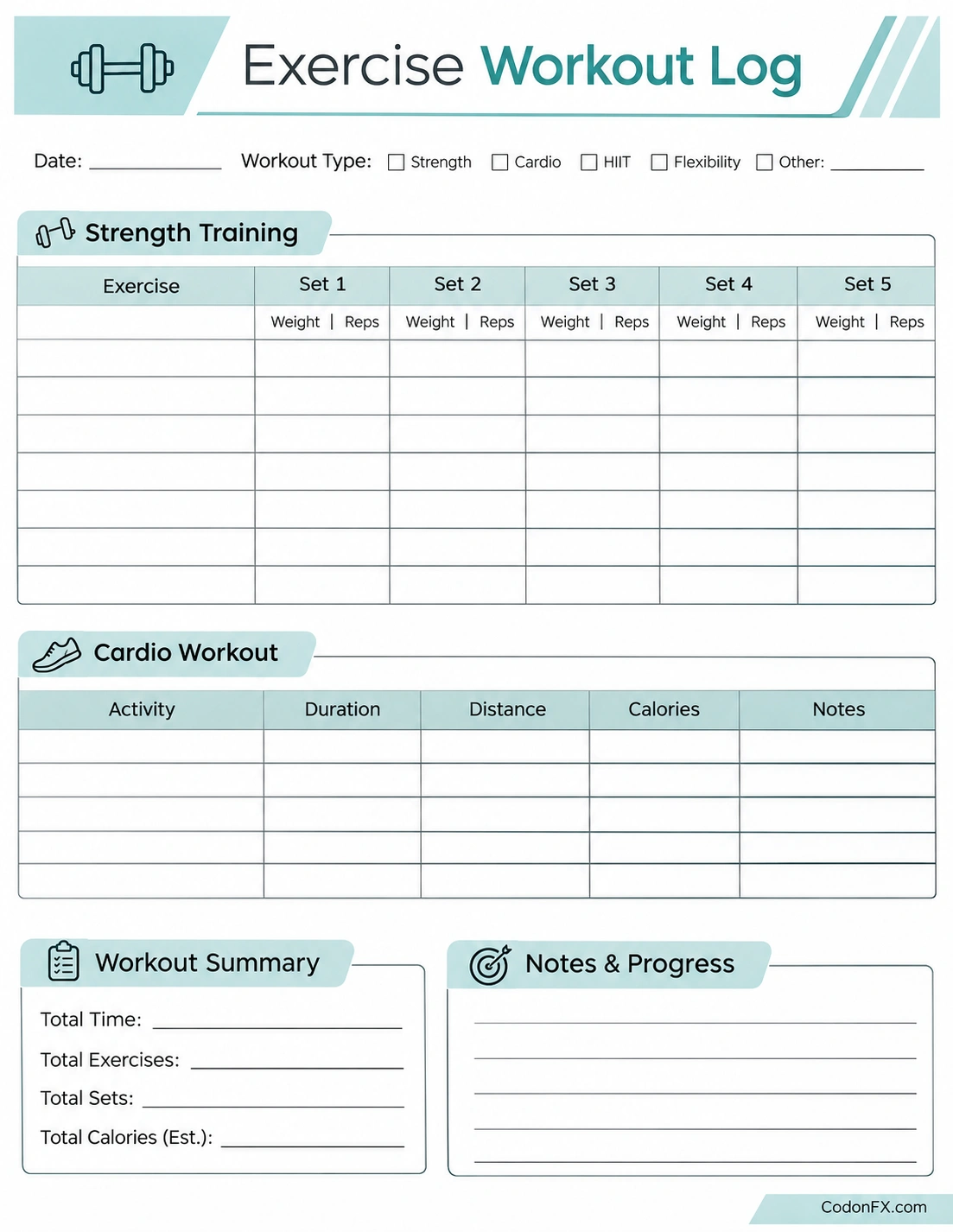
Exercise Workout Log Template
This daily exercise log is designed for people who want to track both strength training and cardio activities on one page. It includes dedicated sections for exercise names, sets, repetitions, weights, cardio statistics, and workout notes.
You can use this layout to record your entire training session without switching between multiple tracking sheets. It is suitable for gym workouts, home exercise routines, and general fitness programs.
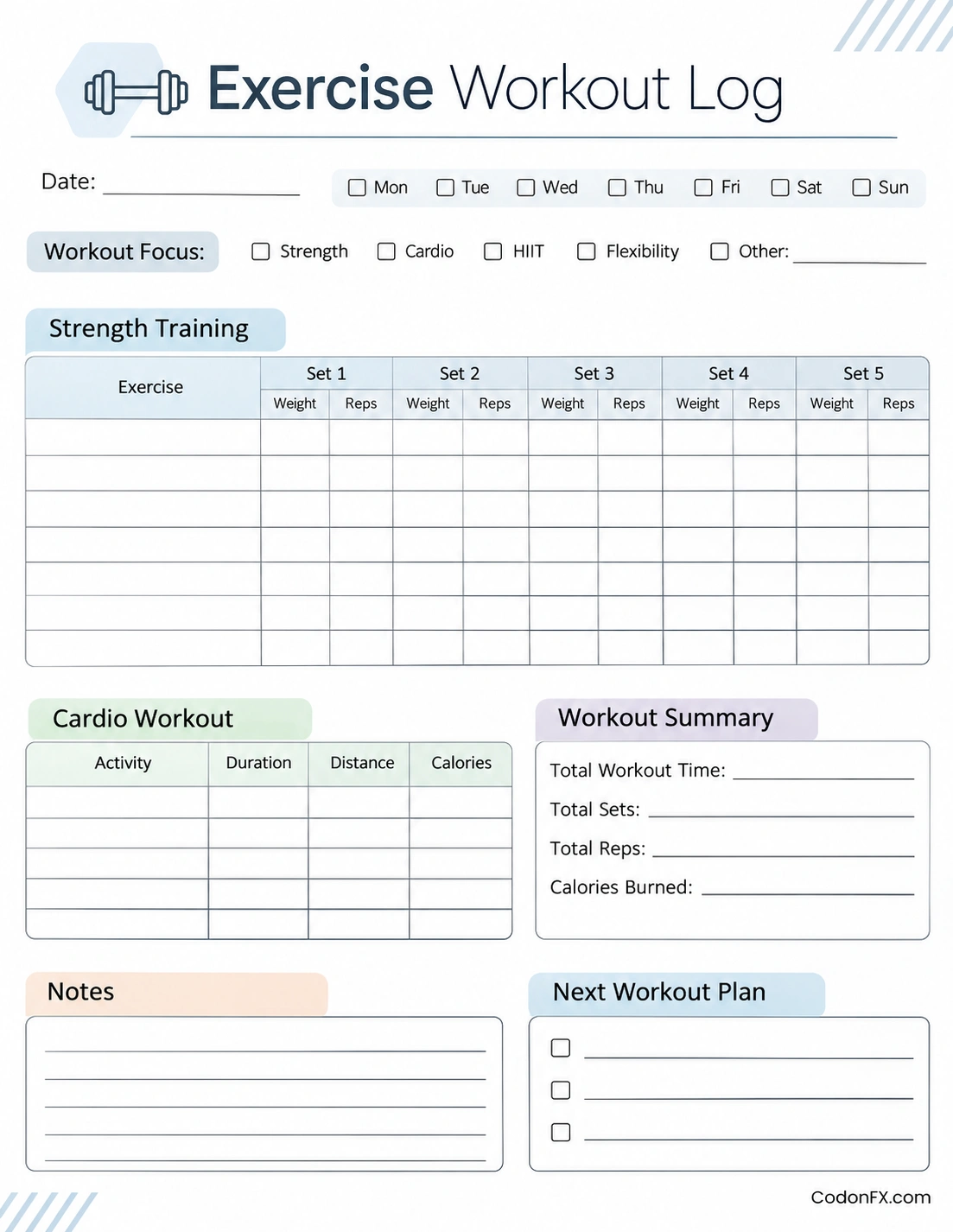
Daily Exercise Workout Tracker
A daily exercise tracker is useful for people who want additional space to organize their weekly fitness habits. This layout includes weekday checkboxes, workout focus options, strength training records, and a section for planning the next session.
You can use the notes area to record important observations, while the workout summary helps you review your overall performance. It is a practical choice for anyone building a consistent exercise routine.
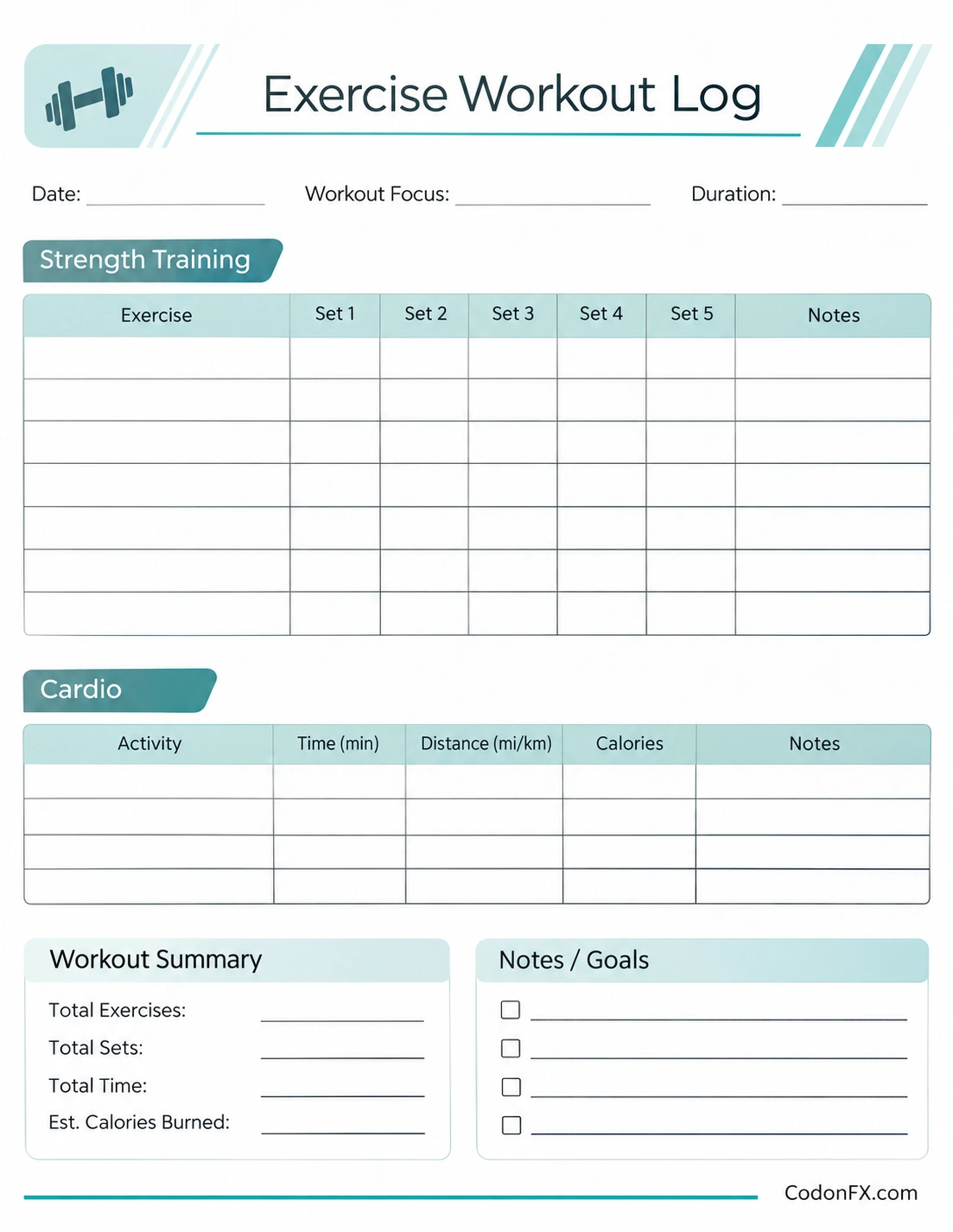
Strength and Cardio Workout Log
This workout log focuses on recording strength and cardiovascular performance in a structured format. Its exercise table provides space for multiple sets and additional notes, while the cardio section tracks activity time, distance, and estimated calories.
The workout summary and goals section makes it easier to review your training session and identify areas for improvement. It works well for people who combine resistance exercises with regular cardio training.
How to Use an Exercise Workout Log Effectively
Having a printable workout sheet is only the first step. The real benefit comes from using it consistently and recording information accurately.
1. Complete Your Workout Details Immediately
Write down your exercise information during your workout or immediately after completing each activity. This reduces the chance of forgetting important details.
2. Record Accurate Measurements
Use consistent units when recording weights and distances. For example, choose pounds or kilograms for resistance training and miles or kilometers for cardio activities.
3. Review Your Previous Sessions
Before starting a new workout, review your previous records. This helps you understand your current performance and decide whether adjustments are appropriate.
4. Include Recovery and Rest Days
Fitness progress is not only about exercise intensity. Rest and recovery are also important parts of a balanced training program. Record recovery days when useful to maintain a more complete picture of your routine.
5. Review Your Progress Weekly
Set aside a few minutes each week to review your workout records. Look for improvements in strength, endurance, consistency, and overall training habits.
Tips for Getting Better Results From Your Workout Tracker
To make your exercise workout log more useful, follow these simple practices:
- Keep your records simple: Focus on information that is relevant to your fitness goals.
- Use the same format: Consistent tracking makes comparisons easier.
- Set realistic goals: Choose achievable targets based on your current fitness level.
- Track small improvements: Progress can include better technique, increased repetitions, or improved endurance.
- Be consistent: Recording every workout provides a more reliable training history.
- Listen to your body: Adjust your training when necessary and avoid increasing exercise intensity too quickly.
Frequently Asked Questions About Exercise Workout Logs
What is the purpose of an exercise workout log?
The main purpose of an exercise workout log is to record physical activities and monitor fitness progress. It helps you track exercises, sets, repetitions, weights, cardio statistics, and workout consistency.
How often should I update my workout log?
You should update your workout log after every training session. Recording information consistently makes it easier to review your performance and compare results over time.
What is the difference between a workout log and a fitness planner?
A workout log records completed exercise sessions, including sets, repetitions, weights, and cardio activities. A fitness planner focuses more on scheduling future workouts, setting goals, and organizing an exercise routine.
Can beginners use an exercise workout log?
Yes. Beginners can benefit from using a workout log because it provides a simple way to learn about their exercise habits and track improvements. Start with basic information such as exercise names, workout duration, and repetitions.
Should I track cardio and strength training separately?
You can track both activities on the same sheet if your workout log provides separate sections. This approach keeps your training information organized while allowing you to monitor different types of exercise.
Can I use a printable workout log at home?
Absolutely. A printable exercise workout log works for home workouts, gym sessions, outdoor activities, and many other fitness routines. You only need a printed copy and a pen to record your training information.
What information is most important to track during strength training?
The most useful details include exercise names, sets, repetitions, weights, and additional notes about performance. Tracking these measurements helps you understand your training history and monitor gradual improvements.
Conclusion
An exercise workout log is a simple but valuable tool for organizing your fitness routine and monitoring progress. By recording exercises, sets, repetitions, weights, cardio statistics, and workout notes, you can build a clearer picture of your training habits.
Whether you are a beginner or an experienced fitness enthusiast, a printable workout tracker can help you stay consistent and make more informed training decisions. Choose a layout that matches your exercise routine, update it after every session, and review your records regularly.
Download and print an exercise workout log template to start tracking your workouts and working toward your fitness goals.
