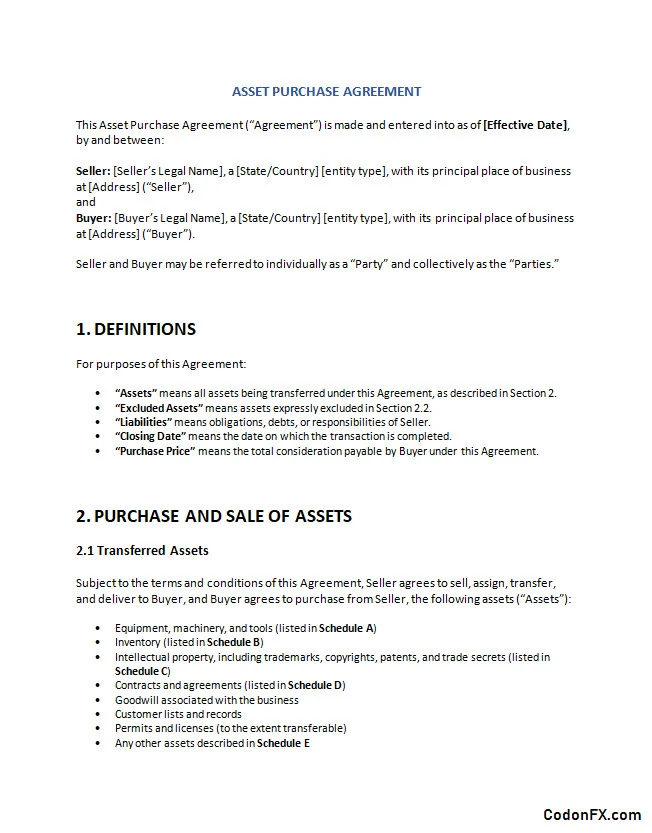
In the world of business acquisitions, an asset purchase agreement is a crucial document that lays out the details of the sale of specific business assets from a seller to a buyer.
This agreement allows the buyer to pick and choose the assets they want to acquire, while also protecting them from any unwanted liabilities that may come with the purchase. By structuring a customized acquisition with clear terms for price, assets, responsibilities, and risk mitigation, both parties can enter into the transaction with confidence and security.
What is an Asset Purchase Agreement?
An asset purchase agreement is a legally binding contract that outlines the terms of the sale of specific business assets from one party to another. These assets can include equipment, intellectual property, inventory, and more. Unlike a stock purchase agreement, which involves buying shares of a company, an asset purchase agreement allows the buyer to select only the assets they desire, effectively “cherry-picking” what they want while avoiding any liabilities or obligations they do not wish to inherit.
Asset purchase agreements are commonly used in situations where a buyer is interested in acquiring certain assets of a business without taking on its entire operations. This type of agreement provides a framework for specifying what is included in the sale, how much it will cost, and how the transaction will be structured to protect the interests of both parties involved.
Why Use an Asset Purchase Agreement?
There are several reasons why parties involved in a business acquisition may choose to use an asset purchase agreement:
1. Customized Acquisition: Asset purchase agreements allow buyers to tailor the transaction to their specific needs by selecting the assets they want to acquire and excluding those they do not.
2. Liability Protection: By only purchasing certain assets, buyers can avoid inheriting any unknown or unwanted liabilities that may be associated with the seller’s business.
3. Clear Terms: Asset purchase agreements provide a clear and detailed outline of the terms of the sale, including price, assets included, responsibilities of each party, and any conditions that must be met for the transaction to proceed.
4. Risk Mitigation: By defining obligations, ensuring legal compliance, and allocating tax impacts, asset purchase agreements help mitigate risks for both the buyer and the seller.
What to Include in an Asset Purchase Agreement
When drafting an asset purchase agreement, it is important to include the following key components:
- Identification of Parties: Clearly identify the buyer and the seller, including their legal names and any relevant contact information.
- Description of Assets: Provide a detailed list of the assets being sold, including any equipment, inventory, intellectual property, real estate, or other items included in the transaction.
- Purchase Price: Specify the total purchase price for the assets and outline any payment terms or conditions that must be met.
- Representations and Warranties: Include any assurances made by the seller regarding the condition of the assets, ownership rights, and any other relevant information.
- Conditions of Closing: Outline any conditions that must be met before the sale can be finalized, such as obtaining necessary approvals or financing.
- Indemnification: Define how any potential disputes or liabilities will be handled, including any indemnification provisions to protect both parties.
- Confidentiality: Include provisions to protect the confidentiality of any sensitive information exchanged during the transaction.
How to Draft an Asset Purchase Agreement
Drafting an asset purchase agreement can be a complex process, but with careful attention to detail and the help of legal professionals, you can create a comprehensive and effective document. Here are some key steps to consider when drafting an asset purchase agreement:
1. Consult with Legal Counsel: Before starting the drafting process, it is essential to seek guidance from experienced legal professionals who can help ensure that the agreement complies with all relevant laws and regulations.
2. Identify the Assets: Work closely with both the buyer and the seller to create a detailed list of the assets to be included in the sale, making sure to clearly define each item and its value.
3. Determine the Purchase Price: Agree on a fair purchase price for the assets, taking into account any appraisals, valuations, or financial considerations that may impact the transaction.
4. Include Relevant Terms: Outline all relevant terms of the sale, including payment terms, delivery obligations, warranties, representations, and any other conditions that must be met.
5. Review and Revise: Carefully review the agreement with all parties involved to ensure that it accurately reflects their intentions and interests, making any necessary revisions or modifications as needed.
6. Seek Signatures: Once the agreement is finalized, have all parties sign the document to make it legally binding and enforceable.
7. Retain Copies: Keep copies of the signed agreement for your records and provide copies to all parties involved in the transaction for their reference.
Tips for a Successful Asset Purchase Agreement
When creating an asset purchase agreement, consider the following tips to help ensure a successful and smooth transaction:
- Communicate Clearly: Maintain open and transparent communication with all parties involved to avoid misunderstandings and conflicts.
- Seek Professional Advice: Consult with legal, financial, and tax professionals to ensure that the agreement meets all legal requirements and protects your interests.
- Be Thorough: Take the time to carefully review and negotiate all terms of the agreement to avoid any potential disputes or disagreements down the line.
- Plan Ahead: Anticipate any potential issues or complications that may arise during the transaction and address them proactively in the agreement.
- Follow Legal Requirements: Make sure that the agreement complies with all relevant laws, regulations, and industry standards to avoid any legal challenges or disputes.
- Keep Records: Maintain detailed records of all communications, negotiations, and agreements related to the transaction for future reference and protection.
- Review Regularly: Periodically review and update the agreement as needed to reflect any changes in circumstances, laws, or regulations that may impact the transaction.
Conclusion
In conclusion, an asset purchase agreement is an essential document that provides a clear and detailed framework for structuring a customized acquisition while protecting the interests of both the buyer and the seller. By including key components such as asset descriptions, purchase prices, representations, and warranties, parties can enter into the transaction with confidence and security.
By following the tips outlined in this guide and working closely with legal professionals, you can create an effective asset purchase agreement that sets the stage for a successful business acquisition.
Asset Purchase Agreement Template – Word
