When buying or selling a vehicle, it’s crucial to have a clear understanding of the terms and conditions of the transaction. A vehicle purchase agreement, also known as a car sale agreement, serves as a legally binding contract that outlines the specifics of the sale between a buyer and a seller. This document is designed to protect both parties by documenting crucial details such as vehicle information, payment terms, and each party’s responsibilities.
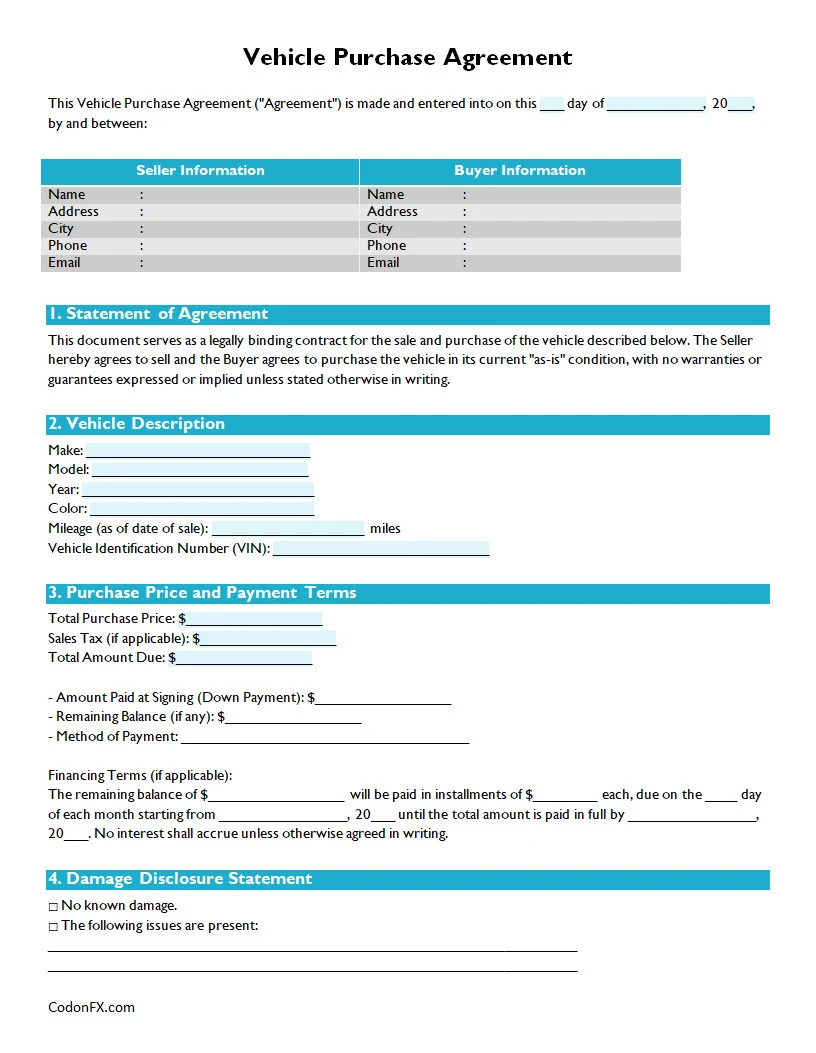
In this article, we’ll delve into the key elements of a vehicle purchase agreement, how to write one, common issues that may arise, and more.
What Is a Vehicle Purchase Agreement?
A vehicle purchase agreement is a legal document that formalizes the sale of a vehicle between a buyer and a seller. It outlines the terms and conditions of the transaction, including details about the vehicle, payment terms, and any additional agreements made between the parties.
This agreement serves as a crucial tool to prevent misunderstandings and disputes that may arise during or after the sale.
Key Elements of a Vehicle Purchase Agreement
When drafting a vehicle purchase agreement, there are several key elements that should be included to ensure clarity and protection for both parties. These elements typically include:
Vehicle Information
The section detailing the vehicle information should provide a comprehensive description of the vehicle being sold. This includes details such as the make, model, year, VIN, mileage, and any unique features or modifications. By clearly outlining these specifics, both parties can verify the identity and condition of the vehicle.
Payment Terms
One of the most critical elements of a vehicle purchase agreement is the payment terms. This section should specify the purchase price of the vehicle, any deposit required, the method of payment (such as cash, check, or bank transfer), and the deadline for final payment. Clear payment terms help prevent confusion or disputes regarding the financial aspect of the transaction.
Warranties and Disclosures
Including warranties and disclosures in the agreement is crucial for protecting both the buyer and the seller. Warranties may cover issues such as the mechanical condition of the vehicle or promises made by the seller regarding its performance. Disclosures, on the other hand, disclose any known defects or issues with the vehicle upfront to avoid surprises for the buyer.
Delivery and Inspection
The delivery and inspection section of the agreement outlines when and where the vehicle will be delivered to the buyer. It also includes provisions for the buyer to inspect the vehicle before finalizing the sale. This step ensures that the buyer has the opportunity to verify the condition of the vehicle and confirm that it meets their expectations.
Transfer of Title
The transfer of title is a crucial element of the agreement as it specifies when and how the title of the vehicle will be transferred from the seller to the buyer. This process typically involves signing over the title and registering the vehicle in the buyer’s name with the relevant state or local authorities. By clearly defining this process, both parties can ensure a smooth transition of ownership.
How to Write a Vehicle Purchase Agreement
Writing a vehicle purchase agreement may seem daunting, but with the right guidance, it can be a straightforward process. Here are some steps to help you draft a comprehensive agreement:
Step 1: Identify the Parties
Begin by clearly stating the names and contact information of the buyer and seller. This information is essential for identifying the involved parties and ensuring that the agreement is legally binding.
Step 2: Describe the Vehicle
Provide detailed information about the vehicle being sold, including make, model, VIN, mileage, and any relevant features. This description helps avoid confusion and ensures that both parties are in agreement about the vehicle being sold.
Step 3: Outline Payment Terms
Specify the purchase price, any deposit required, payment method, and the deadline for payment. Clearly defining these terms helps prevent misunderstandings and ensures that both parties are on the same page regarding the financial aspect of the transaction.
Step 4: Include Warranties and Disclosures
Clearly state any warranties or disclosures about the condition of the vehicle to avoid disputes later on. This step helps establish trust between the buyer and seller and ensures transparency throughout the transaction.
Step 5: Agree on Delivery and Inspection
Define when and where the vehicle will be delivered, as well as provisions for inspection by the buyer. Providing the buyer with the opportunity to inspect the vehicle before finalizing the sale helps build confidence and ensures that both parties are satisfied with the transaction.
Step 6: Finalize Transfer of Title
Specify when and how the title of the vehicle will be transferred from the seller to the buyer. This step is crucial for legally transferring ownership of the vehicle and should be clearly outlined in the agreement to avoid any issues down the line.
Common Issues in Vehicle Purchase Agreements
Despite the best efforts to create a comprehensive vehicle purchase agreement, issues may still arise during the transaction. Some common issues to watch out for include:
Missing Information
Ensuring that all relevant details about the vehicle and the terms of the sale are included in the agreement is crucial. Missing information can lead to misunderstandings or disputes between the buyer and seller.
Unclear Payment Terms
Clear communication regarding the payment terms is essential to avoid confusion or disagreements. Both parties should have a clear understanding of the purchase price, deposit requirements, and payment deadlines.
Failure to Transfer Title
One of the most critical steps in a vehicle sale is transferring the title from the seller to the buyer. Failing to specify this process in the agreement can lead to delays or complications in transferring ownership.
Disputes over Condition
If the condition of the vehicle is not accurately disclosed in the agreement, disputes may arise after the sale is completed. It’s essential to provide an honest assessment of the vehicle’s condition to avoid potential conflicts.
Do I Need to Include Sales Tax in My Private Car Sale?
When selling a vehicle privately, it’s important to consider whether sales tax should be included in the transaction. The rules regarding sales tax vary by state, so it’s crucial to consult with a legal professional or tax advisor to determine if sales tax applies to your specific sale.
Is a Vehicle Purchase Agreement Legally Binding?
Yes, a vehicle purchase agreement is a legally binding contract that is enforceable in a court of law. By signing the agreement, both the buyer and the seller agree to abide by the terms and conditions outlined in the document. This protects both parties in the event of a dispute.
Some Details To Look For in a Car Purchase Agreement Before You Sign
Before signing a vehicle purchase agreement, it’s essential to carefully review the document to ensure that all the crucial details are included and accurately represented. Here are six key details to look for in a car purchase agreement before you sign:
Vehicle Information
Verify that the make, model, VIN, mileage, and any other pertinent details about the vehicle are correctly stated in the agreement.
Payment Terms
Double-check the purchase price, any deposit required, payment method, and the deadline for payment to ensure they align with your agreement with the seller.
Warranties and Disclosures
Review any warranties or disclosures about the condition of the vehicle to ensure they accurately represent the agreement between you and the seller.
Delivery and Inspection
Confirm the details about when and where the vehicle will be delivered, as well as provisions for inspection by you
Transfer of Title
Ensure that the agreement specifies when and how the title of the vehicle will be transferred from the seller to you as the buyer. This step is crucial for legally transferring ownership and should be clearly outlined in the agreement.
Signatures
Make sure that both parties have signed the agreement and that all signatures are dated to indicate when the agreement was executed. Signatures are a key component of a legally binding contract and serve as proof that both parties have agreed to the terms of the agreement.
Legal Review
Consider having a legal professional review the agreement before signing to ensure that all terms are clear and legally sound. This step can provide additional peace of mind and help you avoid any potential legal issues in the future.
Amendments and Addenda
If there are any additional agreements or changes to the terms of the sale, make sure they are clearly documented in the form of amendments or addenda to the agreement. This ensures that any modifications are legally recognized and binding.
Retain a Copy
After signing the agreement, make sure to retain a copy for your records. Having a copy of the agreement on hand can be helpful in case any issues or disputes arise in the future, providing you with a reference point for the terms agreed upon.
Confirmation of Payment
Before finalizing the sale, confirm that payment has been made in accordance with the agreed-upon terms. This step helps ensure that both parties have fulfilled their obligations and that the transaction is completed smoothly.
Vehicle Purchase Agreement Template
A Vehicle Purchase Agreement helps clearly document the terms and conditions of a vehicle sale between a buyer and seller. It outlines essential details such as purchase price, vehicle information, payment terms, and responsibilities, ensuring transparency and legal protection for both parties. With a well-structured template, you can reduce misunderstandings and complete the transaction smoothly.
Download our Vehicle Purchase Agreement Template today to finalize your vehicle sale with clarity and confidence.
Vehicle Purchase Agreement Template – DOWNLOAD
