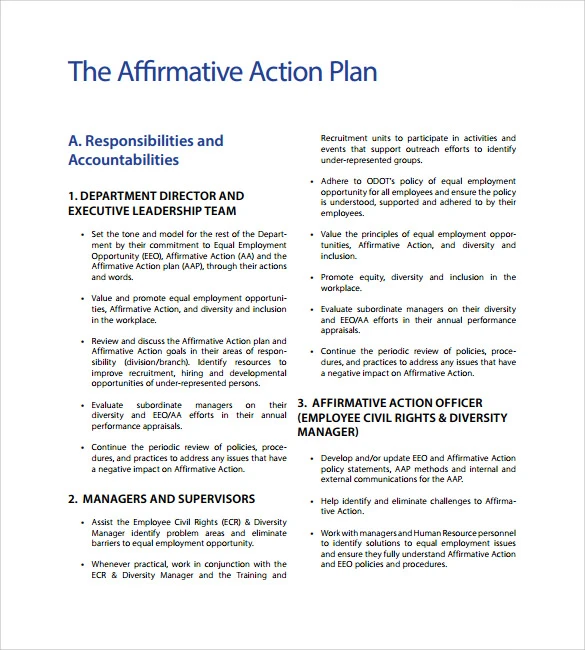
Affirmative Action Plans (AAPs) are crucial tools in ensuring equal employment and educational opportunities for underrepresented groups. These plans are designed to create a diverse workforce and address past discrimination by outlining detailed steps to recruit, hire, and support individuals based on merit and ability, regardless of protected characteristics like race, gender, age, or disability. For federal contractors and other organizations, implementing AAPs is not just a moral imperative but also a legal requirement.
What Is An Affirmative Action Plan?
An Affirmative Action Plan is a set of policies and procedures aimed at promoting equal opportunity and diversity within an organization. These plans outline specific goals and strategies to recruit, hire, and promote individuals from underrepresented groups, such as women, minorities, and individuals with disabilities. By implementing AAPs, organizations can address systemic barriers to equality and create a more inclusive work environment.
How Affirmative Action Works
Implementing an Affirmative Action Plan involves several key steps, including:
- Evaluation: Assessing the current state of diversity within the organization and identifying areas for improvement.
- Goal Setting: Establishing specific diversity goals and targets to be achieved through the AAP.
- Recruitment and Outreach: Actively seeking out qualified candidates from underrepresented groups through targeted recruitment efforts.
- Training and Development: Providing support and resources to help employees from diverse backgrounds succeed and advance within the organization.
- Monitoring and Reporting: Tracking progress towards diversity goals and regularly reporting on the outcomes of the AAP.
Advantages And Disadvantages Of Affirmative Action
While Affirmative Action Plans have been successful in promoting diversity and equal opportunity in many organizations, they are not without controversy. Some of the key advantages and disadvantages of AAPs include:
Advantages:
- Promotes Diversity: AAPs help organizations create a more diverse and inclusive workforce, which can lead to improved creativity, innovation, and problem-solving.
- Reduces Discrimination: By actively promoting equal opportunity, AAPs can help reduce instances of discrimination and bias in the workplace.
- Enhances Reputation: Organizations that prioritize diversity and inclusion are often viewed more favorably by customers, employees, and the public.
Disadvantages:
- Perceived Reverse Discrimination: Some critics argue that AAPs can lead to reverse discrimination against individuals who are not part of underrepresented groups.
- Legal Challenges: AAPs have faced legal challenges in some cases, with opponents arguing that they violate principles of meritocracy and equal treatment.
- Implementation Challenges: Developing and implementing an effective AAP requires significant time, resources, and expertise, which can be challenging for some organizations.
When Is An Affirmative Action Plan Required?
Affirmative Action Plans are typically required for federal contractors and subcontractors who meet certain criteria, including:
- Gross Annual Revenue: Organizations with contracts exceeding a specified dollar amount are required to develop and implement AAPs.
- Number of Employees: Companies with a certain number of employees are also subject to AAP requirements.
- Federal Funding: Organizations that receive federal financial assistance may be required to comply with AAP regulations.
What Affirmative Action Employer Requirements Are There?
Employers subject to Affirmative Action requirements must take specific actions to comply with regulations, including:
- Developing an AAP: Creating a comprehensive Affirmative Action Plan that outlines goals, strategies, and timelines for promoting diversity and equal opportunity.
- Implementing Recruitment Initiatives: Actively recruiting and hiring individuals from underrepresented groups to achieve diversity goals.
- Providing Training and Support: Offering training and development opportunities to help employees from diverse backgrounds succeed and advance within the organization.
How Do You Write An Affirmative Action Plan?
Writing an effective Affirmative Action Plan involves several key steps, including:
- Evaluate Current Diversity: Assess the current state of diversity within the organization to identify areas for improvement.
- Set Measurable Goals: Establish specific diversity goals and targets that are realistic and achievable.
- Develop Actionable Strategies: Outline detailed strategies and initiatives to promote diversity and equal opportunity within the organization.
- Monitor and Evaluate Progress: Regularly track progress towards diversity goals and make adjustments as needed to ensure success.
By following these steps and committing to creating a diverse and inclusive work environment, organizations can leverage Affirmative Action Plans to promote equal opportunity and foster a culture of equality and respect for all employees.
Affirmative Action Plan Template – Word
