A busy schedule can make it difficult to keep track of everything that needs to get done. Between work responsibilities, personal appointments, household tasks, and long-term goals, it is easy to forget important details or feel overwhelmed by too many things competing for your attention. A day-to-day planner provides a simple way to bring everything together in one organized place.
Whether you are managing a professional schedule, balancing family responsibilities, or working toward personal goals, a daily planner can help you make better use of your time. By writing down your priorities, organizing appointments, and breaking larger projects into smaller steps, you can create a clearer plan for each day.
Using a daily planning worksheet also helps reduce mental clutter. Instead of trying to remember every responsibility, you can refer to your written schedule and focus on completing one task at a time. With a consistent routine, planning your day becomes a practical habit that supports better organization, time management, and productivity.
What Is a Day-to-Day Planner?
A day-to-day planner is an organizational tool designed to help you manage your daily activities, responsibilities, appointments, and personal goals. It provides a central place to record what needs to be accomplished and when each activity should happen.
Unlike a general calendar that mainly displays dates and appointments, a daily planner offers additional space for task lists, priorities, notes, schedules, and progress tracking. This makes it easier to understand how your time is being used throughout the day.
A typical daily planning worksheet may include:
- Date: A designated space to identify the day you are planning.
- Daily priorities: The most important activities that deserve your attention.
- Task checklist: A list of responsibilities with checkboxes to track completed tasks.
- Hourly schedule: A timeline for organizing activities and appointments.
- Notes: Additional space for reminders, ideas, and important information.
- Daily reflection: A section to review accomplishments and identify improvements.
These sections work together to create a practical roadmap for your day without making your schedule unnecessarily complicated.
Benefits of Using a Day-to-Day Planner
Planning your day does not require a complicated productivity system. Even a simple printable planner can make everyday responsibilities easier to manage. Here are some important benefits of using one regularly.
1. Improves Daily Organization
A daily planner helps you organize different responsibilities in one place. Instead of keeping separate mental lists for work, personal activities, and household errands, you can write everything down on a single worksheet.
This makes it easier to see what needs attention and prevents small but important responsibilities from being overlooked.
2. Supports Better Time Management
When you assign activities to specific time slots, you gain a better understanding of how your day is structured. An hourly schedule can help you identify available time, avoid unnecessary scheduling conflicts, and allocate enough time for important responsibilities.
You can also recognize when your schedule is too crowded and make adjustments before the day becomes overwhelming.
3. Helps Reduce Mental Clutter
Remembering multiple deadlines, appointments, and unfinished tasks can consume valuable mental energy. Writing these responsibilities in a planner allows you to move them from your mind onto paper.
Having a written reference can make your daily routine feel more manageable and help you concentrate on the activity in front of you.
4. Keeps You Focused on Priorities
Not every task has the same level of importance. A daily planner encourages you to identify the activities that matter most instead of spending the entire day responding to less important requests.
By selecting your top three priorities each morning, you can establish a clear direction and make meaningful progress toward your objectives.
5. Makes Large Projects Easier to Manage
Large projects can feel intimidating when viewed as one enormous responsibility. A planner helps you divide them into smaller, achievable action steps.
For example, instead of writing “organize the entire home,” you could create smaller tasks such as sorting one closet, organizing kitchen cabinets, and clearing your workspace. Completing these smaller activities makes progress easier to track.
Essential Sections to Include in Your Daily Planner
The most useful day-to-day planner is one that matches your personal routine. Although different layouts offer different features, several sections can make a daily planning worksheet more effective.
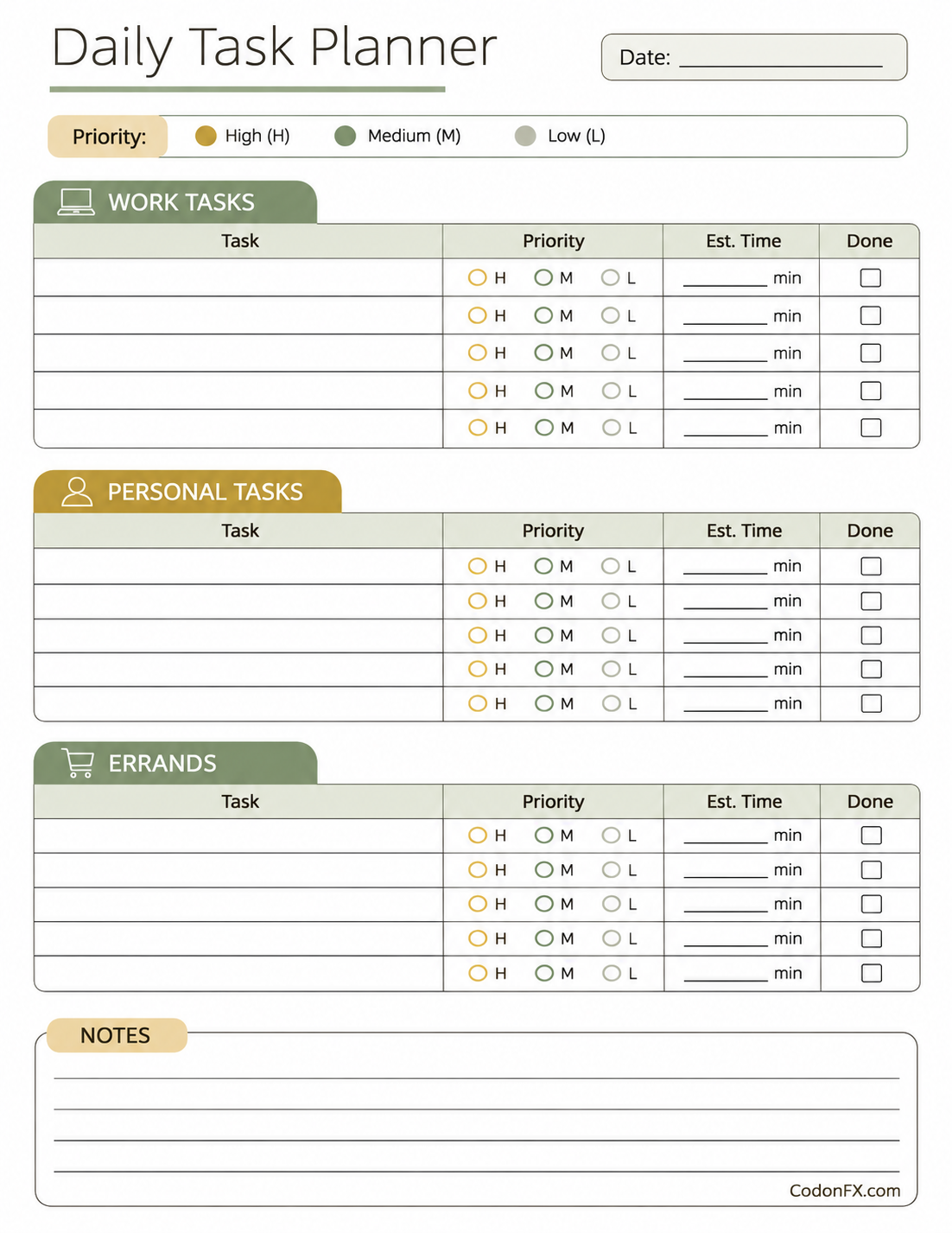
Daily Task List
A task list provides space to record everything you want to accomplish during the day. Use individual checkboxes to mark completed activities and make your progress visible.
Consider separating tasks into categories such as work, personal responsibilities, household activities, and errands. This approach makes it easier to manage different areas of your life.
Daily Schedule and Appointments
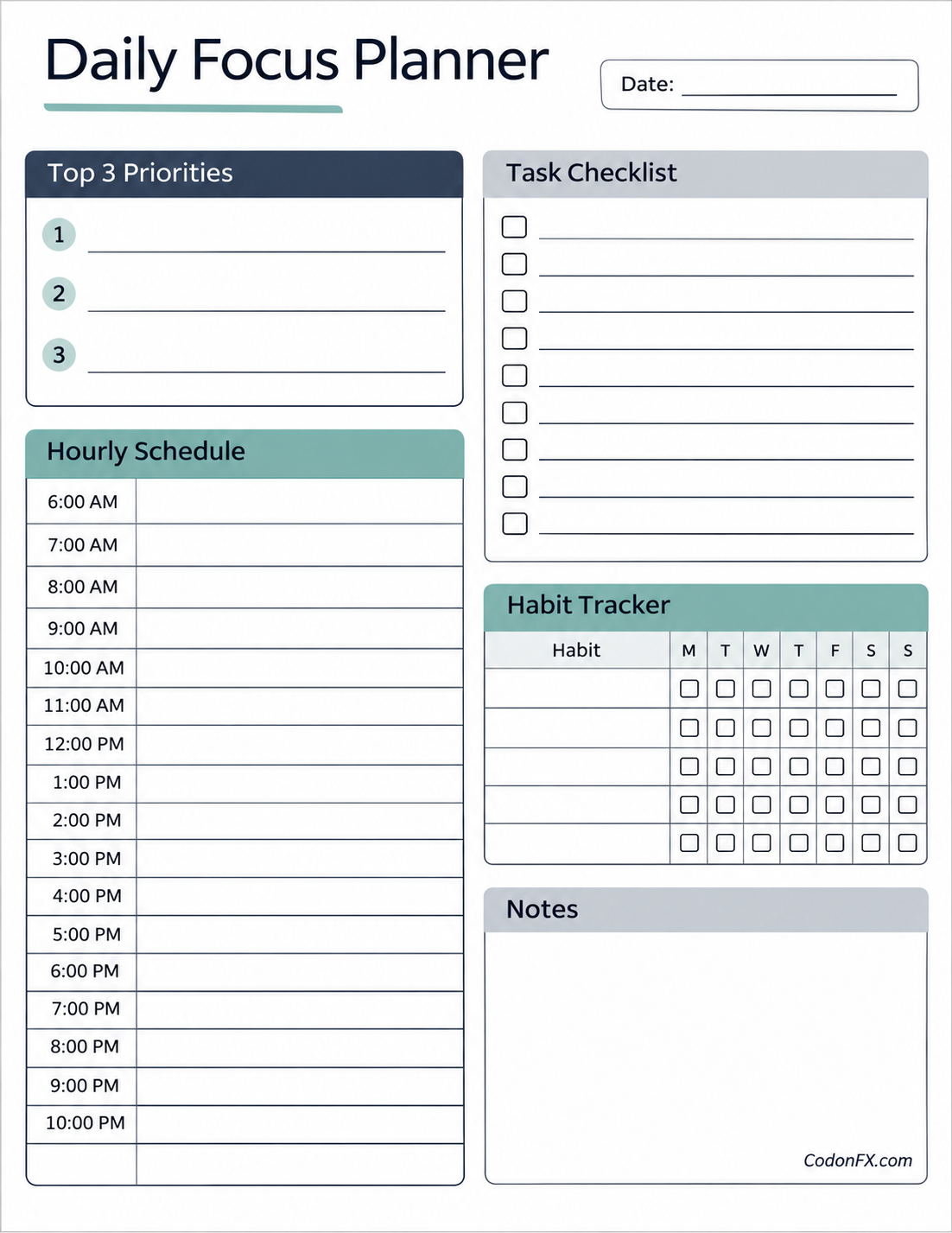
An hourly schedule helps you assign specific periods to activities, meetings, and appointments. Rather than creating an unrealistic list of tasks, you can estimate how long each activity will take and arrange your day accordingly.
Remember to leave some flexibility between activities. Unexpected requests, delays, and additional responsibilities can happen, so your schedule should allow room for adjustments.
Top Priorities
Choose a few important activities that deserve your attention before adding smaller tasks to your schedule. This helps prevent your day from becoming dominated by minor responsibilities.
Try identifying three priorities each morning. If you complete these activities, you will have made meaningful progress even if some less important tasks remain unfinished.
Time Blocking
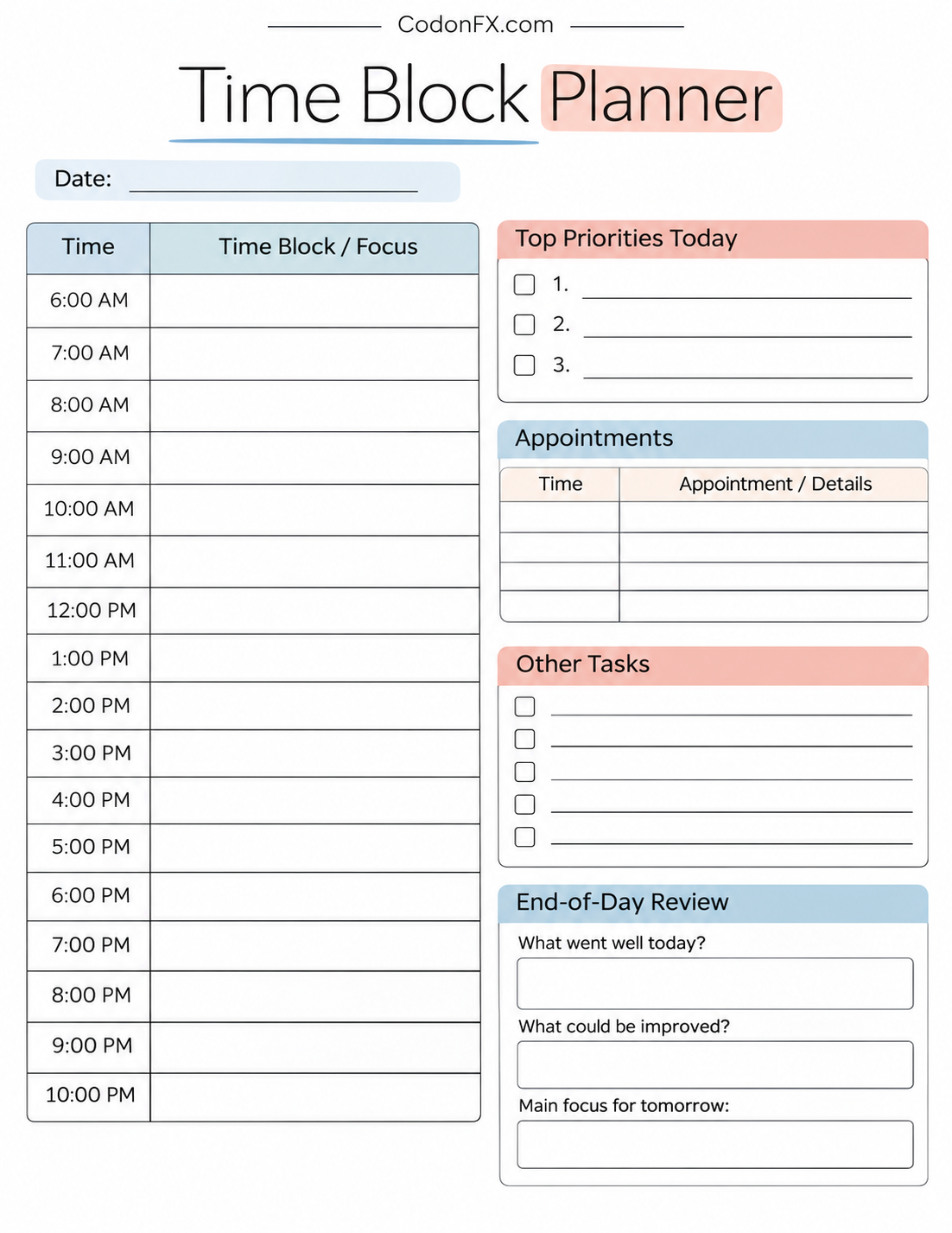
Time blocking is a planning technique that assigns specific periods to individual activities or groups of tasks. Instead of simply writing a list of responsibilities, you decide when each activity should take place.
For example, you might reserve the morning for focused work, early afternoon for meetings, and late afternoon for administrative tasks. This creates a more structured routine and helps reduce unnecessary distractions.
Notes and Daily Reflection
A notes section provides additional space for reminders, important details, and unexpected tasks. You can also use an evening reflection area to review your day.
Consider asking yourself three simple questions:
- What did I accomplish today?
- What tasks still need attention?
- What should I prioritize tomorrow?
These questions help you recognize progress and make better decisions when planning the next day.
How to Use a Day-to-Day Planner Effectively
Having a planner is only the first step. Developing a consistent planning routine is what makes it useful over time. The following steps can help you get more value from your daily planning worksheet.
Step 1: Write Down Everything You Need to Do
Start by listing your responsibilities without worrying about their order. Include work assignments, personal errands, appointments, household activities, and other commitments.
Getting everything onto paper gives you a clearer picture of your daily workload.
Step 2: Identify Your Most Important Tasks
Review your list and identify the activities that have the greatest impact on your goals or responsibilities. Mark these as high-priority tasks.
Consider deadlines, importance, and potential consequences when deciding what should come first.
Step 3: Estimate How Much Time Each Task Requires
Think about how long each activity will realistically take. Some tasks may require only 15 minutes, while others could need several hours.
Estimating task duration helps you avoid filling your schedule with more activities than you can reasonably complete.
Step 4: Arrange Your Daily Schedule
Place appointments and fixed commitments on your timeline first. Next, schedule important tasks during periods when you can give them your full attention.
Group similar activities together when possible. For example, answering emails, making phone calls, and completing administrative work can often be handled in one dedicated time block.
Step 5: Track Your Progress
Check off completed activities throughout the day. If something remains unfinished, decide whether it should be rescheduled, delegated, or removed from your list.
A planner should help you manage your responsibilities, not make you feel guilty about every unfinished task.
Step 6: Review Your Day Before Finishing
Spend a few minutes reviewing your accomplishments and outstanding responsibilities. Record important reminders and identify the main activities for tomorrow.
This simple evening routine makes it easier to begin the following day with a clear plan.
Different Types of Day-to-Day Planner Templates
There is no single planner layout that works for everyone. Your ideal format depends on your schedule, responsibilities, and preferred planning style.
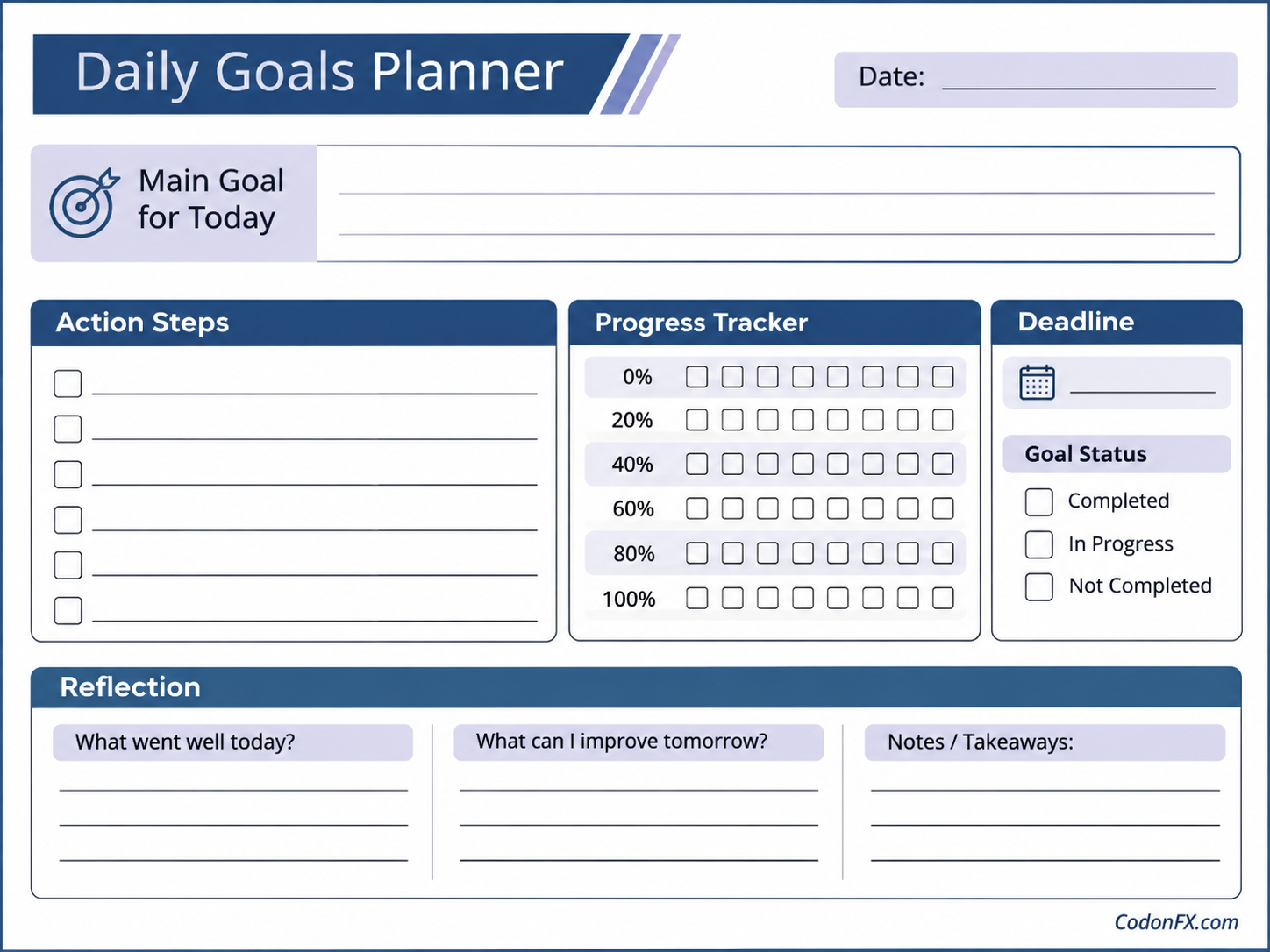
Daily Goals Planner
A daily goals planner is useful for people who want to connect everyday activities with larger objectives. It provides space to identify a main goal, list action steps, and monitor progress.
Mindful Day Planner
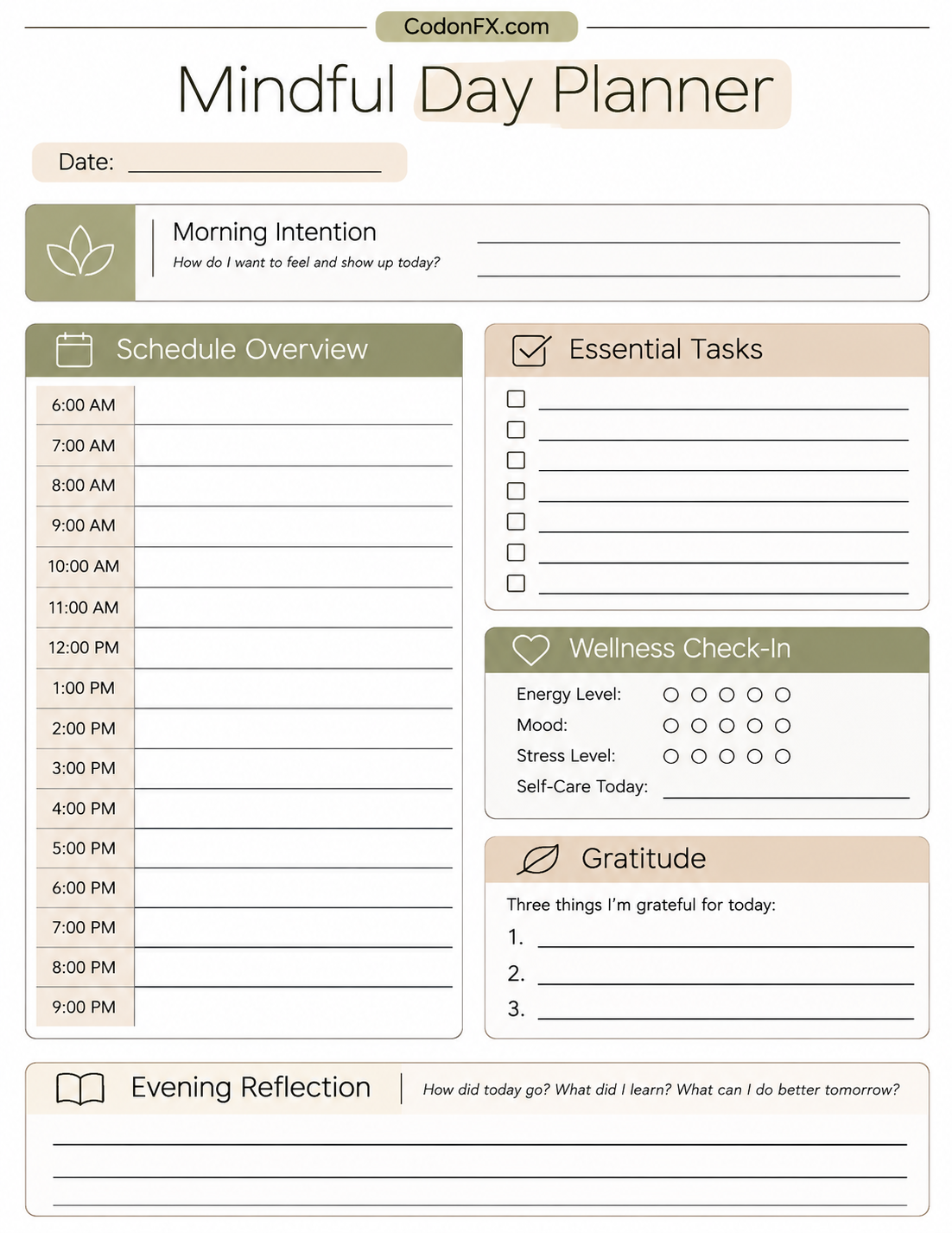
A mindful day planner combines everyday organization with personal reflection. In addition to managing your schedule, it provides space for morning intentions, gratitude, wellness check-ins, and evening thoughts.
This format is particularly useful if you want a more balanced approach to productivity and personal well-being.
Time Block Planner
A time block planner is ideal for people with busy schedules who prefer assigning specific hours to their activities. It provides a visual timeline that makes it easier to organize appointments, focused work, and personal commitments.
Tips for Building a Consistent Daily Planning Habit
Consistency is more important than creating a complicated planning system. Start with a few simple habits and adjust your approach as you discover what works best.
- Plan the night before: Write down tomorrow’s priorities before ending your current day.
- Keep your planner accessible: Place your printable worksheet somewhere you can easily see it.
- Use realistic expectations: Avoid scheduling more activities than you can reasonably complete.
- Prioritize important work: Complete high-impact activities before spending too much time on minor tasks.
- Include short breaks: Allow time for rest between demanding activities.
- Review your schedule: Make adjustments when unexpected responsibilities arise.
- Keep it simple: Use only the sections that genuinely support your daily routine.
Remember that the purpose of a planner is to make your day easier to manage. It should provide structure while still allowing enough flexibility to handle real-life situations.
Frequently Asked Questions About Day-to-Day Planners
1. What is the purpose of a day-to-day planner?
A day-to-day planner helps organize daily tasks, appointments, priorities, and goals in one place. It supports better time management, reduces mental clutter, and makes it easier to track responsibilities throughout the day.
2. What should I write in my daily planner?
You can include your daily priorities, task lists, appointments, hourly schedule, reminders, personal goals, and notes. You may also add a reflection section to review your progress at the end of the day.
3. Is a daily planner better than a regular calendar?
They serve slightly different purposes. A calendar is useful for tracking dates, appointments, and upcoming events, while a daily planner provides more detailed space for tasks, priorities, schedules, and everyday activities. Using both together can provide a more complete organizational system.
4. How do I organize my day using a planner?
Begin by listing everything you need to accomplish. Identify your most important priorities, estimate how long each task will take, and assign activities to suitable time slots. Review your progress throughout the day and adjust your schedule when necessary.
5. How many tasks should I put on my daily planner?
There is no fixed number because everyone’s schedule is different. However, choosing three main priorities and adding a manageable number of smaller tasks is a practical starting point. Focus on what you can realistically accomplish rather than creating an overly long checklist.
6. Should I plan my day in the morning or at night?
Both approaches can work. Planning the night before helps you start the next morning with a clear direction, while reviewing your schedule in the morning allows you to make adjustments based on new priorities or unexpected changes.
7. Can I use a printable daily planner for work and personal activities?
Yes. A printable daily planner can combine professional responsibilities, household tasks, appointments, errands, and personal goals. You can also use separate sections to keep different areas of your life organized.
8. How can a daily planner improve productivity?
A daily planner improves productivity by helping you identify priorities, allocate time, organize responsibilities, and monitor completed activities. It also makes larger projects easier to manage by breaking them into smaller action steps.
9. Are printable daily planners useful for beginners?
Yes. Printable planners are a convenient starting point because they offer ready-made sections without requiring you to design your own planning system. Beginners can start with a simple task list and gradually incorporate schedules, priorities, and reflection sections.
Conclusion
A day-to-day planner is a practical tool for anyone who wants to bring more structure and clarity to everyday life. By organizing tasks, scheduling appointments, identifying priorities, and tracking progress, you can manage your responsibilities with greater confidence.
The best approach is to choose a planner layout that fits your routine and use it consistently. Whether you prefer a daily task checklist, an hourly schedule, a goal-setting worksheet, or a time-blocking layout, the important thing is to create a system that supports your priorities.
Start with a simple daily planning routine, keep your expectations realistic, and make small improvements over time. With consistent use, a printable daily planner can become a valuable part of a more organized, focused, and productive lifestyle.
Download: Day-to-day Planner Template
