A coaching contract is a written agreement that establishes the expectations, responsibilities, services, fees, and other terms of a professional coaching relationship. It gives both the coach and client a clear understanding of how the coaching process will work before sessions begin.
A well-structured coaching agreement can help create a professional foundation built on communication, trust, accountability, and clearly defined goals. It can also reduce misunderstandings by explaining what services are included, how sessions are scheduled, how payments are handled, and how either party can end the relationship.
Whether you provide life coaching, executive coaching, career coaching, business coaching, health and wellness coaching, or another type of coaching service, a written contract can make the relationship more organized and transparent.
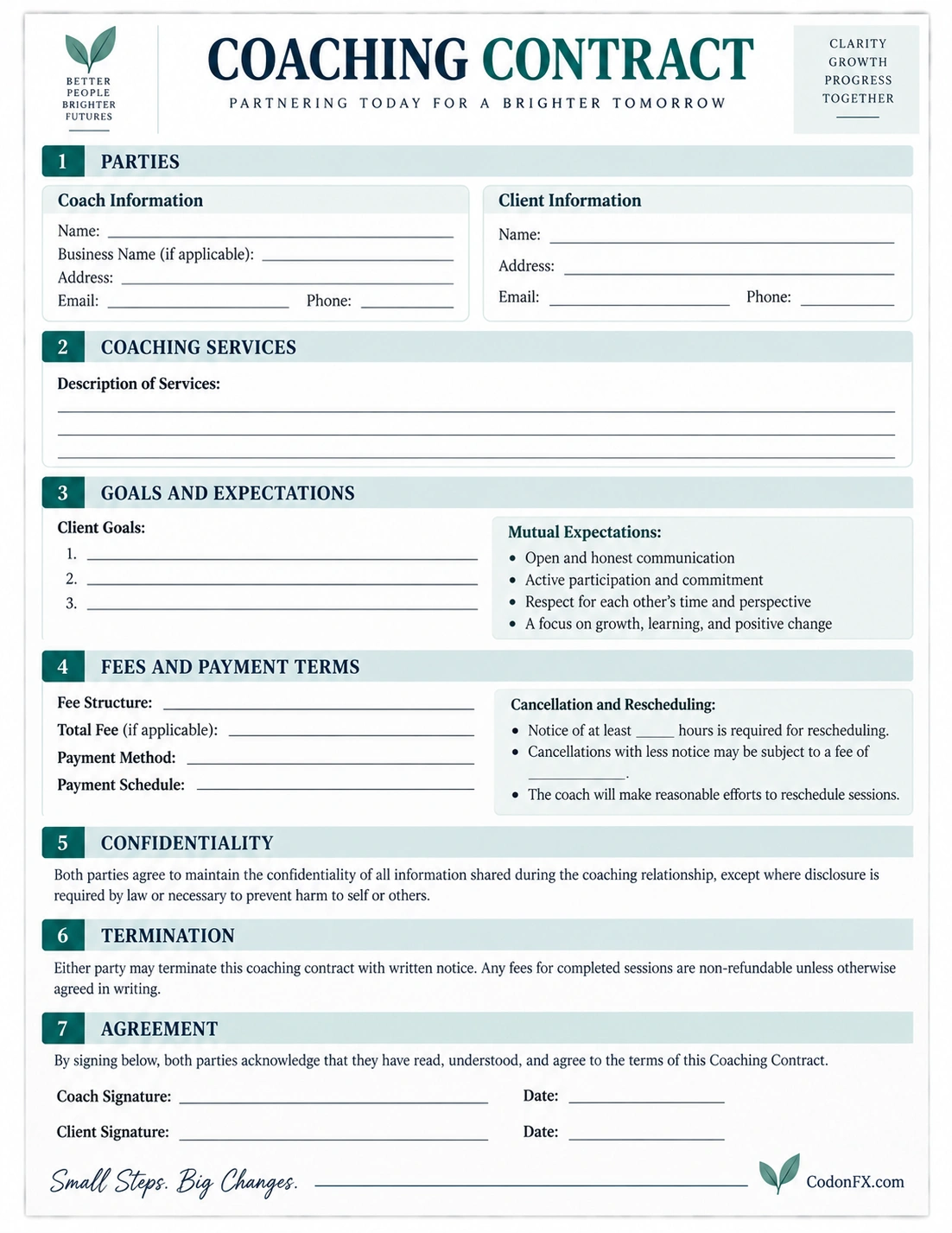
What Is a Coaching Contract?
A coaching contract is a formal written agreement between a coach and a client. It explains the nature of the coaching relationship and establishes the terms under which coaching services will be provided.
The exact content can vary depending on the type of coaching and the coach’s business model. A simple agreement may cover only the essential terms, while a more detailed coaching contract may address scheduling, communication, confidentiality, fees, cancellations, intellectual property, termination, disclaimers, and dispute procedures.
The contract should be written in language that both parties can understand. Its purpose is not simply to create paperwork, but to establish a shared understanding of the coaching process.
Why Use a Coaching Contract?
Putting the coaching relationship in writing can benefit both the coach and client. Clear terms give each party a reference point throughout the engagement.
- Clarifies expectations: Both parties understand what the coaching relationship includes.
- Defines services: The contract explains what the coach will provide.
- Establishes client responsibilities: The client can understand their role in the process.
- Documents fees: Payment amounts, schedules, and methods can be recorded clearly.
- Explains confidentiality: The agreement can describe how information shared during coaching will be handled.
- Reduces misunderstandings: Written terms provide a reference when questions arise.
- Creates a professional framework: A contract can help establish boundaries and a consistent working relationship.
What Should a Coaching Contract Include?
A useful coaching agreement should address the major practical aspects of the relationship. The specific provisions will depend on the services being offered and the applicable laws.
Coach and Client Information
Start by identifying the parties to the agreement. Include the coach’s name or business name and the client’s name. Contact information such as an address, email address, and phone number may also be included when appropriate.
Accurate identification makes it clear who is entering into the coaching relationship.
Description of Coaching Services
The contract should describe the services being provided. This section can explain the type of coaching, session format, session length, frequency, communication methods, and overall scope of the engagement.
For example, a coaching package might include eight virtual sessions over four months, with each session lasting 60 minutes. The agreement can state exactly what is included so the client knows what to expect.
Client Goals and Expectations
Coaching is generally goal-oriented, so the agreement can include a section describing the client’s objectives. Goals may involve professional development, career planning, leadership, business growth, personal development, or another area.
The contract does not need to guarantee a particular outcome. Instead, it can establish that the coach and client will work together toward objectives identified during the coaching process.
Fees and Payment Terms
The payment section should clearly explain the financial terms of the coaching relationship. Depending on the arrangement, it may include the total fee, individual session rate, payment schedule, payment method, deposit requirements, and applicable taxes or charges.
Clear payment terms help prevent confusion about when and how the client is expected to pay.
Cancellation and Rescheduling
Coaching contracts commonly include rules for cancellations and rescheduling. The agreement can state how much notice is required and whether a missed or late-cancelled session is charged.
It is helpful to make this policy easy to understand. For example, the contract might state that sessions cancelled with less than a specified number of hours’ notice may be subject to a cancellation fee, subject to any applicable legal requirements.
Confidentiality
Confidentiality is an important consideration in many coaching relationships. The agreement can explain the coach’s approach to information shared by the client and identify any applicable exceptions or limitations.
Coaches should avoid promising absolute confidentiality if circumstances or applicable law create exceptions. The actual confidentiality language should be appropriate for the type of coaching service and jurisdiction.
Coach and Client Responsibilities
A coaching relationship works best when both parties understand their responsibilities. The contract can describe what the coach and client are expected to contribute.
Coach Responsibilities
The coach’s responsibilities may include providing the agreed coaching sessions, communicating professionally, maintaining appropriate boundaries, protecting client information as agreed, and supporting the client through the coaching process.
Client Responsibilities
The client may be expected to attend scheduled sessions, communicate honestly, complete agreed activities, provide relevant information, and take responsibility for decisions and actions arising from the coaching process.
Defining these responsibilities helps distinguish coaching from a service in which the provider simply completes tasks on behalf of the client.
Coaching Contract and Client Goals
Goals can provide a useful foundation for the coaching relationship. A coaching contract may include a general description of the client’s objectives while leaving room for those objectives to evolve during the engagement.
Effective goals are usually specific enough to guide the coaching process without making unrealistic promises about results.
For example, instead of stating that the coach will guarantee a promotion, the agreement could identify career development, leadership skills, interview preparation, or professional planning as areas of focus.
Types of Coaching Contracts
The basic structure of a coaching contract can be adapted to different professional coaching services.
Life Coaching Contract
A life coaching agreement may focus on personal goals, habits, decision-making, relationships, confidence, or other areas selected by the client.
Business Coaching Contract
A business coaching contract may define services related to business planning, leadership, strategy, productivity, entrepreneurship, or organizational development.
Executive Coaching Contract
An executive coaching agreement may cover leadership development, communication, management skills, professional goals, and organizational performance.
Career Coaching Contract
A career coaching agreement may address career planning, job search strategy, resumes, interviews, professional development, or career transitions.
Online Coaching Contract
An online coaching contract can include additional practical details about video sessions, email communication, online platforms, scheduling, technical problems, and digital communications.
Coaching Contract vs. Coaching Agreement
The terms coaching contract and coaching agreement are often used interchangeably in everyday business communication. Both can refer to a written document that establishes the terms of a coach-client relationship.
The important consideration is not the title of the document but the clarity of the terms it contains. A document titled “Coaching Agreement” can serve a similar practical purpose to one titled “Coaching Contract.”
How to Create a Coaching Contract
Creating a coaching contract becomes easier when the document is organized into clear sections.
1. Identify the Parties
Enter the coach’s information and the client’s information. Make sure names and contact details are accurate.
2. Define the Services
Describe what coaching services are included. Specify session length, frequency, delivery method, and package duration when applicable.
3. Establish Goals
Record the general objectives of the coaching engagement. Leave enough flexibility for goals to be reviewed and adjusted as the relationship develops.
4. Explain Fees
State the applicable fee and payment schedule. Clearly explain when payment is due and which payment methods are accepted.
5. Add Policies
Include relevant policies for cancellations, rescheduling, missed sessions, communication, confidentiality, and termination.
6. Review the Agreement
Both parties should read the contract carefully before signing. Questions about unclear terms should be addressed before the coaching relationship begins.
7. Sign and Retain Copies
Once both parties agree to the terms, obtain the required signatures and provide each party with a complete copy of the signed agreement.
Common Coaching Contract Mistakes
A contract can lose much of its practical value when important terms are vague or missing. Watch for these common problems.
- Vague service descriptions: Clearly explain what coaching services are included.
- Unclear fees: State the price and payment schedule explicitly.
- No cancellation policy: Explain how cancellations and rescheduling are handled.
- Unclear communication boundaries: Specify how clients can contact the coach outside scheduled sessions.
- Overpromising results: Avoid language that guarantees a particular personal, professional, or financial outcome.
- Unclear confidentiality terms: Explain the intended scope and any applicable limitations.
- Missing termination terms: State how either party can end the coaching relationship.
- Using the same document for every situation: Customize the agreement to the actual coaching service.
Using a Coaching Contract Template
A coaching contract template can provide a convenient starting point for organizing the agreement. Instead of creating the document from a blank page, a template can provide sections for parties, services, goals, fees, confidentiality, termination, and signatures.
A printable coaching contract template can also be useful when a coach wants a physical copy for records or an in-person signing process.
However, a template should be customized before use. Remove sections that do not apply, add provisions relevant to the coaching service, and make sure the language accurately reflects the actual relationship.
For contracts involving substantial fees, complex business arrangements, sensitive information, regulated professional services, or unusual terms, consider having the agreement reviewed by a qualified attorney in the applicable jurisdiction.
Coaching Contract Checklist
Before finalizing a coaching agreement, review the following checklist:
- Coach’s name and contact information are included.
- Client’s name and contact information are included.
- Coaching services are clearly described.
- Session length and frequency are specified.
- Coaching goals are identified where appropriate.
- Fees and payment terms are clearly stated.
- Cancellation and rescheduling policies are included.
- Confidentiality terms are addressed.
- Communication expectations are explained.
- Coach and client responsibilities are defined.
- Termination conditions are addressed.
- Any relevant disclaimers are included.
- Required signatures and dates are provided.
- Both parties receive a complete copy of the signed agreement.
Final Thoughts
A coaching contract provides a structured foundation for a professional coach-client relationship. By defining services, goals, responsibilities, fees, confidentiality, scheduling policies, and termination terms, the agreement helps both parties understand what they can expect from the coaching process.
A good coaching agreement should be clear, practical, and tailored to the actual services being provided. A printable template can make the process easier by providing an organized starting point, but it should be reviewed and customized before it is used.
The goal of the contract is not to make coaching unnecessarily complicated. It is to establish a shared understanding that allows the coach and client to focus on the work, maintain appropriate boundaries, and move forward with clearly defined expectations.
Download: Coaching Contract Template
